-
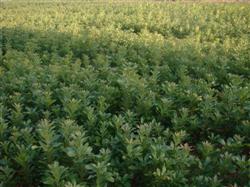
A detailed guide to bayberry cultivation techniques: master all the key points of planting and management
Biological characteristics of cultivation: It prefers a warm, humid, cloudy and misty climate. It is not tolerant of strong light or cold. It is best planted on north- or east-facing mountain slopes in deep, loose, fertile, well-drained acidic yellow soil. Cultivation techniques: There are many cultivars; by fruit color they can be divided into white, red, pink...
-
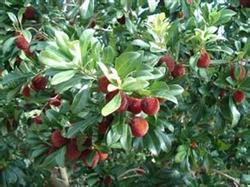
How to Treat Bayberry Root Rot? Detailed Explanation of Key Prevention and Control Techniques
1. Mounding soil. In conjunction with deep plowing, carry out one round of fertilizing mud and mounding soil around the tree disk. Use locally available materials such as mountain surface soil, plant ash, river mud, pond mud, etc., generally once every two years, each time raising the soil by about 5 cm, in order to increase the cultivated layer of the bayberry orchard, protect the root system, expand the extension range of the roots, and improve the bayberry root system...
-
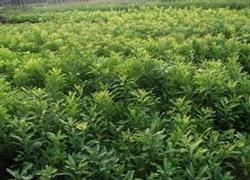
How to manage Chinese bayberry after planting? These techniques must be mastered
After the Chinese bayberry seedlings are planted, they begin to bear fruit in about 5 years. To achieve the goal of early fruiting, strengthening cultivation and management after planting cannot be neglected. First, inspect the seedlings and straighten them promptly. After the Chinese bayberry seedlings are planted, they must be checked promptly; if missing plants are found, replant immediately so that growth is uniform and consistent; if dry weather occurs after planting, water promptly...
-
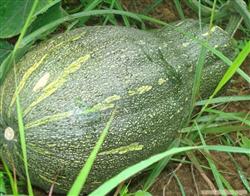
Key Points of Spring Cultivation Techniques for Honey Pumpkin
Honey pumpkin plants grow as vines. A single fruit weighs 2-3 kg, the fruit is about 36 cm long with a transverse diameter of 14.5 cm. The fruit is club-shaped, and when ripe it is orange-yellow with thick, orange-red flesh, fine-textured starch, and a sweet taste and excellent quality. It is early to mid-maturing, and can be harvested 85-90 days after transplanting. Spring planting is from January to March, autumn planting from July to August, with a yield of 2000 kg per mu....
-
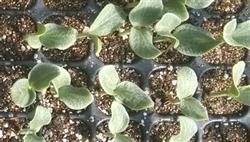
Detailed Guide to Early-Maturing Spring Cultivation Techniques for Japanese Pumpkin
Japanese pumpkin, also known as Western pumpkin, is a new type of vegetable pumpkin introduced in recent years from Japan, South Korea and other places as a high-quality pumpkin. This pumpkin has firm, fine flesh that is sticky or mealy, with excellent flavor, and the fruit is relatively small; when harvested as a vegetable, a single fruit generally weighs 1 kg. It is early-maturing with stable fruit set...
-
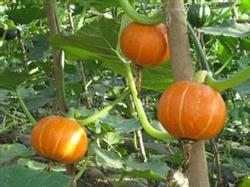
Key Cultivation Techniques for Western Pumpkin in Spring Greenhouses
Pumpkin is a nutritious and healthy vegetable, and the Western pumpkin introduced from abroad is deeply loved by consumers because its fruit has low water content, high solids, high non-reducing sugars and starch, a starch/total sugar ratio exceeding 1, low crude fiber, and high crude protein, giving it excellent taste and mouthfeel, with quality far surpassing domestic local pumpkins...
-
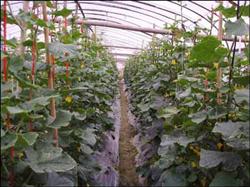
Key Techniques for Spring Greenhouse Cultivation of Winter Squash (Western Pumpkin)
1. Varieties: At present there are many varieties of Western pumpkin. According to the results of comparative trials of introduced varieties at our institute, the "Dongsheng" and "Yipin" selected by Taiwan Nung You Seed Co., Ltd.; and the "Juhong" series and "Lübao" selected by Jiangsu Chia Tai Seed Co., Ltd. of Thailand's Chia Tai Group "...
-
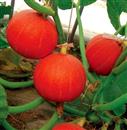
Detailed Explanation of Key Techniques for Spring Sowing and Seedling Cultivation of Winter Squash
1. Seed treatment Before sowing, first prepare seedling pots (specification: 10 cm x 10 cm x 8 cm) and nutrient soil (50% decomposed organic fertilizer, 50% field sandy loam soil, mix evenly). Before sowing, seed treatment should be carried out: remove shriveled and deformed seeds, select plump seeds, and sun the seeds on a sunny day for 1-2 days, ...
-
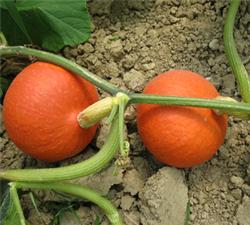
High-Quality New Pumpkin Varieties and Key Points of Spring Cultivation Techniques
Pumpkin is a nutritious and healthy vegetable, and the Western pumpkin (Cucurbita maxima) introduced from abroad has low fruit water content, high solids, high levels of non-reducing sugars and starch, a starch-to-total-sugar ratio exceeding 1, low crude fiber and high crude protein, so its eating quality and mouthfeel are excellent, and its quality greatly surpasses that of domestic local pumpkins, making it deeply...
-
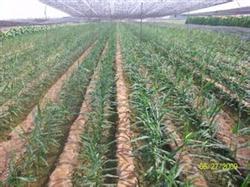
How to Grow Ginger in Northern China for High Yields? A Detailed Guide to Cultivation and Management Techniques
I. Pre-planting Preparation 1. Fine soil preparation and adequate basal fertilizer. It is advisable to choose a plot with fertile soil, good irrigation conditions, and no ginger blast disease, and to avoid continuous cropping as much as possible. On the basis of winter ploughing, carry out fine soil preparation early in spring, so that the soil is free of visible and hidden clods, loose on top and firm below. Increase the application of organic fertilizer, using high-quality chicken manure, manure from livestock pens free of diseased residues, cake fertilizer, and plant ash in combination; along with soil preparation, broadcast 4 cubic meters of high-quality decomposed chicken manure or 5000-10000 kg of high-quality pen manure as basal fertilizer. In high-fertility and high-water plots, open furrows at a row spacing of 60-65 cm ready for sowing, and apply 100 kg of soybean cake, 50 kg of ternary compound fertilizer, 50 kg of potassium sulfate, 2 kg of zinc fertilizer, and 1 kg of boron fertilizer in the furrows as seed fertilizer.
条件筛选