High-Yield Mung Bean Cultivation Techniques, Part Two: Detailed Explanation of Key Planting Points
V. Timely Hoeing and Ridging, and Topdressing. Currently, mung bean production involves low input and extensive management, resulting in relatively low yields, so field management should be strengthened. Especially during the seedling stage, mung beans grow slowly and are easily overwhelmed by weeds, which affects their growth and development, making timely management even more important. During the growth period, generally before flowering and pod setting, 3 rounds of inter-row cultivation and weeding should be carried out (three hoeings...
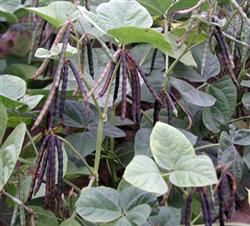 V. Timely Hoeing and Ridging, and Topdressing
Currently, mung bean production involves low input and extensive management, resulting in relatively low yields, so field management should be strengthened. Especially during the seedling stage, mung beans grow slowly and are easily overwhelmed by weeds, which affects their growth and development, making timely management even more important. During the growth period, generally before flowering and pod setting, 3 rounds of inter-row cultivation and weeding should be carried out (three hoeings and three ridgings). Following the principle of shallow - deep - shallow, carry out three hoeings and three ridgings.
Topdressing mung beans is best done at the flowering stage together with the final ridging. Per hectare, 45-65 kg of nitrogen fertilizer such as ammonium nitrate or urea, and 100-120 kg of potassium sulfate can be applied. For poorer plots, foliar topdressing can be done at the pod-setting stage by spraying 0.4% potassium dihydrogen phosphate solution at 500-1000 kg per hectare, which gives a fairly obvious yield increase.
VI. Timely Irrigation
Although mung beans have relatively strong drought resistance, they need more water during the flowering and pod-setting stage. If drought occurs, that is, when the soil field water-holding capacity drops below 50%, irrigate promptly to prevent flower drop and pod drop, which would reduce yield.
VII. Pest and Disease Control
1. Pest control. Throughout the growth period, especially in the early stage, pay attention to controlling pests such as aphids and red spider mites. Pesticides such as omethoate emulsifiable concentrate, pirimicarb, and deltamethrin can be sprayed for control.
2. Disease control. In our city's mung bean production, diseases that commonly occur in recent years include leaf spot, downy mildew, and sclerotinia. (1) Control of leaf spot. Leaf spot damages the stems, leaves, and flower stalks of mung beans. It is a serious disease of mung beans, capable of reducing yield by 10%-30%, and by more than 50% in severe cases, with a serious decline in quality. The pathogen of leaf spot overwinters in the soil and on plant residues. The following year, the pathogen reproduces on the plants and spreads through wind, rain, and seeds. Mung beans can become diseased at the seedling stage. The severity of the disease is closely related to temperature and humidity. When the temperature is high (25°C-28°C) and air humidity is 85%-90%, it spreads very quickly. The main control methods are: ① Crop rotation. This can reduce the host of the pathogen and is a very effective control method. ② Increase potassium fertilizer. Adding potassium-containing chemical fertilizers and organic fertilizers can enhance the resistance of mung beans to leaf spot and reduce the severity of damage. ③ Chemical control. Spray Bordeaux mixture and other agents at the early stage of disease onset. Then repeat once every 7-10 days, usually 3 consecutive times is enough to control the spread of the disease. You can also spray 80% wettable zineb at 400 times dilution or 50% carbendazim wettable powder at 800-1000 times dilution, with each application using 750 kg per hectare. (2) Control of downy mildew and sclerotinia: These two diseases also occur frequently and are relatively serious diseases. Especially in the later stage of mung bean growth and development, in years with continuous rainy weather and high air humidity, they occur more severely. They are also soil-borne or seed-borne diseases. The main control methods are crop rotation and seed treatment. Currently, there are no effective chemical control methods.
VIII. Timely Harvest
Mung bean pods do not mature uniformly, and the pods easily shatter and drop seeds, causing losses. Therefore, to prevent yield reduction caused by seed shattering losses, harvest promptly when more than 80% of the pods are mature, before the morning dew has dried. For small-scale cultivation, harvesting by picking pods in stages can be used. After harvest, the mung beans should be dried and threshed promptly, and after chemical treatment, stored in the warehouse.