How to Grow Organic Bayberry? Planting Techniques, Lesson One
Bayberry is the most distinctive subtropical ecological and economic tree species. It has wide adaptability, and can grow and perform well in most parts of the south, especially in slightly acidic and acidic soils. 1. Orchard Establishment: Bayberry prefers moisture and tolerates shade, has a large canopy and a widely distributed root system. An organic bayberry orchard is required to be built at an altitude of...
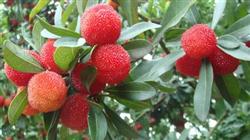
Bayberry is the most distinctive subtropical ecological and economic tree species. It has wide adaptability, and can grow and perform well in most parts of the south, especially in slightly acidic and acidic soils.
1. Orchard Establishment
Bayberry prefers moisture and tolerates shade, has a large canopy and a widely distributed root system. An organic bayberry orchard is required to be built on mountain and hilly land with an altitude below 800 m, a slope of less than 45 degrees, a thick humus layer, acidic yellow soil or red-yellow soil with a pH value of 4.5-5.5, facing shade and ventilated, convenient for intensive management and transportation, with not strong sunlight and deep soil. The climatic conditions are a subtropical humid monsoon climate. Under microclimatic conditions with relatively large light radiation, sufficient heat, higher accumulated temperature in winter and spring, and moderately low rainfall distribution in summer and autumn, the quality and high yield are more pronounced.
2. Planting
1. Planting time: divided into spring planting and autumn planting. Spring planting is from February to early April, and autumn planting is from September to November. Generally, spring planting is preferred. In Yunnan, Guizhou, Guangxi, Sichuan, Hunan, Jiangxi, Guangdong, and Fujian, planting can also be done from October to late March of the following year.
2. Planting density: It is advisable to use a plant-to-row spacing of 4m x 4m or 4m x 5m, planting 33 to 42 trees per mu. The ratio of female to male trees is preferably 100:1. If there are wild bayberry trees locally, male trees do not need to be planted.
3. Applying base fertilizer: Planting holes, 80 x 80 x 60 cm 3, apply about 50 kg of compost or 25-30 kg of barnyard manure or 3-4 kg of cake fertilizer per hole, and cover it with 15-20 cm of fertile topsoil.
4. Planting: When planting, place the seedling in the center of the hole, spread out the root system, straighten the seedling, then add fine soil, tread it firm with the feet or tamp it firm with tools such as a hoe. Water thoroughly to settle the roots, and cover the top with subsoil to 20-30 cm above the ground, and it is advisable to cover the graft union below the soil. After the seedlings are planted, in the high-temperature season from July to August, loosen the soil, water, and cover the tree basin in time to reduce water evaporation.
3. Canopy Management
1. Training
(1) Natural open-center shape: In the first year after planting, focus on bud removal. Starting from about 20 cm above the ground, select and retain the first main branch, and thereafter retain the second and third main branches every 15-20 cm; in the second year, cut off immature autumn shoots on the extension branches of the main branches, and shorten all lateral branches on the main branches, and select and retain the first sub-main branch at 60-70 cm from the trunk; in the third year, select and retain the second sub-main branch on the main branch, with the first and second sub-main branches 60 cm apart; in the fourth year, continue to extend the main branches and sub-main branches, and select and retain the third sub-main branch at about 40 cm from the second sub-main branch. While cultivating the main branches and sub-main branches, large lateral branches should be selected and retained in time, and the training is completed in about 5 years.
(2) Natural round-headed shape: After the seedlings are planted, shorten them at about 30-40 cm above the ground, and thereafter, except for retaining 3-4 strong branches growing from the trunk, remove the remaining branches as early as possible. The retained branches are about 20 cm apart from each other and do not overlap. On the main branch at 60-70 cm from the trunk, begin to retain the first sub-main branch, and then retain the second sub-main branch 60 cm below it on the other side. Control the strong branches growing too vigorously other than the main branches and sub-main branches, moderate the tree vigor, and complete the training after 5-6 years.
2. Pruning
(1) Pruning period
Growing-season pruning: mid-April to mid-September. Dormant-season pruning: late October to mid-November to
mid-February to late March.
(2) Pruning techniques
① Sprout removal: From after spring germination until growth stops in autumn, promptly remove useless sprouts on the tree, including water shoots occurring at the base of the trunk and overly strong branches occurring on the upper side of the main branches, sub-main branches, and large auxiliary branches.
② Pinching: Carried out after branch tips begin to grow in spring, when the tissues have not yet lignified. On the one hand, it aims to increase the fruit-setting rate and reduce fruit drop; on the other hand, it promotes the water shoots in the bare parts of the canopy to send out secondary branches, which then develop into fruiting mother branches.
③ Branch pulling and branch propping: Branch pulling generally uses rope or galvanized wire tied to the middle part of the skeletal branches and pulls the branches horizontally according to the required angle. The part tied to the branch must be padded with rubber or other soft and tough materials to avoid scraping the bark and infecting canker disease. Branch propping uses sturdy short wooden sticks to prop open the angle formed by the main branches and the trunk. Both aim to promote the opening of the bayberry canopy, improve light exposure, bear fruit evenly, and avoid planar fruiting.
④ Girdling, ring barking, bark inversion, and root cutting: Girdling adopts spiral girdling, deep to the xylem. The width of ring barking is controlled at about 1/8 of the trunk diameter. The width of bark inversion is controlled at about 1/4 of the trunk diameter. For vigorous-growing trees with strong vigor, low fruit-setting rate, and low yield, girdling, ring barking, bark inversion, and root cutting can be used.
4. Soil Management
1. Mounding: Carried out in autumn, winter, or spring to reduce topsoil erosion and protect the root system. Mounding generally uses local soil, most commonly mountain topsoil, turf mud, and the like.
2. Intertillage, weeding, and mulching: Young trees have little growth and are easily shaded by mountain weeds and miscellaneous trees, resulting in slow growth or even death. It is required to continuously intertill and remove weeds and carry out ground mulching within a range of about 1 m in diameter around the tree basin of young trees.
3. Hole expansion and soil improvement: It is advisable in autumn and winter, and can be carried out throughout the orchard at one time. When labor is insufficient, the holes can also be expanded year by year with the trunk as the center.