-
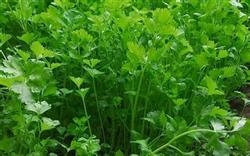
How to grow summer-sown coriander for high yields? Key techniques explained
Coriander prefers cool conditions; its growth slows when the temperature is above 20°C, and stops when it is above 30°C. Therefore, cultivating coriander in summer is quite difficult, and the following supporting cultivation techniques must be mastered. 1. Choice of variety: choose varieties that are drought-tolerant, fast-growing and slow to bolt, such as purple-stem coriander, Beijing coriander, North China large-leaf...
-
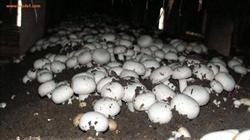
Detailed Explanation of Key Techniques for Cultivating Button Mushrooms (Agaricus bisporus) with Biogas Residue
1. Base material formula: biogas residue 3000 kg, wheat straw or rice straw 3000 kg, superphosphate 120 kg, urea 18 kg, lime powder 180 kg, gypsum powder 90 kg, light calcium carbonate 30 kg, edible mushroom three-dimensional nutrient essence 1440 g (12 bags). This formula is suitable for a cultivation area of 200-220 sq m....
-
Detailed Explanation of King Oyster Mushroom Cultivation Techniques and Management Key Points
King oyster mushroom (Pleurotus eryngii), also known as xuerong. It is a high-quality large fleshy agaric mushroom. The king oyster mushroom has thick flesh, a crisp and tender texture, and a delicious flavor, and can be called the "king of oyster mushrooms." It is rich in nutrients and high in oligosaccharides, with effects of regulating the intestines and beautifying the skin. It is suitable for fresh preservation or drying, and is highly favored by consumers...
-

Detailed Explanation of Artificial Cultivation and Management Techniques for King Oyster Mushroom
King oyster mushroom Pleurotus eryngii (DC. ex Fr.) Quel. belongs to the kingdom Fungi, subkingdom Eumycota, phylum Basidiomycota, subphylum Agaricomycotina, class Agaricomycetes, subclass Agaricomycetidae, order Agaricales, family Pleurotaceae, genus Pleurotus. Also known as eryngo oyster mushroom, it is named because it mainly occurs on dead plants (roots) of the Umbelliferae family...
-
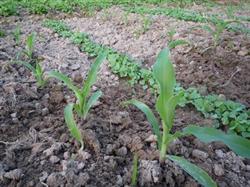
Detailed Explanation of Key Techniques for Raising Seedlings and Transplanting Spring Corn
The spring corn sowing period is approaching, and in production, work on raising seedlings and transplanting should be done well to promote early and steady growth of corn and achieve high and stable yields. For plots selecting improved varieties to harvest tender corn cobs, it is advisable to choose varieties with good quality such as the Jiangnan Huanuo and Suyunuo series; for plots harvesting corn grain, it is advisable to choose high-yielding varieties such as Zhengyu...
-
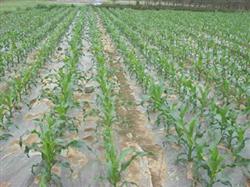
What are the key cultivation techniques for spring corn?
Adapt measures to local conditions and select improved varieties. In plain and hilly areas, promote Yedan 13 and Xiyu No. 3, paired with Huayu No. 4, Zhongdan 32, Chenghai No. 1, and Yuanzheng 808; for intercropping in cotton fields, select short-stalked, short-growth-period Yedan 22 and Yedan 51; in suburban areas, where fresh eating is the main purpose, waxy corn such as Zhongnuo No. 1 can be planted. Apply sufficient base fertilizer and skillfully apply topdressing...
-
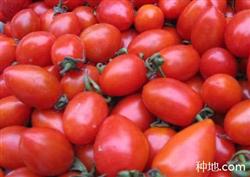
How to manage cherry tomatoes? Detailed explanation of cultivation techniques
What should be noted when planting cherry tomatoes in summer? Please advise. When planting cherry tomatoes in summer, the following points should be noted: arranging the vegetable marketing time reasonably has a great impact on the income of vegetable growers. At present, tomato cultivation is mostly spring cultivation, and the products are concentrated on the market from June to July. After August, tomato supply enters the off-season. And...
-

How to Grow Cherry Tomatoes? Methods and Techniques Explained
How to grow cherry tomatoes? Is there any technical guidance to share? Cherry tomatoes can be grown like this: Cherry tomatoes are warm-season vegetables, and the temperatures they need for growth and development are higher than those of common tomatoes. The optimum temperature for seed germination is 25-30°C, the optimum temperature for growth is 20-25°C, and the optimum temperature for growth during the fruiting stage is 15-25°C. They like light, and insufficient light causes serious flower and fruit drop...
-
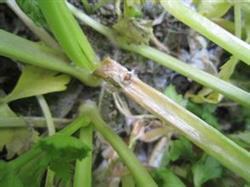
Pollution-free control methods and techniques for sclerotinia disease of coriander
1. Agricultural control (1) Practice crop rotation or high-temperature control. In diseased fields, practice a 2-3 year rotation with grain crops, or a 1-year rotation with rice or with aquatic vegetables. Where protected cultivation land cannot be rotated, high-temperature control may be adopted, as follows: during the high temperatures of the three summer months, first clean the field, remove diseased leaves and stems and weeds, carry them out of the field and bury them deep or burn them; apply 50-100 kg of lime per 666.7 sq m, add 500 kg of chopped rice straw or wheat straw, spread evenly on the surface, immediately turn into the soil, form high ridges about 30 cm tall, and fill the furrows with water until saturated; to keep water in the furrows at all times, irrigate every day; cover with plastic film, seal the edges tightly with soil, and keep the greenhouse or room closed for 15-20 days. This method can not only kill the lower sclerotia, but also kill pathogens such as Fusarium and root-knot nematodes.
-
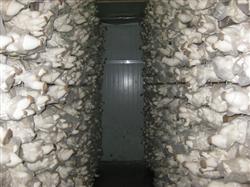
Detailed Explanation of Key Techniques for Industrial Cultivation of King Oyster Mushroom
King oyster mushroom, also known as Pleurotus eryngii, is a high-quality large agaric mushroom found in the high mountain, grassland, and desert regions of southern Europe, northern Africa, and Central Asia. Its flesh is thick and tender with a crisp texture, and it has an almond-like aroma, making it a premium edible mushroom. The optimal temperature for mycelial growth of king oyster mushroom is 23-25°C; the temperature for primordium formation is 10-18°C...
条件筛选