-
High-Efficiency Intercropping Cultivation Techniques for Spring Cauliflower and Pumpkin
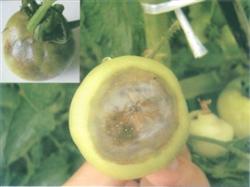
I. Symptoms: 1. Seedlings: infected plants develop dark green water-soaked lesions that spread from the leaves to the main stem, causing the petioles and stems to become thin, dark brown, rotten and collapsed, with the whole plant wilting; when humidity is high, a white mold layer forms on the diseased parts. When the base of the young stem is affected, water-soaked constriction forms, and the seedling wilts or falls over. 2...
-
What are the key points of fertilization techniques for spring peanuts?
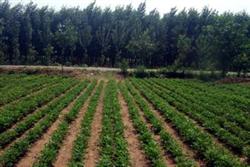
Calcium can promote pod formation, reduce empty pods and increase the number of filled pods; applying calcareous fertilizer such as lime to acidic soil can also reduce soil acidity and benefit nitrogen fixation by root nodules. Therefore, calcareous fertilizer can improve peanut yield and quality. When peanuts are deficient in calcium, plant growth is slow, roots are thin and seedlings are weak, and the edges and surface of old leaves will show...
-
A Complete Analysis of the Key Points of Spring Peanut Cultivation Techniques
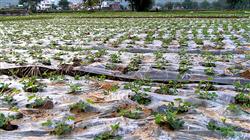
I. Fine land preparation and sufficient base fertilizer. For spring peanuts, choose sandy soil with relatively high soil fertility and convenient drainage and irrigation. Apply 150 dan of high-quality farmyard manure, 100 jin of compound fertilizer, and 2 jin of boron fertilizer per mu. After plowing and harrowing to level, open furrows with a bed width of 5.2 chi and a ditch depth of 0.6 chi, ensuring the three ditches are connected. II. Select...
-
Detailed Explanation of Key Techniques for Greenhouse Cultivation of Chinese Bayberry
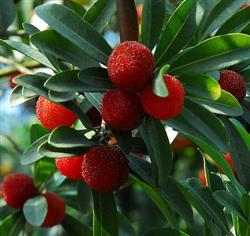
Greenhouse cultivation of Chinese bayberry is a new technique for advancing the ripening of Chinese bayberry, capturing the market early, and obtaining high economic returns. The key points are introduced as follows: (1) Location and method of greenhouse construction. On relatively gentle slopes, select early-maturing Chinese bayberry varieties, about 10-20 years old, with relatively small canopies in high and stable-yielding orchards to build greenhouses...
-

Detailed Explanation of Key Points of High-Yield Fertilization Techniques for Chestnut
High-Yield Fertilization Techniques for Chestnut
-
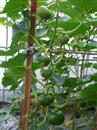
Key points of spring greenhouse cultivation techniques for pumpkin
I. Variety selection: Jinglüli and Jinghongli pumpkins. II. Seedling raising: The suitable sowing period for spring greenhouse pumpkin cultivation is generally mid-February. 1. Preparation before seedling raising: When sowing in early to mid-February, the temperature is relatively low, so electric heating seedbeds must be used for seedling raising. (1) Making the electric heating seedbed: Choose a greenhouse with good light transmission and strong heat preservation as the seedling-raising greenhouse, and build a seedbed inside the greenhouse that is 22.5 m long, 1.5 m wide, and 15 cm deep. After leveling and firming the bottom surface, use 2 heating wires with a power of 1000 watts, lay 12 lines longitudinally on the seedbed bottom, with a line spacing of 8-10 cm, completely cover the heating wires with fine soil, with a soil coverage depth of 1.5-2 cm.
-
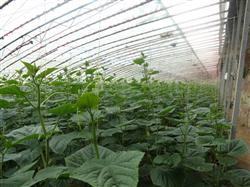
Detailed Explanation of Spring Cauliflower and Pumpkin Intercropping Cultivation Techniques
In spring, when it is time to train the pumpkins grown in arch sheds onto trellises, many vegetable growers choose single-line trellising. Single-line trellising simply means hanging the two vines of the pumpkin side by side, which makes trellising faster. However, because pumpkin leaves are relatively large, the vines already look crowded as soon as the fruit begins to set, which is unfavorable for pumpkin coloration. Vegetable growers in Jitai Town, Shouguang City, Shandong Province...
-
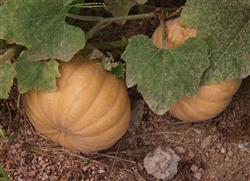
Techniques for Skillfully Trellising Pumpkins in Spring Polytunnel
Spring open-field cultivation techniques 1. Sowing and seedling raising: The pumpkin varieties introduced above belong to the Western pumpkin type, and for spring cultivation early sowing is suitable; the sowing date can be calculated back from the planting time. For example, in the Jianghuai region, planting can be done in mid-to-late April, and counting on a seedling age of 30 days, sowing should be done in mid-to-late March. If a specific time is needed...
-
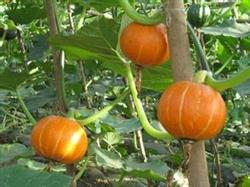
Detailed Key Points of Spring Cultivation Techniques for Mini Pumpkins
I. Timely Sowing: For greenhouse cultivation, sow in spring from mid-January to early February, with a seedling age of 20-25 days; for low-tunnel open-field cultivation, sow in mid-to-late February, with a seedling age of 20-25 days, and transplant into low tunnels in early-to-mid March. II. Seed Treatment and Sowing: Soak pumpkin seeds in clean water for 3-4 hours, then soak in a 500-fold dilution of 50% carbendazim...
-
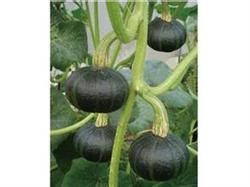
Detailed Explanation of Key Techniques for Spring Cultivation of Mini Pumpkins
Mini pumpkin is a first-generation hybrid bred by the Suzhou Vegetable Research Institute, a variety specifically for protected cultivation, with medium growth vigor, dark green leaves, vines 2.0-2.5m long, short internodes, medium branching, and both main and side vines can bear fruit. It has strong adaptability, fast growth, high yield, small individual size, golden yellow color, and good taste, suitable for long-distance...
条件筛选