Management Techniques for Lychee and Longan After Fruit Harvest
The use of potassium chlorate to promote flowering in longan was first pioneered in Taiwan, China, and its commercial application for off-season longan cultivation began in Thailand. In recent years, longan-producing areas across our province have also been experimenting with potassium chlorate to promote flowering for off-season longan cultivation. Some have achieved certain economic benefits, but most orchards have seen poor or even no...
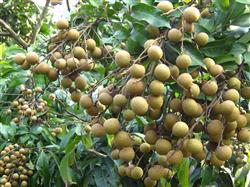 I. Cultivating fruit-bearing mother branches Cultivating fruit-bearing mother branches means promoting a strong autumn flush to improve growth vigor.
1. Lychee
(1) For old trees, weak trees, or mature trees bearing a heavy crop, using a single autumn flush as the fruit-bearing mother branch: apply an appropriate amount of compound fertilizer once before harvest, and spray Zengguoling (produced in Guangxi) once to enlarge the fruit and maintain tree vigor. Then, in mid-to-late August, heavily apply a bud-forcing fertilizer: for every 50 kg of fresh fruit, drench (or broadcast) 2-3 jin of compound fertilizer and spray Zengguoling to promote autumn buds to sprout by the end of August and mature by the end of November.
(2) For vigorous mature trees bearing a moderate crop, using the second autumn flush as the fruit-bearing mother branch: apply a "send-off fertilizer" 10-15 days before harvest, applying 1-1.5 kg of compound fertilizer per 50 kg of fresh fruit, plus 0.5 kg of urea or 0.5 kg of decomposed peanut cake, drenched with water around the tree dish, and spray Zengguoling on the foliage. Aim for buds to sprout in late July to early August. After the first autumn flush, when the leaves turn green, lightly apply compound fertilizer once to hasten maturation by September. As the flush approaches maturity, apply another bud-forcing fertilizer and spray Zengguoling to force buds, promoting sprouting in late September, leaf expansion in early October, and maturity around the end of November.
(3) For young vigorous fruiting trees, three autumn flushes should be encouraged, using the third autumn flush as the fruit-bearing mother branch. On the basis of applying the "send-off fertilizer," apply a bud-forcing fertilizer before each flush period and spray Zengguoling to force buds. After buds are forced out, promptly apply a shoot-strengthening fertilizer after leaf expansion. As the flush approaches maturity, apply another bud-forcing fertilizer and spray Zengguoling to force buds. Repeating this process can help achieve autumn flush maturity by the end of November or December.
2. For longan, the timing of fruit-bearing mother branch emergence should be systematically adjusted starting from harvest. For those producing two flushes, heavily apply compound fertilizer once 10-20 days before harvest, at 0.5-0.75 kg per tree, plus 0.2 kg of urea, and spray Zengguoling once on the foliage. Apply post-harvest fertilizer immediately after harvest at the same rate. After the first autumn flush matures, apply a bud-forcing fertilizer and spray Zengguoling, aiming for the fruit-bearing mother branch to sprout from late September to early October. For those planning a single flush as the fruit-bearing mother branch, apply a fruit-sizing fertilizer before harvest, applying 1 kg of compound fertilizer per tree and spraying Zengguoling once to enlarge the fruit and restore tree vigor. Then apply a bud-forcing fertilizer and spray Zengguoling at the end of August or early September, aiming for the fruit-bearing mother branch to sprout in September. During the bud-forcing process for lychee and longan, autumn flushes that mature too early may, in years with high temperature and excessive moisture, produce winter flushes. If winter flushes sprout, they can be killed by chemical spray. Around the Start of Winter, spray the canopy with 60-80 mL of ethephon (50-60 mL for longan), plus 3-4 liang of paclobutrazol or 2 liang of maleic hydrazide or 1 liang of daminozide, diluted in 50 kg of water. Alternatively, spray with 2200-fold flower-inducing solution to eliminate winter buds and promote flower buds.
II. Pest and Disease Control During the leaf expansion stage of autumn flushes in lychee, the main pests to control are leaf-feeding and shoot-boring insects, as well as fruit borers, leaf rollers, and gall mites. Spray with 10% Miebaike at 3000-fold dilution, or with isocarbophos, Wanling, or dichlorvos when autumn flushes just begin to sprout. For longan, from late June to July, when summer flushes have grown 8-10 cm, use 10% Miebaike at 2000-fold or 5% Cascade at 1500-fold dilution to control the shoot tip borer, fruit borer, and Helice moth, while also controlling the lychee stink bug and the angular-headed psyllid. In mid-September, when autumn flushes have sprouted to 8 cm, use 2.5% Decis at 3000-fold dilution or 10% Miebaike at 3000-fold dilution to control the shoot tip borer, fruit borer, and Helice moth, while also controlling psyllids and lychee stink bugs and other pests.
III. Applying Winter Fertilizer After the fruit-bearing mother branches have matured, dig ring trenches at the end of November to early December to apply winter fertilizer. Outside the canopy drip line, dig fertilizer trenches in a triangular or opposite four-point arrangement, with total length accounting for 1/4-1/2 of the tree circumference, and trench depth and width each of 40 cm. After digging, air-dry the roots for 1 week, then mix 100-200 kg of farmyard manure per tree with 1-2 kg of superphosphate and 1 jin of lime, first blending them evenly, then mixing with the excavated root soil and applying into the trench. The benefits are: first, cutting some roots to prevent winter bud emergence; second, forcing the tree to stop growth, which helps flower bud formation; third, applying fertilizer to sustain flower bud differentiation and flower organ growth, ensuring strong flowers. Additionally, deep-tilling 10-15 cm within the tree dish also has the effect of cutting roots to prevent winter bud emergence.
IV. Shape Pruning After the fruit-bearing mother branches have matured, carry out a shaping winter pruning around mid-December. Remove shade branches, weak branches, overly dense branches, crossing and overlapping branches, and pest- and disease-damaged branches. The degree of pruning should be such that at noon sunlight can be seen passing through the green leaf layer, forming numerous coin-sized light spots on the tree dish. For new shoots that emerge, keep 2-3 per branch and prune out excess ones to favor flower formation.