Detailed Explanation of Key Techniques for Artificial Pollination of Lychee and Longan
Lychee and longan both bear unisexual flowers and are insect- and wind-pollinated, relying on insects and wind for pollination and fertilization. In production, when bee sources are lacking or adverse weather occurs, artificial pollination is an important measure to increase the fruit-setting rate. However, artificial pollination must be done with proper technique, mainly including two aspects: pollen collection and pollination methods....
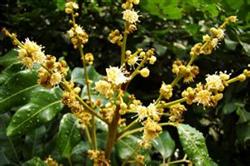
Lychee and longan both bear unisexual flowers and are insect- and wind-pollinated, relying on insects and wind for pollination and fertilization. In production, when bee sources are lacking or adverse weather occurs, artificial pollination is an important measure to increase the fruit-setting rate. However, artificial pollination must be done with proper technique, mainly including two aspects: pollen collection and pollination methods.
I. Pollen Collection
(1) Points to note Pollen should be collected on sunny days. On sunny days the pollen develops well and has a high germination rate, whereas pollen collected on rainy days has a low germination rate. At the same time, cultivars with a high pollen germination rate should be selected for pollen collection. The pollen germination rate of cultivars such as Sanyuehong, Nuomici and Huaizhi is as high as 80%, while that of cultivars such as Shuidong and Feizixiao is only 20%-30%.
(2) Pollen collection methods
1. Collecting pollen by gently shaking branches Spread a plastic film under the tree and gently shake the branches so that fully opened male flowers or pollen fall down. After collecting the shaken-down male flowers, put them into water, stir, soak and filter to obtain "pollen water", then spray it on trees with fully opened female flowers. Most of the male flowers collected by this method have already withered, and the vast majority of the pollen has lost its viability; on the other hand, even if some fresh pollen is present, because it has been immersed in water for too long, the tannins exuded by the flowers inhibit pollen germination and reduce pollination efficiency.
2. Collecting pollen with a wet towel Lightly pat a moistened towel on the flower spikes of fully opened male flowers, pat 5-6 flower spikes, then wash it into water, repeating several times, to obtain pale yellow pollen water. After filtering, spray it immediately on trees with fully opened female flowers. This pollination method is highly efficient, and the pollen collected is of the best quality with a high germination rate.
II. Methods of Artificial Pollination
(1) Points to note for pollination The best pollination temperature is 20-25°C. When the female flowers are fully open, spray at 7:00-9:00 in the morning on sunny days, at noon on cold days, and after the rain clears on rainy days. For the concentration of pollen water, based on a tree area of 100 kg, 2 grams of pure pollen is needed, or add pollen to clean water and stir thoroughly until the clean water turns pale yellow, then filter and spray; alternatively, add 10 grams of borax to 100 kg of pollen water, stir evenly, and spray immediately after mixing.
(2) Pollination method Mix the collected pollen with water to make pollen water (generally pale yellow pollen water is preferable), and spray it onto fully opened female flowers. This method is mostly used on sunny days, as it can both dilute the overly concentrated nectar on the stigma and maintain a certain humidity on the stigma, which is favorable for fertilization. Pollen water should be sprayed immediately after mixing, and the entire process of pollen collection and pollination must not exceed 20 minutes, otherwise the pollen will lose its viability and the pollination effect will be affected.
III. Supplementary Measures to Improve Pollination Results
(1) Shake flowers after rain to prevent "flower soaking" Lychee and longan have a large number of flowers, which are small and densely clustered. When rainy weather occurs during the flowering period, the anthers are difficult to split open, causing the phenomenon of "flower soaking". Therefore, after rain, the branches should be shaken in time to shake off withered flowers and water droplets on the flower spikes, speeding up the air-drying of the flowers so as to facilitate pollination and fertilization.
(2) Spray water in dry weather to prevent "flower scorching" When the flowering period of lychee and longan encounters continuous high temperature and dry weather, the florets secrete more nectar of higher concentration, and the flowers tend to wither and dry up, which is unfavorable for pollen germination and affects fertilization. To prevent "flower scorching", it is advisable to irrigate or spray water in the morning or afternoon to increase soil and atmospheric humidity. Combining this with spraying pollen water gives the best results.