Detailed Explanation of Summer Direct Seeding Cultivation Techniques for Mung Bean
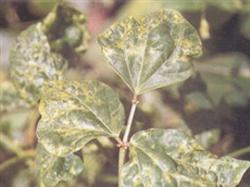
Symptoms: This disease mainly occurs during the rainy season in summer and autumn. After the leaves are infected, brown round to irregular blister-like spots appear on the leaves, initially water-soaked, later becoming gangrenous, and in severe cases becoming suberized. Multiple lesions can often be seen clustering together to form large gangrenous-type lesions. Brown small spots or streak-like spots also appear on petioles and pods when infected...
 Mung bean is one of the important minor grain crops, combining nutritional value and medicinal dietary value. As people's living standards improve day by day, the demand for mung bean is increasing, causing mung bean prices to keep rising. Growing mung bean requires little investment, takes effect quickly, yields high returns, and has very broad development prospects. Its high-yield and high-quality cultivation techniques are as follows:
I. Seed selection and land preparation. Selecting superior varieties is the key to increasing mung bean yield. Early-to-mid maturing varieties with upright and compact plant shape, thick main stems, strong branching ability, lodging resistance, disease and pest resistance, good quality, and high yield should be selected, such as Lulü No. 1. After wheat harvest, stubble should be cleared early, and 1500-2000 kg of organic fertilizer per mu should be applied along with land preparation.
II. Seize the time and sow early. The earlier summer-sown mung bean is sown, the higher the yield. The best sowing period in our region is early to mid-June, with a seeding rate of 1.5-2 kg per mu, sowing depth of 3-5 cm, and row spacing of 40-50 cm.
III. Field management. The growth period of mung bean is relatively short, and field management should emphasize the word "early." First, thin and set seedlings early. Seedlings can be set when the second compound leaf appears, with a plant spacing of 10-15 cm, leaving 10,000-12,000 plants. The summer mung bean growing season coincides with the period of early drought and later waterlogging. Therefore, when selecting and preparing land, it must be ensured that irrigation is possible in drought and drainage is possible in waterlogging. Especially at sowing time, if the weather is dry, moisture should be created first before sowing. During the seedling stage, an appropriate amount of nitrogen fertilizer can be applied as a top dressing, with 7.5-10 kg of urea per mu, to promote robust plant growth. Mung bean is prone to weeds during its growth period, so intertillage and weeding should be carried out at the first compound leaf, the second compound leaf, and before branching and budding stages.
IV. Pest and disease control. When aphids and pod borers occur and cause damage, spray control should be carried out promptly with 40% omethoate at 800-1000 times dilution.
V. Timely harvest. When mung bean pods mature and turn black, if conditions permit, they can be harvested in stages. If it is a variety prone to pod shattering, it must be harvested in batches. Alternatively, a single harvest can be done when 80% of the pods turn black.