-
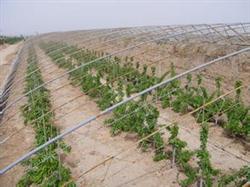
Detailed Explanation of Greenhouse Management Techniques for Sweet Cherry
1. Soil, Fertilizer and Water Management Sweet cherry is a shallow-rooted tree species with vigorous root respiration, so the requirements of water, fertilizer, air and heat needed for root growth should be met as much as possible. Each growing season requires at least 4 to 5 intertillages, with a depth of 5 to 10 cm being appropriate, which both removes weeds and preserves soil moisture, activates the soil and enhances permeability. After harvest, shallow plowing should be carried out...
-
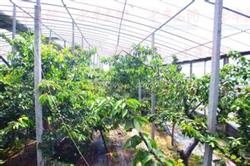
How to manage sweet cherries in summer? These ten techniques must be mastered
1. Soil, fertilizer and water management. The fruit development period of sweet cherries is short, requiring concentrated nutrients. Pay attention to topdressing before flowering, during fruit development, after harvest and in autumn. The first application is mainly nitrogen fertilizer combined with phosphate and potassium fertilizer; the second is mainly phosphate and potassium fertilizer; after harvest, compound fertilizer is mainly used. Decomposed human manure and urine, decomposed soybean cake water, etc. can also be applied (farmyard manure...
-
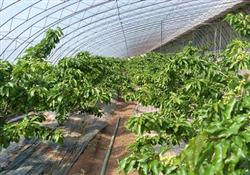
Sweet Cherry Pest and Disease Control Methods and Techniques
(1) Main diseases 1. Cherry brown spot disease: also known as leaf shot hole disease, it is the most important leaf disease of sweet cherry. (1) Symptoms: At the early stage of the disease, small purple spots the size of a needle tip form, then enlarge, and some join together to form round brown lesions, on which small black dots appear, namely conidia masses and perithecia. ...
-
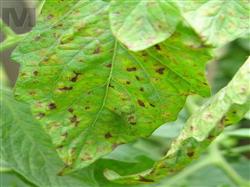
Tomato pruning has its techniques: master the method for more fruit
Symptoms: Tomato bacterial speck, also known as bacterial micro-spot disease. It mainly damages leaves, stems, flowers, petioles and fruits, and is most obvious on leaf margins and immature fruits. When leaves are infected, dark brown to black spots appear, often surrounded by yellow halos; when petioles and stems are infected, black spots appear; when young green fruits are infected, slightly...
-
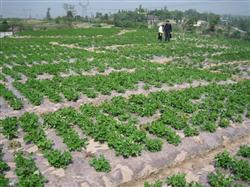
Detailed Explanation of Key Points for Plastic Film Mulch Cultivation Techniques for Spring Peanuts
Anxi County has promoted plastic film mulch cultivation techniques for spring peanuts. Under similar conditions, yields are generally 15-20% higher than open-field cultivation, and Aspergillus flavus disease is reduced, peanut quality is improved, and good benefits are achieved. The cultivation techniques are as follows: 1. Variety selection: Choose "Shanyou 71," a variety with strong disease resistance, good waterlogging tolerance, and suitability for paddy fields with good fertilizer and water conditions...
-
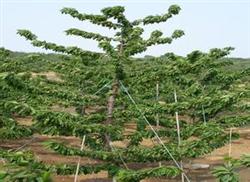
Cherry post-harvest management methods and key points of summer pruning techniques
Pinching new shoots: To promote flower bud differentiation and prevent excessive vegetative growth, the method of pinching new shoots should be adopted for control. That is, pinch the new shoots that have not stopped growing, and the pinching position is generally bounded by the half-leaf point; after pinching, growth stops for 10-15 days and then secondary shoots emerge, and when they grow to 15-20 cm, a second pinching is carried out,...
-
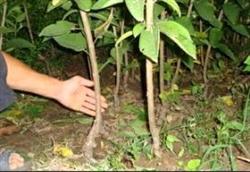
Detailed Explanation of Post-Grafting Care Techniques for Cherry Trees
1. Untie promptly. After cherry grafting, if rain or watering occurs, it easily causes gummosis and affects survival. Therefore, do not water within half a month after grafting. After the bud-grafted seedlings survive, untie the binding promptly to prevent rainwater from seeping along the binding material into the bark and causing gummosis. 2. Cut the rootstock at the right time. For bud-grafted seedlings that have already survived, the rootstock should be cut...
-
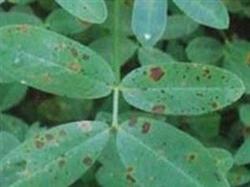
Detailed Explanation of Key Techniques for Mulched Cultivation of Spring Peanuts
The main pest from the seedling stage to the pegging stage is aphids. Control threshold: 1000 aphids per 100 hills; per 667 sq m, use 6-8 g of 50% pirimicarb or 20 mL of 40% omethoate, mix with 50 kg of water, and spray for control. Attention should also be paid to protecting natural enemies (ladybugs). When the ratio of ladybugs to aphids reaches 1:80-100, ladybugs can be used to prey on...
-

Detailed Explanation of Key Field Management Techniques for Peppers
Field Management Techniques for Peppers
-

Detailed Explanation of Post-Harvest Management Techniques for Chestnut
Post-Harvest Management Techniques for Chestnut
条件筛选