-
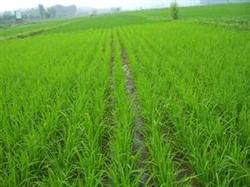
Detailed Explanation of Rice Dry-Raising and Dry-Planting Cultivation Techniques
Dry-raising and dry-planting refers to the practice, when dry-raised early rice seedlings reach the suitable seedling age for throwing and transplanting but the field is dry and lacking water for paddy preparation, of directly spraying herbicide to control weeds, then making holes with a wooden stick or opening furrows with a shovel, and then transplanting the seedlings. Key points of the cultivation technique (1) Paddy field treatment: before planting, spray the paddy field with herbicide to control weeds; options include...
-
Detailed Explanation of Key Points for Efficient Cultivation Techniques of Cherry Tomatoes
1 Cherry Tomato Cherry tomato is also known as grape tomato and cherry tomato. In addition to containing all the nutritional components of tomatoes, its vitamin content is 1.7 times that of ordinary tomatoes. The nutritional value of cherry tomatoes is superior to the components of ordinary tomatoes. Cherry tomatoes contain special substances such as glutathione and lycopene, and these substances can promote human...
-
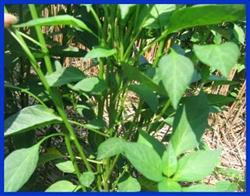
High-Yield Cultivation Techniques for Greenhouse Peppers Across Spring, Summer, and Autumn
At present, the main problem in production is that early spring cropping dominates, while after the greenhouse film is removed in summer, autumn delayed production is relatively limited. After summer, as open-field vegetables reach the market, management is relaxed, and late-season pepper yields are relatively low. To maximize the production role of greenhouse facilities, the author guided farmers to carry out a single large cropping cycle of greenhouse peppers across spring, summer, and autumn...
-
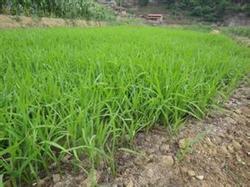
Key Field Management Techniques After Transplanting Dry-Raised Rice Seedlings to the Paddy Field
1. Prepare the field carefully so that the field is level and the soil is puddled, with not even a inch of water exposing the mud. 2. Fertilization principle: apply a heavy basal fertilizer and skillfully apply panicle-grain fertilizer. Apply no less than 1500 kg of farmyard manure per mu. When harrowing the field, apply phosphate and potassium fertilizers plus 70% of the nitrogen fertilizer as a one-time basal application, 20% of the nitrogen fertilizer as tillering fertilizer, and 10% as panicle fertilizer (apply 5-10 days before heading). ...
-
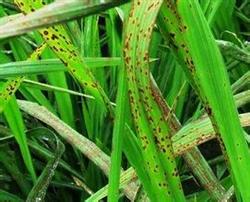
Identifying Zinc Deficiency Symptoms in Rice and Techniques for Skillfully Applying Zinc Fertilizer in Paddy Fields
Zinc is one of the essential trace elements for the growth and development of rice. Zinc deficiency in rice shows obvious symptoms. When rice is deficient in zinc, chlorotic yellow-white spots first appear in the midrib area of the lower leaves, with reddish-brown spots and irregular patches forming on them, which then gradually expand into reddish-brown streaks, turning reddish-brown and drying from the leaf tip downward, and from...
-
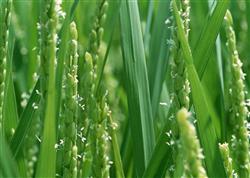
Fertilizer Requirements and Key Fertilization Techniques for Rice at Different Growth Stages
I. Fertilizer Requirements of Rice. Nitrogen, phosphorus, and potassium are the nutrient elements that rice requires in relatively large amounts while soils are relatively deficient in them. Generally, for every 100 kg of rice grain produced, about 1.6-1.9 kg of nitrogen, 0.8-1.3 kg of phosphorus, and 1.8-3.8 kg of potassium are absorbed, with a ratio of approximately 1:0.5:1.3. Nitrogen uptake is highest from the greening stage to the tillering stage...
-
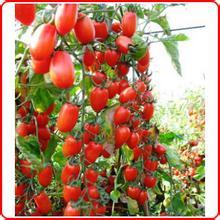
Detailed Guide to Cherry Tomato (Sainte Tomato) Cultivation Techniques
I. Cultivation Season: In the northern region, sowing is from mid-September to early January of the following year, with harvest from late December to mid-May of the following year; in the southern region, sowing is from late August to mid-December, with harvest from late November to April of the following year. II. Variety Selection: Choose varieties that are disease-resistant, heat-tolerant, high-quality, high-yielding, suitable for storage and transport, and have good marketability...
-
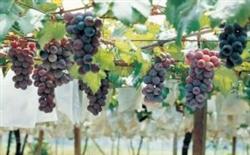
Detailed Explanation of Key Management Techniques During Grape Ripening
1. Timely picking in batches. Grape varieties differ, and their ripening periods are not the same either, so different measures should be taken according to different situations when picking. Ripe grapes have a glossy surface, transparent flesh, and a thick layer of bloom; they taste flavorful, and the seeds are brown. If picked too early, the acidity is too high; if picked too late, the fruit...
-
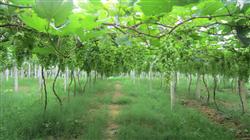
Detailed Explanation of Key Grape Summer Management Techniques
Some vineyards experience many diseases in summer, mainly: grape downy mildew, white rot, anthracnose, etc. The occurrence of downy mildew can cause grape leaf drop, withered branches, rotten fruit, and even death. Therefore, Liu Zhongtang, an agronomist and fruit tree expert at the Wei County Agriculture and Animal Husbandry Bureau, reminded the broad community of fruit growers during technical training in the township that in the rainy summer season they should...
-
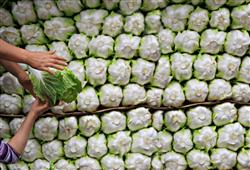
Detailed Explanation of Key Points for Spring Cultivation Techniques of Napa Cabbage
Spring napa cabbage, summer napa cabbage, and early spring napa cabbage do not have a strict harvest period; they can be harvested once the heads have formed. Autumn-winter napa cabbage has a strict harvest period and must be harvested before a low temperature of -2°C occurs. After harvesting napa cabbage intended for storage, orient the heads facing north and the roots facing south, and sun-dry for 2-3 days. Then stack the plants into two rows, ...
条件筛选