Identifying Zinc Deficiency Symptoms in Rice and Techniques for Skillfully Applying Zinc Fertilizer in Paddy Fields
Zinc is one of the essential trace elements for the growth and development of rice. Zinc deficiency in rice shows obvious symptoms. When rice is deficient in zinc, chlorotic yellow-white spots first appear in the midrib area of the lower leaves, with reddish-brown spots and irregular patches forming on them, which then gradually expand into reddish-brown streaks, turning reddish-brown and drying from the leaf tip downward, and from...
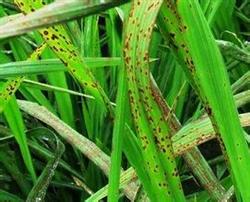
Zinc is one of the essential trace elements for the growth and development of rice. Zinc deficiency in rice shows obvious symptoms. When rice is deficient in zinc, chlorotic yellow-white spots first appear in the midrib area of the lower leaves, with reddish-brown spots and irregular patches forming on them, which then gradually expand into reddish-brown streaks, turning reddish-brown and drying from the leaf tip downward, and appearing in sequence from the lower leaves to the upper leaves. Diseased plants produce leaves slowly, with new leaves short and narrow, and leaf color rather pale, especially near the base of the midrib, which fades to yellow-white. Severely affected plants have a shortened or misaligned leaf sheath distance (leaf collar spacing), are obviously dwarfed and tufted, tiller very little, and often appear uneven in the field. The root system is aged and brown.
Applying zinc fertilizer to zinc-deficient paddy fields has a significant yield-increasing effect and improves quality. However, the application of zinc fertilizer requires strong scientific basis. Unreasonable application not only wastes fertilizer but may also lead to reduced yield. Therefore, the following technical requirements should be mastered when applying zinc fertilizer in paddy fields:
1. It can only be applied to zinc-deficient paddy fields. The critical level of available zinc in soil suitable for rice growth is 0.5 mg/kg; below this level, applying zinc fertilizer gives good results. Generally, calcareous soils are rich in calcium and have a high pH, so available zinc readily combines with carbonate or hydroxide to form zinc carbonate or zinc hydroxide precipitates and becomes unavailable, so they are often zinc-deficient; paddy fields with strong reduction are prone to zinc deficiency; paddy fields where nitrogen and phosphorus fertilizers have been applied heavily over a long period will also have reduced available zinc. The above types of paddy fields should be given additional zinc fertilizer.
2. Apply an appropriate amount. For zinc fertilizer application in paddy fields, zinc sulfate is mostly used, generally 1-1.5 kg per mu. Because zinc fertilizer has an obvious residual effect, the zinc fertilizer applied in the first season still has a yield-increasing effect on the next rice season, so zinc fertilizer does not need to be applied every year; generally, apply it once every 2-3 years.
3. Zinc fertilizer should be applied early. Applying zinc fertilizer in seedling fields gives high utilization efficiency and good results. It can be applied as a base application or by spraying. For field application, zinc fertilizer is best applied when harrowing the field.
4. Application should be uniform. To spread zinc fertilizer evenly, it can be mixed with physiologically acidic fertilizers. However, zinc fertilizer should not be mixed with phosphate fertilizer, to avoid forming zinc phosphate that rice can hardly absorb and utilize, thereby reducing fertilizer efficiency.