High-Yield Cultivation Techniques for Greenhouse Peppers Across Spring, Summer, and Autumn
At present, the main problem in production is that early spring cropping dominates, while after the greenhouse film is removed in summer, autumn delayed production is relatively limited. After summer, as open-field vegetables reach the market, management is relaxed, and late-season pepper yields are relatively low. To maximize the production role of greenhouse facilities, the author guided farmers to carry out a single large cropping cycle of greenhouse peppers across spring, summer, and autumn...
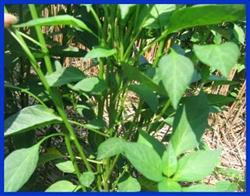
At present, the main problem in production is that early spring cropping dominates, while after the greenhouse film is removed in summer, autumn delayed production is relatively limited. After summer, as open-field vegetables reach the market, management is relaxed, and late-season pepper yields are relatively low. To maximize the production role of greenhouse facilities, the author guided farmers to carry out a single large cropping cycle of greenhouse peppers across spring, summer, and autumn. Through technical measures such as raising seedlings in a greenhouse in winter and spring, mulching with plastic film in the early spring greenhouse, cooling with shade nets in summer, and covering the greenhouse at the appropriate time in autumn, the pepper yield per mu reached 4000-6000 kg, and the output value per mu reached 6000-10000 yuan. The effect of increasing both yield and income is very obvious. This technique is now summarized as follows to guide farmers in better production.
I. Selection of Improved Varieties
Improved varieties are required to meet the following 5 requirements: First, high yield, generally with a yield per mu above 3500 kg; second, strong disease resistance, mainly resistance to viral diseases, and tolerance to Phytophthora blight and anthracnose; third, early maturity, reaching the market 3-7 days earlier than ordinary varieties; fourth, high quality, mainly good marketability of the product, tolerance to storage and transportation, a high rate of marketable fruit, and good market sales; fifth, strong stress resistance, requiring cold resistance and heat tolerance, and tolerance to low temperature and weak light. The main varieties recommended in production are: the horn pepper Nongda No. 22, the ox-horn peppers Xiangyan No. 19, Luojiao No. 4, and Xinfeng No. 3, and the bell pepper Zhongjiao No. 12.
II. Raising Strong Seedlings
1. Seedling raising period The most suitable period is early to mid-January. If too early, the external temperature after transplanting is too low and the seedlings are prone to freezing, increasing management costs; if too late, they easily coincide with the mature marketing period of open-field peppers, and the product sells at a lower price on the market, affecting returns.
2. Seedling raising method
The main method is raising seedlings in a sunny seedbed with a small arch shed inside a solar greenhouse. If there is heating wire in the greenhouse, the seedling raising date can be postponed by 7-10 days. Without heating facilities, it is best to start raising seedlings in early January. Measures such as sunning the seeds before sowing, screening out shriveled seeds, and soaking seeds in warm water to promote germination are adopted. When the seeds show white sprouts, they can be sown directly in the seedling bed. Cover the solar greenhouse with film 5-6 days before sowing, prepare the seedling bed well, and raise the greenhouse temperature to complete the preparatory work for sowing.
3. Timely seedling separation When the seedlings in the seedling bed reach 4 true leaves and 1 heart leaf, carry out transplanting and seedling separation in the seedbed in a timely manner to prevent the seedlings from becoming too large, crowded, and leggy. When separating seedlings, carry as much soil as possible to reduce root damage. A plant and row spacing of 8-10 cm is appropriate for seedling separation.
4. Raising strong seedlings
Before separating pepper seedlings, the seedbed should be watered thoroughly. After seedling separation, do not water too much, and do not water on cloudy and snowy days. If the seedlings are dry, this can be solved on sunny days by sprinkling water with a watering can or covering with moist soil. Keep the seedbed temperature at 15-20°C at night and 20-25°C during the day. At transplanting, the strong seedling standard requires a plant height of about 20 cm, 12-14 leaves, a stem diameter of 0.4-0.5 cm, and the appearance of flower buds.
III. Fertilization and Transplanting
1. Applying sufficient base fertilizer
Before transplanting, in the greenhouse, in combination with deep plowing of the land, apply 3000-5000 kg of decomposed organic fertilizer, 50 kg of superphosphate, 5 kg of urea, and 15-20 kg of potassium fertilizer per mu as base fertilizer. Plow deeply to 20 cm, level the land, and wait for planting.
2. Reasonable close planting
The transplanting time is preferably early to mid-March. Adopt flat-bed plastic film mulching, with two forms: wide-narrow row planting with double plants and equal-row spacing planting with single plants. For wide-narrow row planting with double plants, the wide row for working is 70 cm, the narrow row covered with plastic film is 50 cm, the hole spacing is 25-27 cm, with 2 plants per hole, and 3800-4000 holes per mu. For equal-row spacing planting with single plants, both the working row and the plastic-film-covered row are 60 cm, the hole spacing is 18-20 cm, and 5000-6000 holes per mu. Whichever form is adopted, to achieve high yield, it is necessary to ensure about 6000 plants per mu.
IV. Field Management
1. Temperature management
In early spring (from March to the end of the frost period on April 20), the main focus is cold protection and heat preservation. After transplanting, build a small arch shed inside the greenhouse for multi-layer covering to increase temperature and prevent freezing damage. The main practice is to uncover the greenhouse vents late and cover them early, keeping the greenhouse temperature at 20-30°C during the day and 16-20°C at night. In summer (from April 20 to the Beginning of Summer), the main focus is lowering the greenhouse temperature. Remove the small arch shed and manage under the greenhouse. After the Beginning of Summer, open the vents at both ends of the greenhouse for ventilation day and night. After mid-June, put down side skirt ventilation on both sides of the greenhouse, leave 1 ventilation opening about every 3 m, and cover the top with a shade net, keeping the greenhouse temperature at 25-30°C during the day and 20-22°C at night, and keeping the greenhouse temperature no higher than 32°C. In early September, remove the shade net and enter autumn delayed production in the greenhouse. In late September, close the vents on both sides of the greenhouse, keeping the greenhouse temperature at 20-30°C during the day and 15-20°C at night. In early November, around the Beginning of Winter, end production.
2. Fertilizer and water management
When transplanting in early spring in March, do not water too much to prevent lowering the ground temperature. After 5-7 days of seedling recovery, water once for seedling recovery, and do not water again before the first pepper fruit sets. In late April and early May, during the expansion period of the first pepper fruit, water once for fruit expansion and apply 20 kg of Zhengwang brand water-soluble flush fertilizer with the water. After that, during the fruiting period, water once and apply flush fertilizer once after each harvest. When the temperature in the greenhouse is too high in summer, depending on weather conditions, flood irrigation can be carried out in the working rows to lower the temperature, once every 7-10 days. In autumn, as the temperature drops, greenhouse peppers begin normal growth, with luxuriant branches and leaves and more flowering, forming a second peak yield period. At this time, water about once every 10 days, and apply 10 kg of urea with the water each time.
3. Other management measures
First, during the early spring fruiting period, in combination with pest and disease control, spray fertilizer on the leaves with 0.2% urea solution and 1% potassium dihydrogen phosphate solution to enhance the cold resistance of the plants. Second, in summer, when covering the greenhouse with a shade net and putting down side skirt ventilation around it, use film-pressing lines to prevent strong winds from blowing off the greenhouse film and shade net. Third, harvest in a timely manner, especially the first pepper fruit and the pair of pepper fruits. Greenhouse peppers are mainly harvested as green fruits, and harvesting can be carried out 30 days after flowering. Timely harvesting can promote subsequent flowering and fruiting. In autumn, also pay attention to removing old leaves and yellow leaves from the lower part of the plants to enhance light transmission in the field.
V. Integrated Pest and Disease Control
1. Disease control Mainly divided into physiological diseases and pathological diseases.
①Physiological diseases.
Control of the "three drops" disease (flower drop, fruit drop, and leaf drop): First, strengthen temperature management in the greenhouse to prevent excessively low or high temperatures; second, keep soil moisture suitable to prevent excessive drought or waterlogging; third, strengthen pest and disease control to reduce flower drop, fruit drop, and leaf drop caused by these.
Stiff fruit: After onset, the fruit appears like a small dried persimmon, and later takes on a strawberry shape, with thick skin and hard flesh, bright color, a long fruit stalk, no seeds or few seeds inside the fruit, no spicy taste, and the fruit does not expand, becoming a stiff fruit. Control measures: First, supply sufficient fertilizer and water during flower bud differentiation to ensure sufficient nutrition for the flower buds and sound development; second, control the greenhouse temperature well. During flower bud differentiation, keep the greenhouse temperature at 23-30°C during the day and 15-18°C at night; third, when hardening seedlings, drench the roots with 700-1000 times dilution of zinc sulfate, and spray 0.3% boron fertilizer solution at the flowering stage to promote plant growth.
②Pathological diseases. The main cause of damping-off at the seedling stage is low seedbed temperature and high humidity. Cultivation control measures mainly include removing diseased plants, spreading plant ash and dry soil on the seedbed, and using incandescent lamps on the seedbed to increase temperature and light; for chemical control, spray with chlorothalonil, copper hydroxide wettable powder, etc. In field production, the main disease is Phytophthora blight, which is a highly destructive disease. Chemical control is the main method, and 40% fosetyl-aluminum, 72.2% propamocarb, etc. can be selected for spraying, once every 5-6 days, for a total of 3 treatments. For viral diseases, mainly Virus A, Zhibingling, etc. are selected for control.
2. Insect pests The main insect pests include aphids, whiteflies, tea yellow mites, tobacco budworms, cotton bollworms, etc., and pyrethroid pesticides and biological pesticides such as Bacillus thuringiensis and abamectin can be selected for control.