Detailed Explanation of Key Points for Spring Cultivation Techniques of Napa Cabbage
Spring napa cabbage, summer napa cabbage, and early spring napa cabbage do not have a strict harvest period; they can be harvested once the heads have formed. Autumn-winter napa cabbage has a strict harvest period and must be harvested before a low temperature of -2°C occurs. After harvesting napa cabbage intended for storage, orient the heads facing north and the roots facing south, and sun-dry for 2-3 days. Then stack the plants into two rows, ...
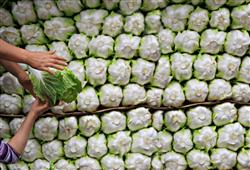 (1) Variety selection: Currently, the varieties mainly suited to spring napa cabbage cultivation are Chun Dajiang and Chun Guan.
(2) Sowing and seedling raising: Napa cabbage seedlings can undergo vernalization after 15-20 days at a low temperature of 5°C, leading to premature bolting. For open-field seedling raising, the suitable sowing time should be mid to late March, with marketing in early to mid May.
For seedling raising in a large greenhouse plus small arched tunnels, sowing should be in mid to late February, with marketing in late April. Because adding small arched tunnels inside a large greenhouse can raise the temperature during the napa cabbage seedling stage, keeping the air temperature above 5°C so that vernalization does not occur, thereby solving the problem of early bolting.
(3) Land preparation and fertilization: There is relatively more rain in spring, and topdressing is often inconvenient, so base fertilizer must be applied heavily before land preparation.
① Base fertilizer: Generally, for 667 sq m, use 5-7.5 tonnes of good decomposed farmyard manure, 100 kg of plant ash, 25 kg of superphosphate or 100 kg of high-quality ternary compound fertilizer, and 30 kg of potassium fertilizer. During plowing and harrowing, mix thoroughly with the soil.
② Bed making: The "high ridge, narrow bed" form of bed making is preferable. Its advantages are that it can deepen the plow layer, promote root development, facilitate ventilation, reduce the occurrence and damage of pests and diseases, and help with drainage.
Generally, the bed height is 25 cm, the bed width is 80-120 cm (excluding the soil trench), and 3-4 plants are planted.
(4) Reasonable close planting: For spring napa cabbage cultivation, because the time is short, close planting is appropriate, generally with row spacing × plant spacing of 35×30 cm.
(5) Field management
① Cultivation and weeding: Generally, after planting, water with clean water to settle the roots and promote seedling growth. After watering or rain, cultivate in a timely manner to prevent surface crusting, promote soil aeration, and remove weeds. At this time, cultivation should be shallow, just enough to break the surface soil with a hoe, and never injure the roots through cultivation.
② Water and fertilizer management: In spring, water management mainly involves paying attention to drainage and preventing waterlogging. Fertilizer management mainly involves applying sufficient base fertilizer, then topdressing according to seedling condition at each growth stage.
Rosette stage: Generally, topdress with 2.5 tonnes of human manure and urine plus 10 kg of urea.
Heading stage: The focus is on the early and middle heading stages. Both fertilizer applications should use quick-acting fertilizers and be applied in advance. Generally, topdress immediately when head formation begins, using 1 tonne of human and animal manure and urine plus 10-15 kg of urea per 667 sq m. Then topdress once more after the cylinder stage, combined with 20 kg of potassium fertilizer.
③ Pest and disease control: The main diseases of spring napa cabbage are soft rot and downy mildew. The main pests are cabbage caterpillars and aphids. Control can be carried out by referring to relevant pest and disease control techniques.