Key Field Management Techniques After Transplanting Dry-Raised Rice Seedlings to the Paddy Field
1. Prepare the field carefully so that the field is level and the soil is puddled, with not even a inch of water exposing the mud. 2. Fertilization principle: apply a heavy basal fertilizer and skillfully apply panicle-grain fertilizer. Apply no less than 1500 kg of farmyard manure per mu. When harrowing the field, apply phosphate and potassium fertilizers plus 70% of the nitrogen fertilizer as a one-time basal application, 20% of the nitrogen fertilizer as tillering fertilizer, and 10% as panicle fertilizer (apply 5-10 days before heading). ...
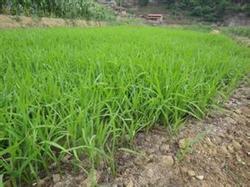
1. Prepare the field carefully so that the field is level and the soil is puddled, with not even a inch of water exposing the mud.
2. Fertilization principle: apply a heavy basal fertilizer and skillfully apply panicle-grain fertilizer. Apply no less than 1500 kg of farmyard manure per mu. When harrowing the field, apply phosphate and potassium fertilizers plus 70% of the nitrogen fertilizer as a one-time basal application, 20% of the nitrogen fertilizer as tillering fertilizer, and 10% as panicle fertilizer (apply 5-10 days before heading).
3. Insist on shallow transplanting and shallow insertion; the transplanting depth generally should not exceed 2-3 cm. At transplanting, the water layer in the field should be just barely there, and about 2 days after transplanting, irrigate to a depth of one inch, then maintain shallow-water management thereafter.
4. Transplanting spacing: Dry-raised seedlings tiller early and vigorously and have a high panicle-setting rate. They can be planted somewhat sparsely, with conventional planting of 25,000-35,000 hills, 1-2 seedlings per hill. Use double-row strip planting or single-row strip planting. However, a reasonable transplanting density should be determined according to altitude, variety, and soil fertility.
5. For dry-raised seedlings, it is best to use the method of shoveling seedlings with soil, though dry pulling can also be used. For seedbeds of poor quality, with heavy, compacted clay soil, where pulling seedlings is difficult, water thoroughly the night before pulling the seedlings.
6. Chemical weed control is the same as for film-raised seedlings. It is best to use herbicides such as butachlor, acetochlor, Tianmao, and Jindaolong; it is best not to use prometryn.
When transplanting dry-raised seedlings, one must adhere to the key technical points of "a fertile seedbed is the foundation, dry raising is the core, age-appropriate strong seedlings are the goal, level field and puddled soil and shallow transplanting are the key, and sparse planting is the guarantee." Only in this way can production efficiency be brought into play in rice production.