Key Points of Pest and Disease Control Techniques for Spring-Planted Purple Cabbage
Pest and disease control: As long as management is proper, purple cabbage generally has few diseases, so it is easy to produce pollution-free products that can be eaten raw. Purple cabbage may only suffer from seedling-stage diseases such as damping-off and downy mildew when humidity is high during the seedling stage, which can be controlled with pesticides such as Yunsheng, Dasheng, carbendazim, Xinluling, and Anke. Pests...
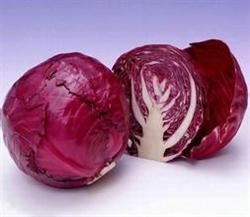
Pest and Disease Control
As long as management is proper, purple cabbage generally has few diseases, so it is easy to produce pollution-free products that can be eaten raw. Purple cabbage may only suffer from seedling-stage diseases such as damping-off and downy mildew when humidity is high during the seedling stage, which can be controlled with pesticides such as Yunsheng, Dasheng, carbendazim, Xinluling, and Anke. The main pests include aphids, diamondback moths, and cabbage caterpillars. For aphids, spray with 50% pirimicarb wettable powder at 2000-3000 times dilution or Zhenya at 1000-1500 times dilution; for cabbage caterpillars, spray with Anzhi microemulsion at 1000-1500 times dilution or Baode at 26.7-33.3 milliliters per mu; for diamondback moths, control with Chujin at 1000-1500 times dilution or Yifu at 1000 times dilution.
Timely Harvesting
Purple cabbage is extremely tolerant of storage and transport and can be harvested in batches according to its maturity. The highest yield per mu can reach 3000-4000 kilograms. When harvesting, leave 2-3 outer leaves on the plant; stored in a cool place, it can be kept for 50 days.