Detailed Explanation of Key Techniques for Spring Cabbage Cultivation
1. Timely sowing. Timely sowing is one of the important technical measures in spring cabbage cultivation. If sowing is too early, the seedlings grow larger, and continuous low temperatures in early spring cause the seedlings to pass through the vernalization stage too early, making premature bolting likely. Conversely, if sowing is too late, the maturity period is delayed, affecting economic returns. In the Hangzhou area, sowing is generally carried out in February...
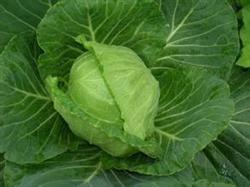
1. Timely sowing. Timely sowing is one of the important technical measures in spring cabbage cultivation. If sowing is too early, the seedlings grow larger, and continuous low temperatures in early spring cause the seedlings to pass through the vernalization stage too early, making premature bolting likely. Conversely, if sowing is too late, the maturity period is delayed, affecting economic returns. In the Hangzhou area, sowing and seedling raising under protected conditions are generally carried out from mid-to-late February to mid-March, with dry seeds broadcast-sown. Before sowing, water the seedbed thoroughly; after sowing, cover with fine soil about 1 cm thick. The sowing rate is about 25 g of seeds per mu of field.
2. Seedling stage management. To cultivate strong seedlings, temperature management during the seedling stage is very important. After sowing, the daytime temperature should be controlled at 20-25°C and the nighttime temperature at around 10°C. If low temperatures occur, straw curtains need to be covered at night. After the seedlings emerge completely, the temperature can be lowered appropriately, and ventilation should be carried out promptly whether it is sunny or rainy. After emergence, promptly carry out disease and pest control: spray Haizheng Miechongling to control diamondback moth, and spray Lüheng No. 1 to prevent cabbage damping-off. The standards for strong seedlings are dark green leaf color, thick and large leaves, thick stems, short internodes, well-developed root systems, and seedlings free of disease spots.
3. Transplanting. According to the climatic conditions in the Hangzhou area, transplanting to the field is generally carried out in early-to-mid April when the seedlings have 6-7 leaves. Apply sufficient base fertilizer 10 days before transplanting, generally applying 75 kg of N-P-K compound fertilizer and 35 kg of phosphate fertilizer per mu. After fertilizing, combine with ditching and bed preparation and cover with soil. The bed width including ditches is 1.2 m, the planting spacing is 40 x 50 cm, and 3000-3200 plants are maintained per mu.
4. Field management. Water promptly after transplanting to improve seedling survival rate. During the growth period, clean ditches and drain water to maintain good root development. Promptly spray Haizheng Miechongling to prevent damage from cabbage caterpillars. During the rosette stage, topdress promptly to promote rapid enlargement of the head. Stop fertilizing 1 month after the rosette stage.
5. Harvesting. Harvesting is generally carried out in early-to-mid June, when the head has fully grown and is firm, and the head weight reaches 1.5-2 kg. It can also be delayed according to market conditions if vegetable prices are relatively low at that time.