Detailed Explanation of Key Techniques for Corn Smut Prevention and Control
Corn smut, called "grey packet" by farmers. It can occur at all growth stages of corn, damaging the tassel, ear, as well as stems and leaves. Symptom identification: symptoms gradually become obvious around tasseling. Tumors of varying sizes grow on the affected parts; the tumors are initially white or reddish-purple, later turning grey, and after rupturing they release black powder. Affected...
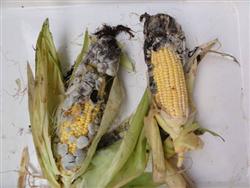
Corn smut, called "grey packet" by farmers. It can occur at all growth stages of corn, damaging the tassel, ear, as well as stems and leaves. Symptom identification: symptoms gradually become obvious around tasseling. Tumors of varying sizes grow on the affected parts; the tumors are initially white or reddish-purple, later turning grey, and after rupturing they release black powder. The diseased male flowers and glumes often proliferate and elongate into leaf-like forms. The difference between this disease and head smut is that head smut only damages the ear and does not produce disease tumors, leaving thread-like residual filaments; while smut can damage all parts of the corn plant and produces disease tumors, with no residual filaments.
Control measures
1. Select disease-resistant varieties. Selecting disease-resistant varieties is the most economical and effective control method. The main disease-resistant varieties currently promoted include: Nongda 60, Xingkang No. 2, etc.
2. Eliminate sources of infection. When disease tumors are found, cut them off early and bury them deep or burn them. After harvest, thoroughly remove residual plants and fallen leaves from the field to reduce overwintering inoculum in the soil. For heavily affected fields, continuous cropping should be avoided as much as possible.
3. Seed dressing for prevention. Use 200 g of 25% triadimefon per 100 jin of seed; or 0.25 kg of 50% carbendazim powder. When dressing seeds, first wipe the seeds moist with a wet towel, then mix in the medicine. Sow immediately after dressing.
4. Pay attention to farming operations and reduce wounds. Timely control corn borers and other pests. During field operations, avoid injuring plants as much as possible.
5. Timely pull out diseased plants. The symptoms of this disease at the seedling stage are often not obvious. Careful observation is needed to find them. Usually the earliest disease tumors appearing in the field are at the stem base of seedlings at the 3-5 leaf stage; at this time the corn plant height is 30 cm. Seedling-stage symptoms include twisted and deformed stems and leaves, stunting, and ruptured and disordered leaf sheaths and central leaves. After pulling up the plant, disease tumors can be seen at the stem base or at the junction of the stem and root; in severe cases the diseased plant dies. Combine timely thinning, final thinning, intertillage, and weeding to thoroughly pull out diseased seedlings and suspicious seedlings.
6. After jointing, focus on cutting off tumors. After jointing, as leaf age increases, symptoms become more obvious. Disease tumors should be cut off promptly.