How to cultivate corn? A detailed explanation of the key points of planting techniques
I. Land selection 1. For irrigated corn, choose plots with flat terrain, good structure, good air permeability, and relatively high soil fertility. 2. For film-mulched corn, you may choose dry flat land with medium or higher fertility, land at the foot of hills, level terraced fields, shaded land, mildly saline-alkaline low wetland, high-cold open meadow, and single-water land. Never choose steep slopes...
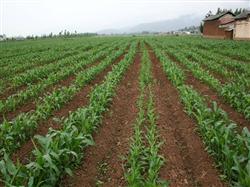
I. Land selection
1. For irrigated corn, choose plots with flat terrain, good structure, good air permeability, and relatively high soil fertility.
2. For film-mulched corn, you may choose dry flat land with medium or higher fertility, land at the foot of hills, level terraced fields, shaded land, mildly saline-alkaline low wetland, high-cold open meadow, and single-water land. Never choose steep slopes, waterlogged lowland, heavily saline-alkaline land, or wind-exposed land.
II. Land preparation and application of base fertilizer
Where conditions permit, autumn fertilization, autumn plowing, and autumn-winter water collection should be carried out. Combined with autumn plowing of the previous crop, apply 2000-2500 kg of farmyard manure per mu, then harrow and level promptly after plowing, and pick out roots and stubble clean, so that the land is level, the soil is fine, and there is no trash or stubble.
III. Variety selection and seed treatment
1. Select seeds with good yield potential, strong stress resistance, high purity, strong germination vigor, and a germination rate above 90%.
Irrigated corn: in areas with effective accumulated temperature of 2700-3100°C, mainly select varieties such as Shuoqiu 5, Shuoqiu 8, Denghai 9, Zhengdan 958, and Shi 117; in areas with effective accumulated temperature of 2300-2700°C, mainly select varieties such as Shi 117 and Sidan 19.
Film-mulched corn: in areas with effective accumulated temperature of 2900-3100°C, select varieties such as Shuoqiu 8, Denghai 9, and Shenshi 29; in areas with effective accumulated temperature of 2700-2900°C, select varieties such as Shuoqiu 5 and Shuoqiu 8; in areas with effective accumulated temperature of 2500-2700°C, select varieties such as Shi 117 and Shuoqiu 5; in areas with effective accumulated temperature of 2300-2500°C, select varieties such as Sidan 19 and Shi 117; in areas with effective accumulated temperature below 2300°C, select varieties such as Jichengdan 3, Shuoqiu 2, and Shuoqiu 3.
2. Purchase coated seeds. Seeds that have not been coated should be carefully selected, sun-dried, and subjected to a germination test, so that the seeds are free of impurities and inferior seeds and are plump. Before sowing, use 40% seed dressing dual (or metalaxyl) at 0.3% of seed weight to dress seeds and control smut; use 100 g of 50% methamidophos emulsifiable concentrate mixed with 5 kg of water to dress 50 kg of seeds, then pile and cover the seeds for 3-4 hours to control underground pests such as mole crickets, grubs, and wireworms.
IV. Sowing
Sowing time: irrigated corn is sown from April 20 to early May; film-mulched corn is sown 7-10 days earlier than local open-field corn.
Sowing rate: the sowing rate per mu is 3-3.5 kg
Seed fertilizer application: apply 20-25 kg of corn-specific compound fertilizer and 1-2 kg of zinc sulfate per mu; or apply 12-15 kg of diammonium phosphate, 3-5 kg of urea, 5-7 kg of potassium chloride or potassium sulfate, and 1-2 kg of zinc sulfate per mu.
Sowing methods
Irrigated corn: for flat-type corn, plant spacing and row spacing are 30-33 x 50 cm, with 4000-4500 plants per mu; for compact-type corn, plant spacing and row spacing are 27-30 x 50 cm, with 4500-5000 plants per mu;
Film-mulched corn: for flat-type corn, large ridges are 80 cm, small ridges are 40 cm, plant spacing is 30 cm, and about 3700 plants per mu are retained; for compact-type corn, large ridges are 70 cm, small ridges are 30 cm, plant spacing is 30 cm, and about 4000 plants per mu are retained.
After sowing, apply 200-250 mL of 48% Lasso emulsifiable concentrate per mu mixed with 30-40 kg of water, or 100-150 mL of 50% acetochlor emulsifiable concentrate mixed with 30-40 kg of water, and spray evenly on the soil surface. For film-mulched corn, apply the film immediately after spraying.
V. Field management
1. Seedling stage
Irrigated corn: thin and finalize seedlings and cultivate and weed in a timely manner. Thin seedlings at 3-4 leaves and finalize seedlings at 5-6 leaves, and combine thinning and finalizing seedlings with cultivation and weeding. At 6-7 leaves (before jointing), apply jointing fertilizer; combine with ridging and apply 10-12 kg of urea per mu, then water.
Film-mulched corn: when 50% of seedlings emerge in the field, release seedlings in stages and batches before 10 a.m. and after 4 p.m., and promptly seal the openings with moist soil. Finalize seedlings at 4-5 leaves, apply 10-12 kg/mu of jointing fertilizer at 6-7 leaves, make holes 15 cm deep between every four plants for fertilizer application, and cover with soil.
2. Large flare stage
Topdressing: when corn grows to 13-14 leaves, carry out the second topdressing, applying 20 kg of urea per mu. For irrigated land, dig 10 cm deep between two corn plants or on both sides of the corn for fertilizer application, cover with soil, and water in due course. For film-mulched corn, dig 10 cm deep holes outside the film for fertilizer application.
Control of armyworms and corn borers: scatter phorate granules into the flare, 7-8 granules per plant, with a dosage of 1-1.5 kg per mu.
Removing the plastic film: for film-mulched corn, at the canopy closure stage, in order to allow the film-mulched corn to receive more rainwater and promote later growth, remove the plastic film in a timely manner, generally in mid-to-late July.
3. Late-stage management. During the grain-filling stage of corn, water appropriately according to rainfall conditions. Entering the dough stage, carry out standing-stalk husk peeling and sun-drying to reduce moisture. Also harvest appropriately late to promote plump grains and increase grain weight.