How to grow Chinese quince? Detailed explanation of cultivation techniques
Chinese quince (Pseudocydonia sinensis) is a deciduous shrub or small tree of the Rosaceae family, also known as iron-foot pear, quince tu, etc. It enjoys the reputation of "fruit of a hundred benefits" and can be used to produce more than 200 varieties across eight categories, including beverages, foods, health products, medicines, cosmetics, drinks and pigments. In recent years, Guizhou Province has gradually strengthened industrial restructuring, vigorously developing the "green...
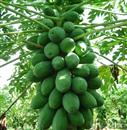
Chinese quince (Pseudocydonia sinensis) is a deciduous shrub or small tree of the Rosaceae family, also known as iron-foot pear, quince tu, etc. It enjoys the reputation of "fruit of a hundred benefits" and can be used to produce more than 200 varieties across eight categories, including beverages, foods, health products, medicines, cosmetics, drinks and pigments. In recent years, Guizhou Province has gradually strengthened industrial restructuring, vigorously developing the "green industry" and "ecological agriculture" economy. As an economic fruit tree, Chinese quince can not only create high economic benefits, but also play a very important role in returning farmland to forest, controlling soil erosion and protecting the ecological environment. Therefore, the cultivation area of Chinese quince has been increasing year by year. However, due to non-standard cultivation and extensive management, with the plants left to fend for themselves, yields are low, quality is poor and economic benefits are low. In order to achieve high yields of Chinese quince, scientific cultivation techniques must be adopted.
(1) Raising seedlings
Chinese quince seedlings are generally raised by cuttings. In late winter and early spring, select a plot with fertile soil, loose and deep soil layers, a sunny aspect and convenient irrigation and drainage for the seedbed, and make standard beds of 1.5-2 x 3-5 m. About 10 days before cutting, apply 10 kg of decomposed manure per standard bed and level it finely. Select vigorous, high-yielding branches from young seedling trees of Chinese quince as cuttings. Insert the cuttings at a spacing of 15 cm x 15 cm between plants and rows. The cuttings are 33-66 cm long. After inserting, water thoroughly and cover the rows with rice straw.
A one-step orchard establishment method can also be used: before Chinese quince buds, take cuttings directly and insert them into the cultivation plot, without going through seedbed cultivation. The specific operation steps follow the planting method below. The branches used in the above two methods can be treated with agents such as 2,4-D, IBA or potassium permanganate.
(2) Site selection and planting
Chinese quince has strong adaptability and is not demanding about soil; it can grow in ordinary soil. However, it is best cultivated in loose, fertile, well-drained slightly acidic to neutral sandy loam and loam. It is also suitable for planting on barren hills and in courtyards, and prefers a sunny, warm and humid soil environment. Plant after the weather warms up in early spring. Generally, plant 80-110 plants per mu, with a spacing of 2 m x 3-4 m between plants and rows. Dig holes of 0.7 m x 0.7 m x 0.7 m, apply 10-15 kg of organic fertilizer per hole, fill with a layer of soil, then apply 1-2 kg of special compound fertilizer for Chinese quince and backfill with soil. After about half a month, transplant or insert cuttings at one plant per hole, and water thoroughly after planting.
(3) Field management
1. Fertilization (1) Fertilization rate: in the first year after transplanting, apply 0.5-1.5 kg of manure water per plant according to seedling conditions. Adult trees are given 10-15 kg of farmyard manure per plant per year and 2-5 kg of special fertilizer for Chinese quince. (2) Fertilization periods are generally divided into three. The first, base fertilizer, accounts for 50% of the total annual application and is applied in late autumn and early winter. The second is applied before flowering, accounting for 30% of the total annual application. The third is applied in the late fruit growth stage, accounting for 20% of the total annual application. (3) Fertilization methods: generally, dig a ring-shaped trench 33-66 cm from the fruit tree, apply the fertilizer into the trench and cover with soil. Foliar fertilizers such as boron fertilizer, foliar treasure and urea can also be sprayed on the leaves in the late flowering stage and the fruit swelling stage.
2. Training and pruning If Chinese quince is not trained and pruned, the tree can reach 10 m in height and grow into a shrub form, which is unfavorable for management and fruit harvesting. (1) Training: the trunk height is 40-80 cm, and a central leader is retained. There are two types: upright and curved. Large, medium and small branch groups are directly developed on the central leader. Tree height can be controlled at about 2.5 m, with a crown diameter of about 2 m. (2) Pruning: starting from the fruiting stage of young trees, appropriate heavy pruning should be carried out to remove basal suckers, dead branches, diseased and pest-infested branches, central branches, weak branches, aging branches, branches growing across the inner canopy, and water sprouts. In order to ensure a certain amount of growth each year and maintain vigorous growth, the principle of renewing before decline should be followed. Use vigorous vegetative branches to renew the crown, stabilize the framework and maintain the growth advantage of the scaffold branches.
3. Intertillage and weeding In Chinese quince cultivation plots, short-statured crops such as vegetables, green manure and tuber crops can be intercropped. Weeding and turning the soil are carried out in combination with planting crops and fertilization, with the soil turned 1-2 times per year.
4. Pest and disease control Chinese quince has extremely strong resistance to pests and diseases; as long as pruning and rational fertilization are strengthened, problems generally do not occur easily. Common diseases include leaf blight, bark blight and stem rot. Leaf blight and stem rot can be controlled by spraying 1:2:200 Bordeaux mixture; for bark blight, scrape off the diseased part forcefully and fumigate with sulfur or apply lime-sulfur mixture. Pests include longhorn beetles and aphids, which can all be controlled with insecticides such as omethoate.
In short, by adopting the above cultivation methods, the annual yield of Chinese quince is stable, with no distinction between on-years and off-years. The annual yield per mu can reach as high as 2000-4000 kg, and the quality and appearance of the fruit are improved; at the same time, the stress resistance and pest and disease resistance of Chinese quince can be enhanced.