Detailed Explanation of Key Asparagus Management Techniques for Summer and Autumn
Asparagus is one of the high-efficiency cash crops, and a single planting can be harvested for more than 10 years. The annual yield per mu generally reaches 2,300 kg, and the output value per mu reaches 10,000 yuan. The key to its high-yield cultivation and management lies in the following aspects: 1. Cultivating strong seedlings. To achieve high yield of asparagus, in addition to selecting excellent varieties, it is also necessary to establish a nursery plot for...
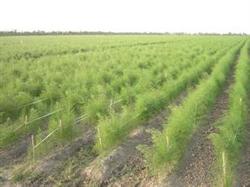 Asparagus is a perennial vegetable. One planting can be harvested continuously for 10 to 15 years, and from the beginning of seedling raising, it enters the normal yield harvest period in the third year. In the subsequent harvest years, the annual yield level and the quality of asparagus mainly depend on whether the field management technical measures are scientific and reasonable and on the level of management. The growth of asparagus and the harvest of the product differ from other vegetables. The annual product harvest period is from April to June, which is determined by the year-round growth characteristics of asparagus and the processing time of the processing plant. After the product harvest period, the newly emerging spears develop into aboveground stems and begin vegetative growth, accumulating nutrients and laying the foundation for next year's yield. In winter, the aboveground plants dry up, and the underground root mass overwinters in the open field. Therefore, the summer and autumn after the completion of spear harvesting each year are the key period for field management. During this period, cultivating robust plants, strengthening water and fertilizer management, controlling diseases and insect pests, promoting photosynthesis, and accumulating nutrients are the main management objectives.
1. Management during the spear harvesting period. Harvest asparagus in a timely manner, once in the morning and once in the afternoon each day. Asparagus that has grown to the height meeting processing requirements should be cut regardless of thickness. If not cut off, substandard thin spears will continue to grow and branch, consuming a large amount of nutrients and affecting the quality and quantity of later spear emergence. Before starting to harvest spears, water appropriately. In the middle of the spear harvesting period, additional topdressing can be applied appropriately according to growth conditions. This can improve asparagus quality and prolong the spear harvesting period.
2. Management after the end of spear harvesting. Remove all young stems on the ground. For plots harvesting white asparagus, apply organic fertilizer and phosphate fertilizer in the furrows, then level the ridges and smooth the ground. For harvesting green asparagus, open furrows for fertilization, with the furrow position 20 cm away from the asparagus ridge. Then water thoroughly once.
3. Vegetative growth period management. This period is the key stage of vegetative growth management. During this period, the growth of asparagus determines next year's yield. Topdressing is applied in two stages, once in late July and once in early August. The first application is about 20 kg per mu, and the second is 25 kg to 30 kg, mainly nitrogen fertilizer, combined with potassium fertilizer. The amount of topdressing can be adjusted appropriately according to growth conditions and soil fertility. The topdressing method is still furrow application, and watering should be done in a timely manner; drought must not occur. Entering August, if the number of stems per plant is too large, thin and weak stems can be removed, and 8 to 10 robust stems per plant can be retained, maintaining good ventilation and light transmission, which is beneficial to photosynthesis and disease control.
4. Management during the overwintering period. After the aboveground stems dry up in winter, remove them in a timely manner and burn them in a centralized manner, or crush them for feed. Generally, do not wait until the next spring to clean them up, otherwise conditions will be created for diseases and insect pests to overwinter, which is not conducive to their control. If this continues year after year, it will cause outbreaks of diseases and insect pests and cause serious losses. In addition, water once for overwintering before the surface freezes.
5. Disease and insect pest control. Although there are many asparagus diseases and insect pests, in recent years the main ones causing losses in asparagus production areas and giving producers headaches are stem blight and the fourteen-spotted leaf beetle. Stem blight is the main disease of asparagus and occurs all over the world. Stem blight mainly occurs in summer and early autumn, which is also the period of vigorous growth of asparagus. On diseased plants, spindle-shaped brown spots appear on the stems near the ground. In severe cases, they merge into patches and encircle the stem. The lesions can invade the xylem of the stem, and the clustered leaves at the stem tip dry up, causing plant death. For control, jingkuijing can be used. At the initial stage, apply it to the diseased parts of the plants. During an epidemic, spray continuously 3 times with an interval of 5 days. In addition, at the end of spear harvesting and during overwintering, pour medicinal solution into the root soil, no less than 250 g of medicinal solution per plant each time. The fourteen-spotted leaf beetle is the name used in general literature, and related research reports are rare. According to observation, the adult is yellow, with small spots on its back, a hard shell, can fly, and has a feigning-death habit; after being disturbed on the plant, the adult falls to the ground, does not move or fly, and then climbs back onto the plant to feed. The damaged parts are the tender tips of asparagus, the scales at the spear tips, and the epidermis of young branches. At the initial occurrence, most are larvae without hard shells; no larvae have been found, and it may be incomplete metamorphosis. For control, spray pesticide early, and during an epidemic, use medication continuously. Because it mostly overwinters in the soil of plant holes, medicinal solution can be used to irrigate the roots after clearing the field in winter and after the end of spear harvesting for prevention.