Detailed Explanation of Key Points for High-Yield Asparagus Cultivation Techniques
Asparagus seeds form a rhizome plate within two to three years after sowing. In spring, many tender spears emerge from the upper part of the rhizome plate, and these are the asparagus commonly eaten. It has a long lifespan, generally reaching 14-18 years. After sowing and planting, it can be harvested in the second year. An excellent F1 hybrid asparagus variety can yield 150 kg-2... of fresh green asparagus in the second year.
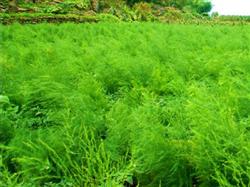
Asparagus seeds form a rhizome plate within two to three years after sowing. In spring, many tender spears emerge from the upper part of the rhizome plate, and these are the asparagus commonly eaten. It has a long lifespan, generally reaching 14-18 years. After sowing and planting, it can be harvested in the second year. An excellent F1 hybrid asparagus variety can yield 150 kg-200 kg of fresh green asparagus per mu in the second year. In the third and fourth years, the fresh asparagus yield can reach 600 kg-1000 kg per mu.
Asparagus is a crop suitable for cultivation under temperate climate conditions with cold winters and warm summers. To meet the dual requirements of air permeability and water retention, growing asparagus in humus loam or sandy loam is most ideal. Asparagus is relatively sensitive to soil acidity and alkalinity, and the most suitable soil pH (acidity and alkalinity) is between 5.8-6.7. During the dormant period, its underground parts can endure low temperatures of -38°C, so its roots can safely overwinter under freezing conditions with a frozen soil layer of 1.5 m. The most suitable temperature for asparagus seed germination is 25°C-30°C. Under such temperature variation, the tender spears harvested are mostly thick and tender, with the scales at the spear tips tightly wrapped, good in form, and of the best quality.
The underground fleshy roots of asparagus can store a relatively large amount of water and can self-regulate according to the amount of water in the soil. The modified needle-like stems of asparagus resemble needles, greatly reducing evaporation, so asparagus is relatively drought-tolerant. However, timely watering is also a necessary condition for high-yield asparagus. Asparagus is a light-loving crop and requires sufficient sunlight at the planting site, so asparagus can only grow vigorously when cultivated on open land without shade.