How to reduce hollow tomatoes? Key points of control techniques
Hollow tomatoes refer to tomatoes that develop gaps between the flesh and the seed cavity. Mildly hollow tomatoes still have relatively low market value, while severely hollow ones have no market value. Therefore, reducing the occurrence of hollow tomatoes should draw the attention of vegetable growers. Seedlings whose flower buds drop easily generally have poorer root development and fewer roots...
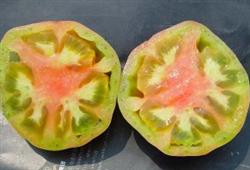
Hollow tomatoes refer to tomatoes that develop gaps between the flesh and the seed cavity. Mildly hollow tomatoes still have relatively low market value, while severely hollow ones have no market value. Therefore, reducing the occurrence of hollow tomatoes should draw the attention of vegetable growers.
Seedlings whose flower buds drop easily generally have poorer root development and fewer roots, and weaker assimilation; using growth hormones to promote fruit set makes hollow fruit likely to occur. If the number of set fruits is reduced, the occurrence of hollow fruit will decrease.
Even if a plant has good flower buds, injury during transplanting can form aged seedlings; after field planting, the root system develops poorly, which easily causes leaf aging and weakens assimilation. According to the plant's growth vigor, setting fruit proportionally, promoting slow fruit enlargement, and supplying sufficient nutrients can reduce the occurrence of hollow fruit.
When the leaf area is small, if the first truss sets a large amount of fruit, the fruit at the bottom of the plant has its required assimilates supplied by the whole plant, so hollow fruit is less common. But the upper fruits receive less assimilate, and hollow fruit will form. When assimilates are insufficient, the fruit cannot enlarge well, and when nutrients are extremely low, fruit cannot set at all. According to different environmental conditions, part of the fruit can be removed to increase the relative leaf area, so as to increase assimilates and prevent the appearance of hollow fruit.
In the same truss, if the flowering time from the first flower to the sixth flower is not concentrated, it will cause competition for assimilates among the fruits, and fruits that flower late will form hollow fruit. Therefore, on the same truss, 3 to 4 flowers that bloom at the same time should be treated together with growth stimulants.
When there is a lot of nitrogen fertilizer in the soil, a lot of moisture, and high nighttime temperatures, the flowering dates tend to be uneven. On the contrary, when the soil is slightly dry and the nighttime temperature is low, flowering is more uniform. When nighttime temperatures are high, especially after nitrogen fertilizer is applied and water is given, most assimilates are allocated to the plant, while very little is allocated to the fruit. In this case, pinching is necessary.
In addition, plant growth regulators should be used sparingly to promote fruit set, with artificial pollination as the main method and growth regulators as a supplement. While ensuring a certain number of set fruits, reduce the number of times growth regulators are used and reduce the amount of growth regulators entering the plant body; it is best not to use high-concentration growth regulators to treat immature flowers.