Detailed Explanation of Cultivation Techniques and Comprehensive Utilization Methods of Wild Lettuce
Wild lettuce, also known as mountain lettuce, bitter chicory, and duck feed, is a herbaceous plant of the Asteraceae family, growing by roadsides, in wilderness, and on hillsides. Its seedlings and tender stems and leaves are suitable for eating, and it is a wild vegetable with development value. 1 Botanical characteristics and biological traits: A biennial herbaceous plant, with white milky sap, 80-150 cm tall. Stem erect,...
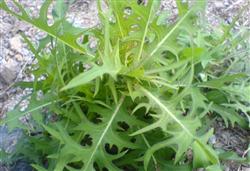
Wild lettuce, also known as mountain lettuce, bitter chicory, and duck feed, is a herbaceous plant of the Asteraceae family, growing by roadsides, in wilderness, and on hillsides. Its seedlings and tender stems and leaves are suitable for eating, and it is a wild vegetable with development value.
1 Botanical characteristics and biological traits: A biennial herbaceous plant, with white milky sap, 80-150 cm tall. Stem erect, usually hairless, single or branched above. Leaves sessile, base slightly clasping the stem, leaf blades lanceolate, linear-lanceolate to linear, hairless or slightly hairy on the midvein on the underside, undivided to pinnately or inversely pinnately parted or deeply lobed, lobe margins with incised or serrate prickles, lower leaves withering at flowering time. Capitula pale yellow or whitish, opening at noon, closing at night, arranged in a panicle; outer phyllaries ovate, inner ones oblong, obtuse. Achenes flat, dark brown, apex beak about 0.7 mm long, with only one distinct longitudinal rib in the middle; pappus white. Flowering and fruiting period July to October. Wild lettuce prefers warmth, is drought-tolerant, and dislikes waterlogging; it grows well in fertile plots with suitable moisture.
2 Cultivation techniques
2.1 Protected cultivation
2.1.1 Land preparation and fertilization: Make beds in the cultivation plot, apply about 10 cm of decomposed organic fertilizer to the surface soil in the beds, deep plow 25 cm, and rake level.
2.1.2 Greenhouse seedling raising: Mix seedling soil with 4 parts field soil, 4 parts decomposed organic fertilizer, 1.5 parts peat, and 0.5 part river sand, sift, put into seedling trays, press down the surroundings, then scrape level with a wooden strip so that the soil surface is 1-2 cm below the tray rim, broadcast sow, with spacing of about 0.5 cm, cover with 1 cm of soil, water thoroughly after sowing, cover with plastic film, keep the temperature at 25-30°C, and open the plastic film for ventilation after leaf tips emerge from the soil. When seedlings are 2 cm tall, transplant and set out; control water 2-3 days before transplanting. When transplanting, make 2 cm deep holes in the bed, with spacing of 4 cm, place the small seedlings in, firm the soil, water thoroughly, shade appropriately, and remove the shade net after the seedlings recover.
2.2 Open-field cultivation
2.2.1 Site selection: Choose fertile, moist, loose, sandy loam with high organic matter content and sunny exposure for sowing. Before sowing, plow the soil, apply organic fertilizer, make it fine and rake level; make beds, and sow in rows, in hills, or by broadcasting. Hill sowing and row sowing are better, as they are convenient for management and help achieve high yield.
2.2.2 Sowing: First soak the seeds in 50°C water, stir for 30 minutes, drain the water, wrap well in clean gauze, and germinate at 30°C, rinsing with clean water 2-3 times a day. After germination, sow directly, 1-2 seeds per hole, cover with 1-2 cm of soil, press lightly, cover with plastic film to retain moisture and warmth and favor seed growth, and remove the plastic film after the seedlings emerge.
2.3 Harvest and management: Wild lettuce can be harvested and marketed in a timely manner according to market demand. Harvesting can be done by stripping leaves or by cutting. For small-area planting, leaves can be stripped for use, that is, only the large leaves are stripped and the small inner leaves are left to continue growing. For large-area planting, cutting is mostly used; timely harvesting gives good palatability and also favors regrowth, and can also improve yield and quality. After each cutting, apply fertilizer once, and carry out intertillage and weeding well to increase yield. The last cutting should be close to the ground to avoid water accumulation and root rot, which would be unfavorable for next year's production.
3 Nutritional composition and utilization: Every 100 g of fresh wild lettuce contains 4.88 mg carotene, 0.63 mg VB2, 29 mg VC, 2.25 g crude protein, 0.74 g crude fat, 2.62 g crude fiber, 0.7 g calcium, and 0.3 g phosphorus.
3.1 Edible use: Wash the tender seedlings and tender stems and leaves, and eat them raw dipped in sweet sauce; or blanch them in boiling water, rinse slightly, and then dress them as a salad, stir-fry them, or use them as filling, or mix them into dough and steam, or dry them in the sun for eating during the vegetable off-season.
3.2 Medicinal use: The whole plant is used as medicine; it is cold in nature and bitter in taste, and has the effects of clearing heat and detoxifying, invigorating blood and removing stasis, and strengthening the stomach. It can treat appendicitis, tonsillitis, sores and boils with swelling and toxin, indigestion from retained food, and postpartum blood stasis.
① Appendicitis, tonsillitis, cervicitis, postpartum blood stasis, abnormal uterine bleeding, and bleeding hemorrhoids: wild lettuce 9-15 g, decocted in water.
② Sores and boils with swelling and toxin: mash fresh wild lettuce and apply to the affected area.