-
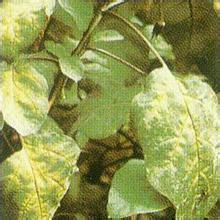
Identification and Remedial Measures for Nutrient Deficiency Symptoms in Eggplant
During the growth and development of eggplant, once a certain element is deficient, the plant's external morphology generally shows corresponding deficiency symptoms, and in production this is mostly used as the basis for diagnosing nutrient deficiencies. Nitrogen deficiency: when eggplant lacks nitrogen, the leaf color becomes pale, old leaves turn yellow, and in severe cases they dry up and fall off, flower buds stop developing and turn yellow, and the heart...
-
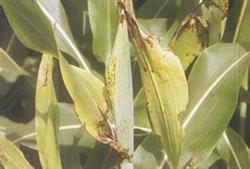
Symptom Identification and Control Methods of Sorghum Leaf Spot
Symptoms Also called spot disease. All parts of the whole plant can be affected, mainly damaging the leaves. The lesions are irregular in shape, long to spindle-shaped or semicircular, varying in size, can reach about 1cm or more, yellow-brown to gray-brown, with red-purple edges. The lesions often start from the leaf margin or leaf tip, and some also occur on the leaf surface or the upper part of the panicle...
-
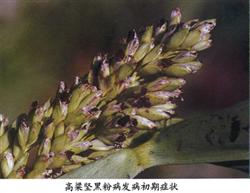
Symptom Identification and Control Methods for Sorghum Head Smut
Symptoms The diseased plants are shorter than healthy plants. In the early stage of the disease, the ear sheath of the diseased ear is very tight, the lower part is swollen, and the flag leaf is upright; when peeled open, a white rod-shaped structure can be seen inside, namely the smut gall. The smut gall inside the sheath is initially small and finger-shaped, gradually grows larger, and later the middle part swells into a cylindrical shape and becomes relatively hard. During the development of the smut gall, the internal tissue changes from white to black, then...
-
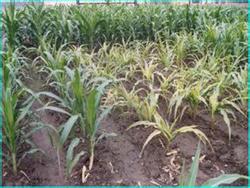
Symptom Identification and Control Methods for Sorghum Downy Mildew
Sorghum seedling blight - Symptoms: The disease can occur when sorghum grows to 4-5 leaves. It starts from the lower leaves and then spreads upward. Infected leaves develop purplish-red streaks that gradually merge, causing the leaves to gradually die from the tip, and the seeds turn very brown. Sorghum seedling blight - Pathogen: Known as Fusarium moniliforme, a fungus belonging to the subphylum Deuteromycotina. On PDA medium...
-
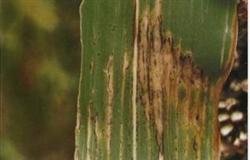
Symptom Identification and Control Methods of Sorghum Black Bundle Disease
Symptoms Sorghum black bundle disease is a vascular bundle disease, also known as tracheomycotic blackening disease. When symptoms appear on leaves, brown streaks form on the leaf veins, mostly presenting as large necrotic spots along one or both sides of the main vein, causing the leaves and leaf sheaths to turn purple or brown; in severe cases the leaves dry up, the stalks become slightly thicker, and branching occurs on the upper part of diseased plants. Cross-sectioning the diseased stalk...
-
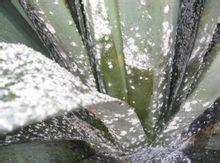
Identification and Control Methods for Pineapple Mealybugs
Pineapple mealybugs belong to the order Homoptera, family Pseudococcidae. Dysmicoccus brevipes is the most commonly seen species. The damage symptoms are caused by adults and nymphs feeding on the sap of pineapple rhizomes, leaves, fruits and seedlings. Affected leaves first show symptoms starting from the lower part, gradually fading upward to yellow and finally turning red-purple; in severe cases all leaves soften and droop...
-
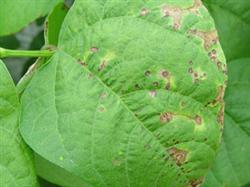
Symptom Identification and Control Methods for Kidney Bean Leaf Spot Disease
It mainly affects the leaves. The leaf spots are round or nearly round, mostly occurring at the leaf tip or leaf margin, with brown edges and a light brown to grayish-brown center; when humid, small black dots are scattered or arranged in concentric rings on the spots. Control methods: strengthen management inside the greenhouse (such as frequently applying foliar fertilizer such as Fengshou No. 1), especially controlling air humidity. Then there is chemical control, ...
-
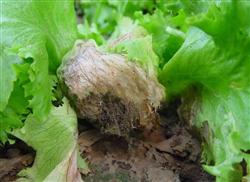
Symptom Identification and Control Techniques for Lettuce Gray Mold
A reader from Jiangsu asks: what are the symptoms and control methods of lettuce gray mold? Answer: Lettuce gray mold mainly damages leaves and stems, and infection can occur from the seedling stage to the mature plant stage. Infection at the seedling stage. Leaves and young stems show water-soaked rot, with gray mold growing on the diseased parts. Leaf infection. It starts from the mature leaves near the ground...
-
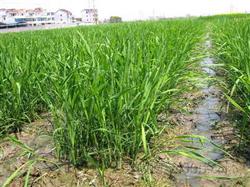
Key Technical Points for Seed Selection and Purification-Rejuvenation of Water Bamboo (Zizania latifolia)
When selecting seeds for planting water bamboo, the "three selections" are generally carried out, namely primary selection, re-selection and fine selection. Six to seven days before the autumn water bamboo harvest, the primary selection is carried out. The method is to select plants with medium height, large fleshy stems, flat stalks, long leaf sheaths, and uniform, neat growth, matching the variety's characteristics, as seed plants. During the water bamboo harvest period, the re-selected plants are those from which gray water bamboo and male...
-
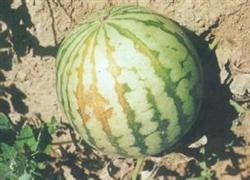
Symptom Identification and Spring Control of Watermelon Fruit Flesh Deterioration
Symptoms: When watermelon fruits are exposed to the scorching sun, the fruit surface temperature becomes very high, and the fruit tissue is scorched and necrosed, forming a dry scar. Cause: Sunburn is related to variety; varieties with dark rind color are prone to it. Secondly, in hilly areas where the soil is relatively poor, the plants have weak vegetative growth and few vines and leaves, and the disease occurs frequently when the fruits are exposed...
条件筛选