-
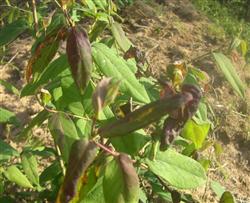
Identification of Symptoms and Control Methods for Honeysuckle Brown Spot Disease
What is honeysuckle brown spot disease? How is it controlled? An introduction to honeysuckle brown spot disease is given below: 1. Damage symptoms: This disease mainly damages the leaves. In the early stage of the disease, small yellowish-brown spots appear on the leaves. Later, several small spots merge together, forming round lesions or angular lesions limited by the leaf veins. When humid, the underside of the leaves also bears...
-
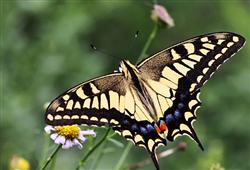
Identification and control methods of Angelica sclerotinia disease
What is the Angelica yellow swallowtail butterfly? Please introduce the Angelica yellow swallowtail butterfly, also known as the fennel swallowtail, belonging to the order Lepidoptera, family Papilionidae. 1. Damage situation: the larvae cause damage, feeding on leaves at night, causing notches, and in severe cases eating the leaves completely, leaving only the petioles and veins, and also feeding on flowers and fruits. This insect has a large appetite, seriously affecting the growth of Angelica, ...
-
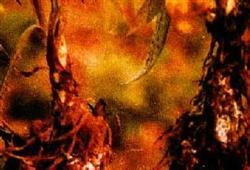
Identification and Control Techniques for Diseases and Pests of Atractylodes macrocephala
Southern blight: Also known as "white sugar rot", it damages the rhizome of Atractylodes macrocephala, with no obvious symptoms on the aboveground parts in the early stage of the disease. Later, as temperature and humidity rise, the mycelium penetrates through the soil surface, and white mycelium densely covers the rhizome and the surrounding soil surface. The top shoots of the affected plants wilt, droop, and eventually the entire plant dies. Disease characteristics: soil and planting material are...
-
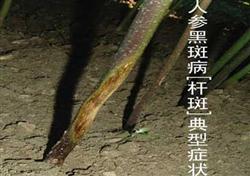
Identification Methods and Control Measures for Ginseng Diseases
Ginseng damping-off disease 1. Symptoms. Caused by infection with Rhizoctonia solani and Fusarium species. It prevents young seedlings from emerging, or after emergence attacks the stem of the seedling at the boundary between dry and moist soil 3-5 cm below the soil surface. The affected part is light yellowish-brown, gradually turning dark yellowish-brown, forming sunken elongated lesions that penetrate deep into the stem and cause rot; after enlargement the diseased...
-
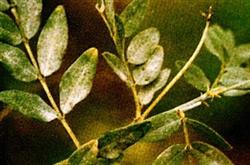
What Is Astragalus Powdery Mildew? Detailed Guide to Symptom Identification and Control Methods
What is Astragalus powdery mildew? How to control it? Astragalus powdery mildew 1. Disease symptoms: Powdery mildew mainly damages Astragalus leaves. In the early stage, white powdery spots appear on both sides of the leaves, and in severe cases the entire leaf is covered with a layer of white powder, with white powder also present on petioles and stems. Affected plants often drop their leaves early, and yield is damaged. Onset...
-

Identification and Control Methods for Common Diseases of Perilla
Common Diseases of Perilla and Their Control
-

How to Tell Real Ginseng from Fake Ginseng? A Few Practical Identification Methods
How should real and fake ginseng be identified?
-

Identification and control of the Pinellia ternata hawk moth
It occurs in summer; the larvae chew and feed on the leaves, and in severe cases they can eat all the leaves bare. Control methods: (1) Spray with 800-1000 times dilution of 90% trichlorfon crystal, once every 5-7 days, for 2-3 consecutive applications. (2) Hand-pick the insects.
-
Symptoms, Identification and Control Methods of Pinellia Leaf Spot
It occurs in early summer. Purple-brown spots appear on diseased leaves, and later many small black dots form on the lesions. In severe cases, the lesions cover the entire leaf, causing the leaves to curl, scorch and die. Control methods: In the early stage of the disease, spray 1:1:120 Bordeaux mixture or 65% zineb 500-fold solution, once every 7-10 days, for 2-3 consecutive applications.
-
Symptom Identification and Control Methods of Root Rot in Codonopsis pilosula
The pathogen is a type of imperfect fungus among the fungi, and it is divided into two types: chronic onset and acute onset. In the chronic type, the disease begins in mid to late May. In the early stage of the disease, dark purple lesions appear on the lower fibrous roots or lateral roots, which then turn black and rot. After the disease spreads to the main root, it gradually rots from bottom to top. The remaining unrotted part is mostly a "half-section ginseng," and the area near the rotted part is dark brown. The stems and leaves above ground gradually turn yellow and eventually die. In the acute type, the disease mostly begins in mid to late June. Once the ginseng root is infected, almost the entire ginseng root becomes diseased at the same time
条件筛选