-
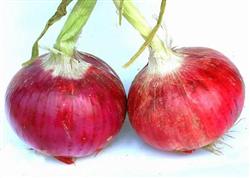
Detailed Introduction to Onion Varieties and Classification
1 Main Types The types of onion can be classified morphologically as: ① Common onion (Allium epa L.), each plant usually forms only one bulb. Propagated by seed; a few varieties form aerial bulbs on the inflorescence under special environmental conditions. Common onions can generally be divided by bulb shape into flat-globular...
-
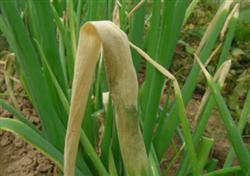
Identification and Control Methods for Dry Tips on Welsh Onions
Welsh onion dry tips fall into two types: physiological dry tips and pathological dry tips, and among the latter, "white dry" and "green dry" often leave onion farmers unable to tell them apart, making it hard to target the right treatment, which leads to missing the best window for control. Here, a brief explanation of the causes and control measures for the two symptoms. White dry is caused by late blight, occurring under high temperature and high humidity conditions...
-
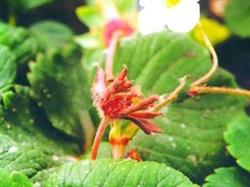
Symptom Identification and Integrated Control Methods for Strawberry Bud Blight
Strawberry bud blight is a soilborne fungal disease with a worldwide distribution. It is strongly saprophytic in soil and is an important root disease of many crops. In addition to strawberry, it also affects more than 160 species of cultivated and wild plants, including cotton, soybean and vegetables. On strawberry, it mainly damages buds, new shoots, stipules and the bases of leaf petioles, causing seedling-stage damping-off...
-
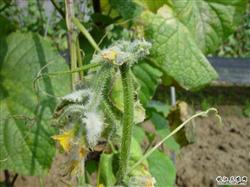
Detailed Guide to Symptom Identification and Control Methods for Cucumber Phytophthora Blight
Cucumber phytophthora blight occurs in all regions. It is one of the important diseases of cucurbit crops. It can harm many kinds of cucurbit crops. 1. Pathogen Cucumber phytophthora blight is a disease caused by fungal infection. 2. Symptom identification 2.1 Leaf lesions appear as light brown, nearly circular large spots. 2.2 Stem base...
-
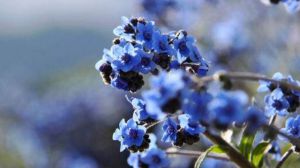
How to identify the blue-flowered Microula? Sharing practical identification methods and tips
Flowers: usually blue, the inflorescence branches at acute angles and is very compact, with no bracts. The filaments grow from the middle of the corolla tube and are about 5-6mm long. The corolla is 5-6mm long, with rounded lobes that have very distinct netted veins. Fruit: ovate, slightly concave on the back, flowering and fruiting from May to September, about 3-4mm long.
-
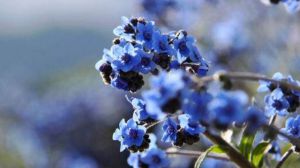
How to identify hound's tongue? A detailed guide to identification methods
Stem: The stem of hound's tongue is either single or several clustered together, and can grow to 15-60cm. Leaves: The basal leaves have petioles and are oblong-lanceolate or lanceolate; the stem leaves have no petioles and are lanceolate or oblong. Flowers: Blue, with rounded lobes and obvious reticulate veins.
-
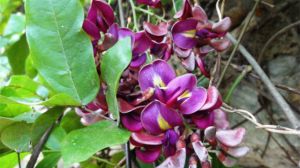
How to identify Millettia dielsiana? A detailed guide to identification methods
Leaves: Millettia dielsiana has pinnately compound leaves that are papery in texture and lanceolate, oblong or narrowly oblong in shape. Flowers: The paniculate inflorescence is terminal, about 40 cm long; the flowers are solitary and the corolla is purplish-red. Fruit: The pod is linear or oblong, flat, and covered with gray down on the surface.
-
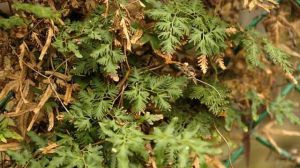
How to identify Lygodium japonicum? Mastering these identification methods is enough
Morphological identification: Lygodium japonicum is a perennial herbaceous plant, with a height of about 1 to 5 m. The rhizome below grows horizontally and is relatively tough in texture. Leaf identification: the small short branches on the stem are distributed symmetrically on both sides, and short hairs are sparsely distributed on the leaf rachis. In summer, fringe-like spikelets grow along the lower edges of the leaves.
-
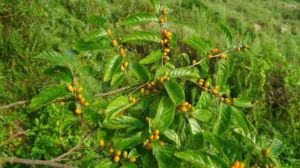
How to identify Rhamnella franguloides? These identification methods are easy to understand at a glance
Tree form characteristics: Rhamnella franguloides grows 2-9m tall, and its new branches are green, covered with relatively short, fairly dense soft hairs. Leaf characteristics: its leaves are obovate, green and hairless on the upper surface, yellow-green with hairs on the lower surface, and the leaf margins are serrated. Flower characteristics: its flowers have pedicels 1-4mm long, and the petals are obovate and yellow-green.
-
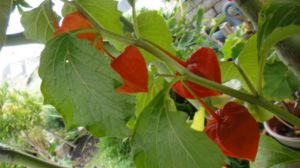
How to identify the Chinese lantern plant? Here are a few identification methods
Leaves: alternate, initially ovate in shape, gradually becoming ovate-cordate later, with serrated edges of varying sizes. Flowers: borne singly in the leaf axils, with a bell-shaped calyx and a yellow corolla. Fruit: a berry, spherical in shape and green in color, enclosed in an enlarged green persistent calyx that is ovate or broadly ovate.
条件筛选