-
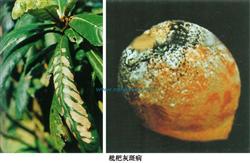
Comprehensive Control Methods and Key Technical Points for Loquat Gray Leaf Spot
Loquat gray leaf spot, also known as "ring spot." It is the most important disease of loquat. It attacks branches, leaves, flowers, and fruit. There are two types: acute and chronic: in the chronic type, leaf spots are initially light brown circular spots; later they join into irregular large spots, with small black dots scattered on them. On young shoots, the disease starts as small water-soaked brown...
-
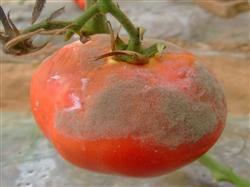
Early prevention and control of gray mold in autumn tomatoes gives good results
Gray mold: During the flowering period, 0.1% of 50% procymidone wettable powder or 50% iprodione wettable powder can be added to the flower-dipping medicinal solution, with very good results. Spraying the fruit is also possible, but care should be taken to rotate the medications to prevent the pathogen from developing resistance. 50% duoke dust formulation can also be used, applying 1 kg of dust per mu.
-
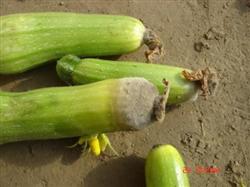
What are the control methods for zucchini gray mold?
In recent years, the area of zucchini grown in solar greenhouses has been relatively large, and the occurrence of zucchini gray mold often causes tender squash to rot, affecting yield and profitability. Therefore, measures should be taken for integrated control. Grafting for disease prevention. Using Yunnan black-seeded squash (Cucurbita ficifolia) as rootstock and zucchini as scion for grafting can increase zucchini's resistance to...
-
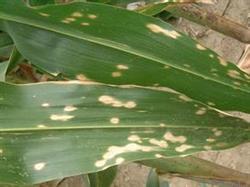
How to prevent and control corn gray leaf spot? A full analysis of the technical key points
Corn gray leaf spot can occur throughout the entire growth period, but the disease is most severe at the tasseling and grain-filling stages. In the early stage of the disease, water-soaked light brown spots appear. These streaks extend parallel to the leaf veins, are often rectangular, and are more obvious when held up to the light. The center of the lesion is gray, and the edge has a brown line. The lesion size is 2-4 x 10-24 (mm), and...
-
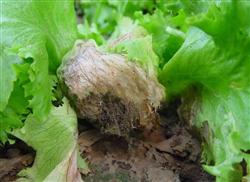
Symptom Identification and Control Techniques for Lettuce Gray Mold
A reader from Jiangsu asks: what are the symptoms and control methods of lettuce gray mold? Answer: Lettuce gray mold mainly damages leaves and stems, and infection can occur from the seedling stage to the mature plant stage. Infection at the seedling stage. Leaves and young stems show water-soaked rot, with gray mold growing on the diseased parts. Leaf infection. It starts from the mature leaves near the ground...
-
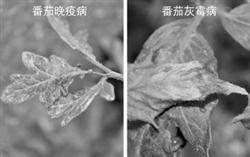
Identification Methods for Late Blight and Gray Mold in Greenhouse Tomatoes
Late blight and gray mold are important diseases that severely affect the yield and output value of spring-season greenhouse tomatoes in northern China. Early detection and accurate identification are the prerequisites for effective prevention and control. Their field symptoms often vary with cultivar and environmental conditions, and are easily confused with each other or with other diseases, causing confusion for growers. The following is an introduction to the...
-
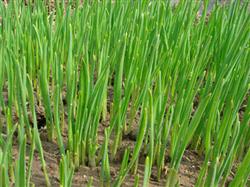
How to prevent and control gray mold in garlic? Garlic farmers, take a look
How can you make garlic sprout earlier when planting it? Please advise. If you want garlic to sprout earlier when planting it, you can refer to the following methods: 1. Water and chemical treatment method: first use 500 grams of quicklime, add it to 50 kg of water, soak the seed for 24 hours, then mix 1 kg of sulfur powder with 50 kg of seed. After the water and chemical treatment, place it in a cool place and cover it with fine sand or loess,...
-
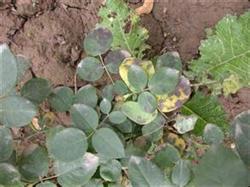
Identification and Control of Gray Mold in Roses
Symptoms: When gray mold occurs on rose leaves at the leaf margins and leaf tips, it first appears as water-soaked light brown spots that are smooth and slightly sunken, then expands and rots. When flower buds are affected, the spots are grayish-black and can prevent the flower from opening; diseased buds turn brown and die. When flowers are affected, some petals turn brown, shrivel and rot. The gray mold fungus also attacks the branch ends after flowers are cut, and the black diseased area can extend several centimeters downward from the infection point. In warm, humid conditions, the gray mold layer can completely cover the infected area.
-
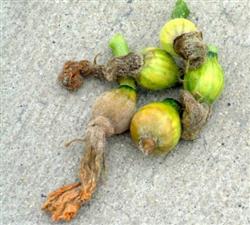
How to prevent and control gray mold in pumpkins? Practical methods explained clearly in one article
How is gray mold in pumpkins prevented and controlled? Why does gray mold occur? Please explain: gray mold in pumpkins mainly occurs on the fruit. Affected fruit usually begins to rot from spent flowers and grows a light grayish-brown mold layer, then spreads to the young fruit, first at the tip of the pumpkin and then upward, causing the young fruit to soften and rot. Affected...
-

What are the specific fungicides for strawberry gray mold? Symptoms of damage and control methods
Strawberry gray mold occurs in all strawberry-growing regions of China, and the disease has gradually worsened since the 1970s, especially in the south where the fruit-picking period coincides with the spring rain season, making the disease even more severe. It often causes a diseased fruit rate of around 30% in susceptible varieties with fruit rot, and in severe cases it can reach over 60%
条件筛选