How to prevent and control gray mold in pumpkins? Practical methods explained clearly in one article
How is gray mold in pumpkins prevented and controlled? Why does gray mold occur? Please explain: gray mold in pumpkins mainly occurs on the fruit. Affected fruit usually begins to rot from spent flowers and grows a light grayish-brown mold layer, then spreads to the young fruit, first at the tip of the pumpkin and then upward, causing the young fruit to soften and rot. Affected...
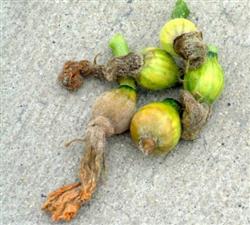 How is gray mold in pumpkins prevented and controlled? Why does gray mold occur? Please explain
Gray mold in pumpkins mainly occurs on the fruit. Affected fruit usually begins to rot from spent flowers and grows a light grayish-brown mold layer, then spreads to the young fruit, first at the tip of the pumpkin and then upward, causing the young fruit to soften and rot. In mild cases, affected fruit stops growing and the tip of the fruit rots away; in severe cases, the entire fruit rots. Gray mold also occasionally occurs on the leaf surface, mostly spreading with fallen diseased flowers as the center, forming large nearly circular lesions with a small amount of gray mold layer on the surface. Rotten flowers and rotten fruit that drop off and attach to the stems and vines can cause the stems and vines to turn brown and rot.
Gray mold prefers lower temperatures and higher humidity. The optimum temperature for disease development is around 20°C, and it is prone to occur when air humidity is above 90%. When the temperature is above 30°C or below 4°C and air humidity is below 90%, it is less likely to occur. In northern regions and other areas, it is prone to occur in spring when there are many cloudy and rainy days and the temperature is relatively low. In the south, after mid-March, when the temperature is 10-15°C and there is abundant rain, the disease develops rapidly. The pathogen most easily invades through plant wounds, wilted petals, and weakened and dead tissues. The pathogen overwinters on diseased plant residues or in the soil, and the following year can spread with airflow, water splashes, and field farming operations.
Gray mold in pumpkins can be prevented and controlled by referring to the following methods:
1. Cultivation measures and environmental control inside protected structures:Inside the facility, pay attention to ventilation and dehumidification to keep air humidity below 85%, and control the daytime temperature at 26-30°C to reduce the occurrence of the disease. Use raised beds with plastic film mulching, irrigate with subsurface water, and where conditions permit use drip irrigation. Do not use flood irrigation, to prevent excessive humidity in the field. Inside the facility, the temperature can sometimes be raised to 33°C, which can inhibit pathogen production. During routine management, promptly remove diseased leaves, diseased flowers, diseased fruit, and yellow leaves, clean them up thoroughly, and bury them deeply or burn them at any time. When changing crops, thoroughly remove diseased plant residues from the field.
2. Chemical control: Pesticides such as carbendazim, zineb, chlorothalonil, thiophanate-methyl, iprodione, propamocarb, thiram, and procymidone can be used for spray control; chlorothalonil smoke agents and procymidone smoke agents can also be used for fumigation control; and dusts such as procymidone dust, dimethachlon dust, and chlorothalonil dust can also be used for dusting control. For specific methods, refer to the previous disease control information.
Click to get more pumpkin cultivation techniques
Click to get more vegetable cultivation techniques