-

Identification of Rose Gray Mold Symptoms and Control Methods
Roses are a relatively common ornamental flowering plant in China, native to China. Through long-term hybridization and breeding by horticulturists, they have now developed to more than 20,000 varieties. Although roses are relatively easy to cultivate, we should not overlook the common diseases of roses.
-
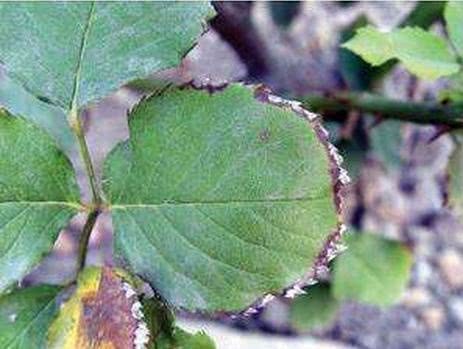
How to treat rose gray mold? All the control methods are here
Gray mold is a common disease of roses. It is characterized by rapid onset and extremely fast spread. Once gray mold is detected, it should be dealt with immediately, otherwise it can easily infect a large area. To treat it, you first need to target the right cause, so what happens when a rose gets...
-
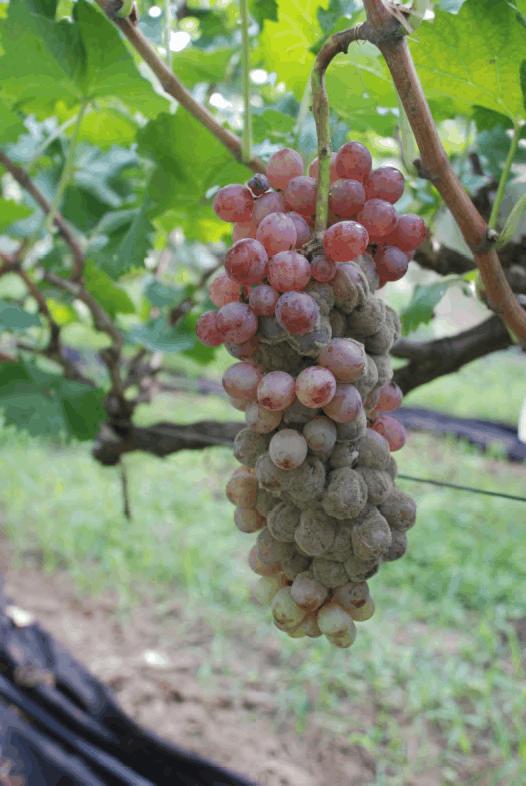
How to prevent and control grape gray mold? Detailed explanation of its occurrence pattern and green control techniques
Occurrence pattern of grape gray mold and green control techniques. Grape gray mold, commonly known as "rotten flower cluster," is one of the most common and seriously damaging diseases in grape production, mainly caused by Botrytis cinerea. In recent years, whether under protected cultivation or open-field cultivation...
-
What plant is Kalanchoe luciae? A brief introduction to the succulent Kalanchoe luciae (Flapjacks) of the Crassulaceae family
Kalanchoe luciae (Flapjacks) is a perennial succulent herbaceous plant of the genus Kalanchoe in the Crassulaceae family, native to Cape Town and Transvaal in South Africa. The leaves are pale green, covered with a thick layer of white powder, appearing grayish-green, with a ring of red lines along the leaf margins. In cool seasons, when grown outdoors in full sunlight, layered red patches appear, giving it excellent ornamental value
-
Moon Rabbit Ears is a succulent in the Crassulaceae family - a complete guide to its care
Moon Rabbit Ears is native to the dry regions of central China and Madagascar. The leaves are covered in fuzz, like rabbit ears, grayish-white with brown spots interspersed, and it branches easily. It belongs to the summer-growing type among succulents, growing vigorously from late autumn to early spring. It likes a sunny environment, and when sunlight is ample, brown markings appear on the leaf tips. In summer, give it appropriate
-
White Peony is a succulent plant in the Crassulaceae family.
White Peony belongs to the genus Graptopetalum in the Crassulaceae family. The stems and leaves are succulent, and the leaf color ranges from gray-white to gray-green. The leaf surface has a faint white powder, and the leaf tips turn slightly pink in sunlight. The stems are robust. The white leaves open like peony flowers, and the offsets are tough and numerous. The petals have fine red dots, and the flowering period is in spring.
-
What plant is Lithops marmorata? A brief introduction to the mesemb (Aizoaceae) succulent Lithops marmorata
Lithops marmorata is a succulent in the genus Lithops of the family Aizoaceae, and is a small variety among living stones. Its body is ovoid, often growing in clusters of around 20 heads, with pale gray-cyan spherical leaves and distinct brown-green dendritic markings on top.
-
The axe-leaf peperomia is a plant of a different genus and family
The axe-leaf peperomia is a succulent in the pepper family, genus Peperomia, native to Peru. The leaf shape is unusual, the plant is compact, and the whole leaf is like an axe, with a pink-tinged gray-green leaf color. The axe-leaf peperomia does not have high light requirements and is suitable for home cultivation!
-
What plant is Huangbo? Introduction to Aizoaceae succulent plants
Huangbo is a succulent of the genus Faucaria in the Aizoaceae family, native to South Africa. Its leaves grow alternately and have gray-white recurved teeth, with wart-like protrusions on the leaf surface. In a suitable environment, it blooms small yellow flowers in autumn.
-
What is Haworthia truncata? An introduction to the Haworthia truncata succulent
Haworthia truncata, also known as truncated haworthia, is a succulent plant of the genus Haworthia in the family Liliaceae, also called a succulent. The plant has no stem, and its fleshy leaves are arranged in two rows in a fan shape. The leaves are upright, slightly curved inward, with a slightly sunken tip. The surface is rough, green to dark greenish-brown, with small wart-like protrusions. The cross-section of the new leaves is partly transparent and grayish-white.
条件筛选