How to prevent and control corn gray leaf spot? A full analysis of the technical key points
Corn gray leaf spot can occur throughout the entire growth period, but the disease is most severe at the tasseling and grain-filling stages. In the early stage of the disease, water-soaked light brown spots appear. These streaks extend parallel to the leaf veins, are often rectangular, and are more obvious when held up to the light. The center of the lesion is gray, and the edge has a brown line. The lesion size is 2-4 x 10-24 (mm), and...
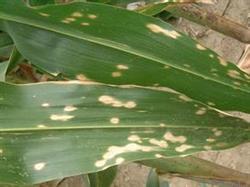
Corn gray leaf spot can occur throughout the entire growth period, but the disease is most severe at the tasseling and grain-filling stages. In the early stage of the disease, water-soaked light brown spots appear. These streaks extend parallel to the leaf veins, are often rectangular, and are more obvious when held up to the light. The center of the lesion is gray, and the edge has a brown line. The lesion size is 2-4 x 10-24 (mm). Gray mold, namely the pathogen's conidiophores and conidia, usually forms on both sides of the leaf. By the middle and late stages, after most lesions merge, the leaves turn yellow and die. This disease has occurred epidemically in our county and has caused huge losses to corn production. The key points of its prevention and control techniques are:
First, select disease-resistant and high-yielding varieties, such as Beiyu No. 2, Haihe 1, Beiyu No. 16, Tunyu No. 7, Yayu 889, etc.
Second, clean the field and reduce the base number of inoculum. (1) From after corn harvest to before sowing, effectively treat the residues of corn gray leaf spot diseased plants, using them as fuel or for high-temperature composting, to reduce the primary infection source of the disease and effectively prevent the occurrence of corn gray leaf spot. (2) After corn becomes diseased, when the diseased plant rate reaches 70% and the diseased leaf rate reaches about 20%, remove 2-3 diseased leaves from the lower part of the diseased plants to reduce the secondary infection source of the disease.
Third, implement health-preserving cultivation to control the disease. (1) Sow early at the proper time and make full use of the light and heat resources in the early period, which can stagger the dangerous growth period of corn from the peak disease period and reduce disease occurrence. (2) Plant at a reasonable density and use standardized cultivation to improve the field microclimate, which is conducive to ventilation and light penetration, enhances plant resistance, and prevents the occurrence of the disease. Implement double-row strip sowing, with 3500-4000 plants per mu. (3) Implement balanced fertilization: apply 1000-2000 kg of barnyard manure, 10 kg of urea, 40-50 kg of ordinary calcium superphosphate, 10 kg of potassium fertilizer, and 1 kg of zinc fertilizer per mu as base fertilizer; for the first topdressing (5-leaf stage), apply 15 kg of urea per mu, combined with shallow intertillage and weeding; for the second topdressing (large trumpet stage), apply 25 kg of urea per mu, and carry out intertillage and high hilling.
Fourth, select the appropriate pesticides for control at the proper time. At the early disease stage, the large trumpet stage, and the tasseling and silking stage, respectively, choose 70% thiophanate-methyl, 70% thiophanate-methyl 80-100 g/mu, or 10% difenoconazole 30 g/mu, diluted with 50 kg of water for spraying.