-

What to Do When Cucumbers Get Gray Mold? Symptoms, Damage and Control Methods
Cucumber gray mold is a disease that occurs year-round in protected cucumber cultivation, caused by infection with the fungus Botrytis cinerea of the Deuteromycotina (Fungi Imperfecti). Vegetable growers often call it fruit rot disease or moldy rot disease. In recent years its occurrence has been increasing year by year, and because the fruit is often affected it causes rotting.
-
How to prevent and control gray mold in plants? What specific pesticides are available?
Gray mold is a fungal disease that is common in open-field and protected cultivation crops and is relatively difficult to control. It is a low-temperature and high-humidity type of disease. The growth temperature of the pathogen is 20 to 30°C. When the temperature is 20 to 25°C and the humidity remains above 90%, it is a high-incidence period for the disease. It is caused by infection with Botrytis cinerea.
-

Identification of Symptoms of Gray Mold in Phalaenopsis and Its Prevention and Control Methods
Symptoms and Prevention of Gray Mold in Phalaenopsis
-

How to prevent and control gray mold in peppers? All the practical methods are here
Prevention and control methods for gray mold in peppers
-

What specific fungicide works well against gray mold?
What are the specific fungicides for controlling gray mold?
-
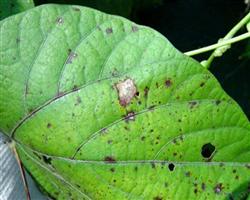
Detailed Explanation of Key Points for the Prevention and Control of Soybean Gray Leaf Spot
1. Symptoms: It mainly damages the leaves of adult plants and also infects seeds, seedlings, stems, and pods. On the cotyledons of seedlings grown from diseased seeds, round brown lesions appear. Later, irregularly shaped lesions may also form. When humid, the central part of the lesions on the underside of the leaves mostly produces a gray mold layer, which is the pathogen's conidia. 2. Control methods: ...
-
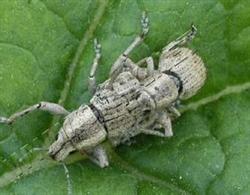
What are the control methods for the ginseng large gray weevil?
The large gray weevil, also known as the snout beetle or "tula lv", has an adult body length of 9-12 mm, grayish-yellow or grayish-black, densely covered with grayish-white scales. The head and rostrum are densely covered with golden shiny scales. The pests occurring this year mainly feed on tender stems and leaves on the soil surface during the seedling emergence period, causing great damage. When disturbed, they feign death and drop to the ground, causing damage in the early morning and evening....
-
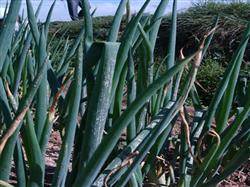
What are the control methods for gray mold in Welsh onion?
How do you control gray mold in Welsh onion? Please give an introduction. Gray mold in Welsh onion, also known as white spot disease, is a major disease of Welsh onion. It mainly damages the leaves. In the early stage, white oval or nearly round spots appear on the leaves, mostly spreading downward from the leaf tip, gradually joining together into patches, causing the leaf tip to curl and die. When humidity is high, a large...
-
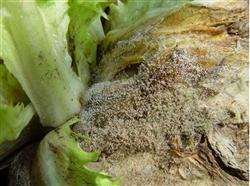
How to prevent and control gray mold in lettuce cultivation?
It is lettuce planting season once again. In previous years, gray mold has caused damage every time. How should lettuce gray mold be prevented and controlled this year? We also ask fellow growers to share their methods. The harm gray mold causes to lettuce: gray mold mainly damages lettuce leaves and the base of the stem. Seedlings are mostly affected on the stem and leaves near the ground, and after transplanting, the disease starts from the old leaves...
-
What are the control methods for ginseng gray mold?
How do you control ginseng gray mold? Please explain the methods. Ginseng gray mold symptoms: It damages ginseng leaves; the lesions on the leaves are limited by the leaf veins and appear polygonal or irregular. They are light brown, and on the underside of the lesions there is a sparse, thin, grayish-white or pale yellow mold layer, namely the pathogen's sporangiophores and sporangia. In the later stage, the lesion tissue necroses, breaks apart easily...
条件筛选