-

Symptom Identification and Control Methods for Licorice Gray Leaf Spot
It damages the leaves, forming nearly round brown lesions with gray centers. Control methods: (1) Clear the garden in winter and dispose of plant debris. (2) During the disease period, spray 1:1:120 Bordeaux mixture or 70% thiophanate-methyl wettable powder at 1500-2000 times dilution.
-
Lily gray mold (Botrytis elliptica Cooke)
Commonly known as lily leaf blight. It mainly damages leaves, but also infects stems, flowers, buds and bulbs. Leaf spots are round or oval, yellow-brown or red-brown, with the center of the spot light yellow or light brown and the edge purplish red or pale red. When the weather is humid, a gray mold layer grows on the diseased part; when dry, the spots become thin and brittle, semi-transparent, and light gray. After the spots expand, the leaves die, and affected buds and flowers look as if scalded by boiling water, turning brown and then rotting. When stems are affected, light brown canker spots form, and they break very easily in the wind. After young plants are infected, the growing point
-
Symptom Identification and Control Methods of Lily Gray Mold
Lily, belonging to the genus Lilium in the family Liliaceae, is a perennial herbaceous plant. In recent years, lily cultivation has been severely threatened by diseases, mainly including lily gray mold (leaf blight), Phytophthora blight, basal rot, and viral diseases. These diseases often occur together, compounding the damage. Among them, lily gray mold has the greatest impact on lily growth and cut flower quality, and can even affect the propagation of lily bulbs. Lily gray mold is a commonly occurring disease. It mainly damages leaves, but can also infect stems and flowers. Infected lily leaves and floral organs frequently develop symptoms such as leaf scorch, deformed flower buds, and wilting petals in the later stages.
-
Lily gray mold (Botrytis elliptica Cooke)
Commonly known as lily leaf blight. It mainly damages leaves, and also infects stems, flowers, buds and bulbs. Leaf lesions are round or oval, yellowish-brown or reddish-brown, with the center of the lesion pale yellow or light brown and the edge purplish-red or pale red. In humid weather, gray mold grows on the diseased parts; when dry, the lesions become thin and brittle, semi-transparent, light gray. After the lesions expand, the leaves die, and affected buds and flowers look as if scalded by boiling water, turning brown and then rotting. When stems are affected, light brown canker spots form, and they break easily in the wind. After young plants are infected, the growing
-
What are the control methods for gray leaf spot on Japanese euonymus (Euonymus japonicus)?
Control methods for gray leaf spot on Japanese euonymus: 1. Strengthen plant quarantine and use healthy seedlings. 2. Strengthen tending and management, cultivate strong seedlings, and enhance the disease resistance of the plants. 3. In autumn, winter and early spring, thoroughly remove diseased leaves and fallen diseased leaves, and burn them in a centralized manner to reduce the source of infection. 4. In the early stage of the disease, spray the plants once every 20 days with a 200-fold dilution of non-toxic high-fat film, for 3 to 4 consecutive sprays. 5. During the epidemic period of the disease, spray a 500- to 1000-fold dilution of 50% carbendazim or 75% chlorothalonil, used alternately, for 4 to 5 consecutive sprays.
-
What are the control methods for rose gray mold?
Gray mold mainly affects flowers and young shoots. After the flower buds are infected, at first there are small irregular water-soaked spots, and the lesions continue to expand until the entire bud becomes soft and rots. After the diseased buds wither, they hang above the diseased tissue. The pathogen also attacks the shoots from which flowers have been removed. Under warm and humid conditions, the diseased parts produce a large amount of gray mold. Control measures: 1. Remove diseased flowers promptly, remove withered old flowers, and burn them in a centralized manner. 2. For greenhouse cultivation, pay attention to ventilation and avoid excessively high humidity. 3. When disease occurs, spray 65% zineb wettable powder at 600 times dilution, 75% chlorothalonil wettable
-
What to Do When a Phalaenopsis Orchid Gets Gray Mold? Symptoms and Control Methods
Gray mold is one of the most common diseases in Phalaenopsis orchid production, occurring frequently during their growing season, especially during winter and spring greenhouse cultivation, and the pathogen can infect any part of the plant. If cultivation management is neglected, it further favors the occurrence and spread of the disease, and in severe cases can cause a large number of fallen flowers and leaves, not only affecting the plant's blooming but also directly reducing the ornamental value and yield of Phalaenopsis orchids. (1) Conditions for Onset Warmth and humidity are the main conditions for the spread of gray mold in Phalaenopsis orchids. That is, when relative humidity is around 90% and temperature is
-
The Amur grayling is a cold-water economic fish with extremely high aquaculture value
The Amur grayling belongs to the order Salmoniformes, family Thymallidae, genus Thymallus, commonly known as spotted trout and red-scaled fish. In China it is found in the upper reaches of the Heilongjiang River, the upper reaches of the Nenjiang River, the Mudanjiang River, the Ussuri River, the Songhua River, the Suifen River and other places. Abroad it is distributed along the coast of the Sea of Okhotsk and the coast of the Sea of Japan in Russia. The grayling has two other subspecies in China: the Yalu River grayling from the Yalu River and the Arctic grayling from the **Irtysh River basin. The above three subspecies are quite similar in appearance and habits, differing only in geographical distribution. Amur grayling
-
What are the symptoms of gray leaf spot on Japanese euonymus?
Symptoms of gray leaf spot on Japanese euonymus: it occurs on the leaves of Japanese euonymus. In the early stage, small chlorotic yellow spots appear on infected leaves, then gradually expand into irregular large spots that are gray, grayish white or light loess yellow. The boundary between diseased and healthy tissue is often brown or dark brown, and the edge is often raised. In the later stage, several spots often merge into one, occupying one-half to one-third of the total leaf area. When the damage is severe, diseased leaves may drop in the same year or even cause twig dieback.
-
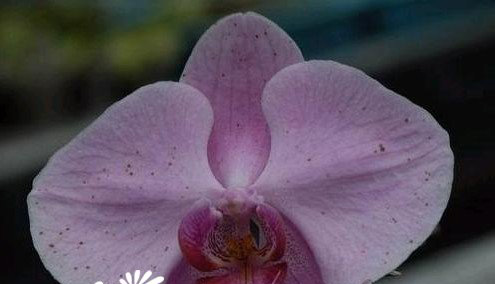
What are the control methods for gray mold on Phalaenopsis?
Orchid gray mold, also known as orchid flower rot, occurs from time to time in flower nurseries in both southern and northern China. In addition to harming the genus Cymbidium among the Orchidaceae, it also harms ornamental plants such as Phalaenopsis, Cattleya, Dendrobium, Vanda, and Phaius. Among these, horticultural treasures such as Phalaenopsis, Cymbidium hybridum, and Cymbidium sinense suffer the most severe damage. Symptoms
条件筛选