Comprehensive Control Methods and Key Technical Points for Loquat Gray Leaf Spot
Loquat gray leaf spot, also known as "ring spot." It is the most important disease of loquat. It attacks branches, leaves, flowers, and fruit. There are two types: acute and chronic: in the chronic type, leaf spots are initially light brown circular spots; later they join into irregular large spots, with small black dots scattered on them. On young shoots, the disease starts as small water-soaked brown...
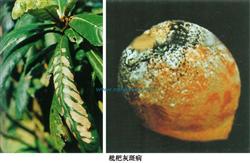
Loquat gray leaf spot, also known as "ring spot." It is the most important disease of loquat. It attacks branches, leaves, flowers, and fruit.
There are two types: acute and chronic:
In the chronic type, leaf spots are initially light brown circular spots; later they join into irregular large spots, with small black dots scattered on them. On young shoots, the disease starts as small water-soaked brown dots, then becomes large dark brown spots, and the shoot tips wither. On large branches, after the diseased part turns black, reddish-brown halo spots appear, the branches die back and the bark lifts. When flower clusters are infected, the rachis branches dry up and turn yellowish-brown; the petals first have small oil-soaked spots, then brown and wither. When ripe fruit is infected, large areas of brown rot appear on the fruit surface, later becoming distinctly sunken, with small black dots scattered on them.
In the acute type, the main effect is large areas of scorch at the leaf margins or tips, causing heavy leaf drop.
Control methods:
(1) Remove fallen leaves to reduce the source of infection. Avoid excessively high humidity inside the greenhouse;
(2) Strengthen fertilizer management, do pruning well, drain water or relieve drought in time, strengthen tree vigor, and enhance disease resistance.
(3) Pay attention to pesticide use, that is: using different pesticides at different stages is more effective: ① Bordeaux mixture and lime sulfur mixture are excellent pesticides for controlling loquat gray leaf spot. The concentrations used are 0.3-0.5% Bordeaux mixture and 0.3-0.5 degrees Baume lime sulfur mixture. After use, they can both prevent disease and supplement copper and calcium for loquat. However, the two pesticides affect flowers and young fruit. Therefore, they can only be used from after fruit harvest to before flower bud emergence. ② 80% Bibei wettable powder contains copper calcium sulfate; spray a 400-600 times dilution, and like Bordeaux mixture and lime sulfur mixture it both prevents disease and has a calcium-supplementing effect. But it can only be used from after fruit harvest to before flower bud emergence. ③ 70% mancozeb 600 times dilution, or 80% Daconil M-45 600 times dilution, are some preventive pesticides. They should be used before budding or at the beginning of budding to have a disease-preventing effect. ④ After budding, pesticides with preventive, protective, and therapeutic effects should be used, such as: 50% carbendazim wettable powder 800 times dilution; or 70% thiophanate-methyl 600 times dilution; or 40% Xinxing (Fuxing) 8000 times dilution; or 25% metalaxyl (Ridomil) 500-800 times dilution; or 75% chlorothalonil 600-800 times dilution.