-
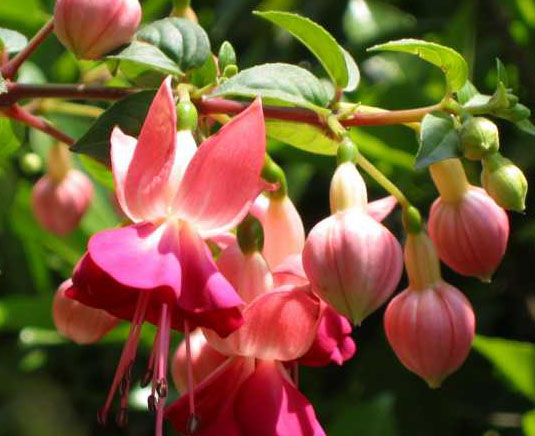
Symptoms and Control Methods of Gray Mold in Fuchsia
Symptoms and pathological changes: Gray mold is also called leaf mold. It mainly harms the leaves. The general onset period of the disease is from late April to early May, and the peak period is in early and mid-August. In July and August there is abundant rainfall and high humidity, which favors the spread of the disease. Courtyards with overly dense planting and poor cultivation management have more severe outbreaks. Generally, after suffering frost damage
-
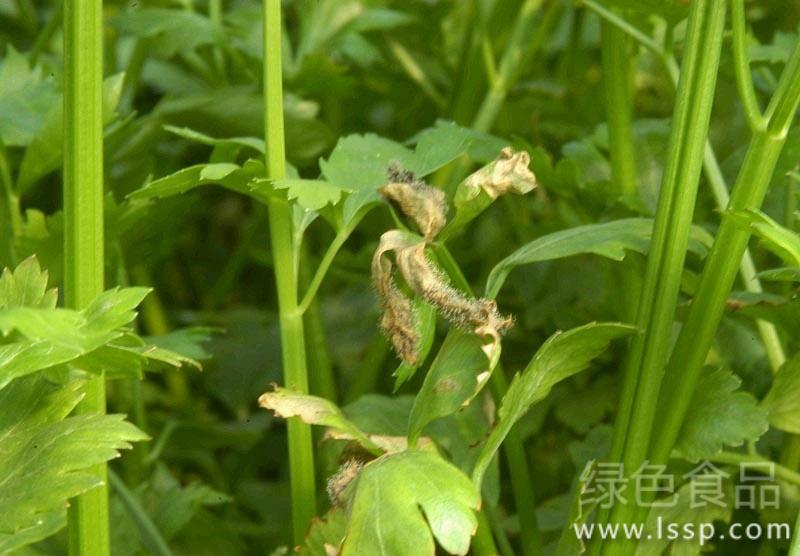
Celery leaf rot with gray mold layer, how to prevent and control gray mold
How to prevent and control celery gray mold when celery leaves rot with a gray mold layer
-
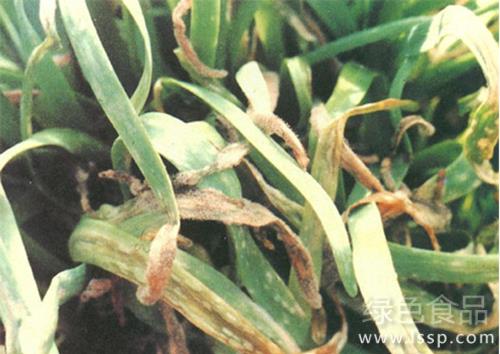
After mold appears on the leaves of Chinese chives, the whole leaf withers and scorches. How should gray mold be prevented and controlled?
Prevention and control methods for Chinese chive gray mold, where the whole leaf withers and scorches after mold appears on the leaves
-
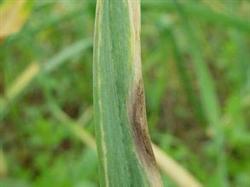
Characteristics and Control Methods of Garlic Gray Leaf Spot
(1) Symptom characteristics: It mainly affects the leaves. The lesions are long elliptical, initially light brown, later turning grayish white. On both sides of the leaves, the lesions produce fine grayish-black mold-like growth. In severe cases, the lesions merge, causing localized death of the leaves. The disease is severe in weather with warm days and cool nights, heavy fog, and heavy dew. (2) Control methods: ① Promptly remove damaged leaves...
-
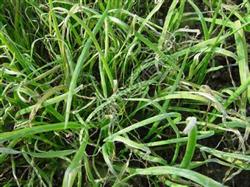
Control Methods and Technical Key Points for Gray Mold in Greenhouse Chinese Chives
When humidity inside a greenhouse for Chinese chives is high, gray mold is likely to occur. After the disease develops, pale grayish-brown to white spots gradually appear on the leaves from the tip downward, on both the upper and lower surfaces; after expanding, they become elliptical or spindle-shaped lesions and merge with each other into large dead patches. When air humidity is above 85% and the temperature is 15°C~20°C, warm and humid conditions favor the occurrence of this disease.
-
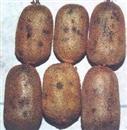
Occurrence Patterns and Control Methods of Kiwifruit Gray Mold
Kiwifruit gray mold mainly occurs during the flowering stage, young fruit stage and storage period of kiwifruit. In severe years, the incidence rate in orchards and during storage can reach more than 50%. Kiwifruit gray mold has become one of the main diseases affecting the healthy development of the kiwifruit industry. 1. Symptoms When young fruit (late May to early June) is affected, residual stamens and petals are densely covered with gray spores. At the initial stage, the fuzz on young fruit turns brown, the skin is infected, and in severe cases it can cause fruit drop. Contaminated stamens and petals attach to leaves and form concentric ring lesions centered on them; the lesions expand and leaves drop. If rain occurs, the disease develops more severely. After fruit is affected, gray-brown mycelium and spores form on the surface, followed by black sclerotia. During storage, fruit is easily infected by diseased fruit.
-
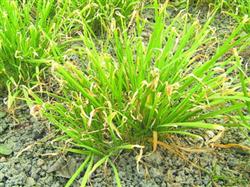
Diagnosis, Identification and Control Methods of Gray Mold in Chinese Chives
How to control gray mold in greenhouse Chinese chives. Gray mold in Chinese chives, also known as "white spot leaf blight" and "white spot rot", is the main disease of greenhouse Chinese chives. It should be controlled early to reduce losses and increase profits. The occurrence conditions and control methods of gray mold in Chinese chives are briefly summarized as follows: 1. Occurrence conditions 1. Chi...
-
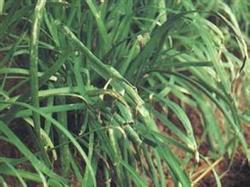
What are the control methods for gray mold in Chinese chives?
In protected cultivation, fumigate with 10% Procymidone smoke agent at 250 g per mu; for foliar spraying, use 50% Procymidone wettable powder at 1000 times dilution, 2% Wuyimycin (BO-10) at 150 times dilution, 40% Huimeiwang at 500 to 800 times dilution, 10% Polyoxin at 500 to 700 times dilution, and 50% Vinclozolin at 1200 to 1400 times dilution.
-
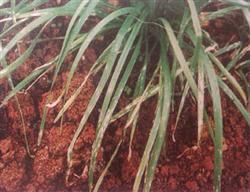
How to treat gray mold in Chinese chives? Key points of pollution-free control techniques
(1) Symptoms and epidemic patterns The disease mainly affects the leaves and shows 3 types: the white-spot type, in which water-soaked grayish-white spots form on both the front and back of the leaves, oval or spindle-shaped, with pale yellow margins; later the lesions enlarge into large dead patches, causing half a leaf or the whole leaf to die. In humid conditions, a sparse gray mold layer forms. The dry-tip type occurs...
-
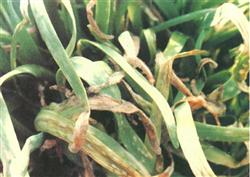
How to identify and prevent gray mold in Chinese chives? Growers, please pay attention
Gray mold is the main disease of Chinese chives in protected cultivation, seriously affecting the quality of Chinese chives marketed around the Spring Festival. Around the Spring Festival each year, the price of Chinese chives is generally at its highest of the year, and once the disease occurs it will cause relatively large economic losses to farmers. Therefore, preventing and controlling gray mold well is crucial for the production of Chinese chives in protected cultivation. 1. Onset...
条件筛选