Symptoms and Control Methods of Gray Mold in Fuchsia
Symptoms and pathological changes: Gray mold is also called leaf mold. It mainly harms the leaves. The general onset period of the disease is from late April to early May, and the peak period is in early and mid-August. In July and August there is abundant rainfall and high humidity, which favors the spread of the disease. Courtyards with overly dense planting and poor cultivation management have more severe outbreaks. Generally, after suffering frost damage, the plant's resistance is weak and the disease is severe. The degree of susceptibility varies among varieties. In the early stage of the disease, nearly round purplish-brown spots with a diameter of 1~5 mm appear on the leaves, which later expand into irregular large spots with a diameter of 7~12 mm, pale yellow in the center and purplish-brown at the edges, with obvious concentric rings on the spots. The spots expand and join together into patches. When humid, a dark green moldy substance, namely the pathogen's conidia and conidiophores, is produced on the surface of the spots. This disease often occurs in continuous rainy weather, or when too much nitrogen fertilizer is applied, or when there is insufficient light. The pathogen overwinters as mycelium on the diseased residual stems and dead leaves. In the spring of the second year, conidia are spread by airflow and rainwater and infect and damage the lower leaves. The pathogen overwinters as mycelium on the diseased residual stems and dead leaves. In the spring of the second year, spores are spread by airflow and rainwater and infect and damage the lower leaves.
Control methods for gray mold in fuchsia: 1. Pay attention to ventilation and light transmission. 2. Pay attention to drainage. 3. After the disease occurs, promptly prune and dispose of the diseased branches and leaves to reduce the source of infection. 4. In the early stage of the disease, promptly spray a 500-fold dilution of 65% zineb or 50% carbendazim or other new fungicides, once every 7~10 days, for 3~4 consecutive sprays; or a 800-fold dilution of 50% thiophanate-methyl, once every 10~15 days, for a total of 3~4 sprays.
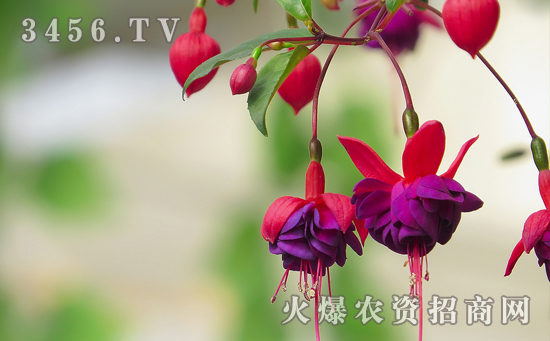
How to control pests and diseases of fuchsia, and the methods for controlling pests and diseases of fuchsia
The main pests and diseases harming fuchsia are:
① Fuchsia gray mold: This disease often occurs in continuous rainy weather, or when too much nitrogen fertilizer is applied, or when there is insufficient light. It mainly harms the stems, leaves, and flowers, causing water-soaked spots on the affected parts. If not controlled in time, they will gradually expand and become rotten, covered with gray hairy mycelium, and in severe cases will cause the plant to die.
Control methods for gray mold in fuchsia: In the early stage of the disease, promptly spray a 500-fold dilution of 65% zineb or 50% carbendazim or other new fungicides. Spray once every 7~10 days, for 3~4 consecutive sprays. Usually pay attention to ventilation and light so that the plants grow well and their disease resistance is improved. After the disease occurs, promptly prune and dispose of the diseased branches and leaves to reduce the source of infection.
② Fuchsia powdery mildew: This disease mainly harms the stems, leaves, and flower buds. After infection, there is a layer of white powder on the surface, and in severe cases the leaves shrink and the flowers become smaller.
Control methods for gray mold in fuchsia: Pay attention to ventilation and light, and apply more phosphorus and potassium fertilizer to improve the plant's disease resistance. After the disease occurs, promptly spray a 800-fold dilution of 70% thiophanate liquid or a 2500-fold dilution of triadimefon or other suitable fungicides, once every 10 days, for 2~3 consecutive sprays.
③ Fuchsia root rot: The main causes of this disease are: excessive watering in the hot summer, which causes the roots to rot and the branches and leaves to turn yellow, and in severe cases causes the plant to die.
Control methods for gray mold in fuchsia: After the disease occurs, promptly drench the root-zone soil with a 300-fold dilution of 50% amobam. At the same time, in summer pay attention to ventilation and cooling, and do not water the pot soil too much.
④ Fuchsia whitefly: At the same period, different stages of the insect can be seen. The adults harm the tender leaves and suck the juice from the leaf tissue; after hatching, the nymphs fix themselves on the underside of the leaves and pierce and suck to cause damage, making the leaves curl and even dry up. In addition, after the honeydew secreted by the whitefly contaminates the leaves, it very easily causes sooty mold.
Control methods for gray mold in fuchsia: When pests are found, promptly spray a 1000-fold dilution of 40% omethoate or a 2000-fold dilution of 20% fenvalerate. Spray once every 7 days, for 3~4 consecutive sprays. When spraying, note that both the front and back sides of the leaves must be covered.
How to control pests and diseases of fuchsia, and the methods for controlling pests and diseases of fuchsia are briefly introduced here. To prevent the occurrence of pests and diseases in fuchsia, the most important thing is to understand its growth habits and cultivate it reasonably. Fuchsia is suitable for growing in a warm and humid environment, and high temperatures and excessive drought should be avoided. Fuchsia likes a cool, well-ventilated environment, and strong direct sunlight should also be avoided in summer. At the same time, the soil should be kept fertile to ensure sufficient nutrients.