Diagnosis, Identification and Control Methods of Gray Mold in Chinese Chives
How to control gray mold in greenhouse Chinese chives. Gray mold in Chinese chives, also known as "white spot leaf blight" and "white spot rot", is the main disease of greenhouse Chinese chives. It should be controlled early to reduce losses and increase profits. The occurrence conditions and control methods of gray mold in Chinese chives are briefly summarized as follows: 1. Occurrence conditions 1. Chi...
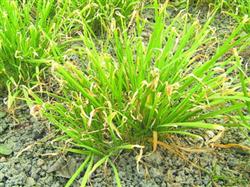
How to control gray mold in greenhouse Chinese chives. Gray mold in Chinese chives, also known as "white spot leaf blight" and "white spot rot", is the main disease of greenhouse Chinese chives. It should be controlled early to reduce losses and increase profits. The occurrence conditions and control methods of gray mold in Chinese chives are briefly summarized as follows:
1. Occurrence conditions
1. Gray mold in Chinese chives is closely related to temperature and humidity inside the greenhouse. The suitable temperature for pathogen spread is 15-30°C, the suitable temperature for mycelial growth is 15-21°C, and sclerotia are produced at high temperatures. The relative humidity is 85%; when the relative humidity is above 95%, the disease is severe, while below 60% it is mild or does not occur.
2. Gray mold in Chinese chives is related to the greenhouse environment. When the greenhouse is alternately cold and hot, with low nighttime temperatures causing freezing, and high daytime temperatures, high humidity, or bottom ventilation causing the Chinese chives to freeze, the diurnal temperature difference is relatively large, and water droplets condense on the leaves at night, causing the disease to worsen.
3. Gray mold in Chinese chives is related to disease resistance. First, the variety itself has poor disease resistance; second, the microclimate in the greenhouse has not been effectively controlled, and the harsh environment affects the disease resistance of Chinese chives, leading to disease occurrence.
4. Gray mold in Chinese chives is related to management level. Insufficient fertilization in the vegetable field, especially insufficient application of phosphorus and potassium fertilizers, results in weak plant growth and reduced disease resistance; flood irrigation causes excessive soil and greenhouse humidity, triggering disease; failure to ventilate in time or cold wind directly invading from the bottom vent of the greenhouse aggravates the occurrence of the disease.
2. Control measures
1. Control temperature and reduce humidity. According to weather changes, open the greenhouse film appropriately at noon to ventilate for cooling and dehumidification. Regulate the temperature inside the greenhouse through ventilation so that the maximum temperature in the greenhouse does not exceed 25°C; for the first harvest of Chinese chives, the maximum temperature must not exceed 23°C; the diurnal temperature difference must not be greater than 10°C; and the relative humidity inside the greenhouse should be controlled below 75%. Note that a skirt should be added at the bottom vent of the greenhouse, and ventilation through the bottom vent is strictly prohibited.
2. Strengthen management. First, carefully select good seeds, and choose excellent varieties with strong disease resistance when sowing; second, apply sufficient base fertilizer, mainly fully decomposed high-quality organic fertilizer, appropriately increase the application of phosphorus and potassium fertilizers, and apply medium and trace element fertilizers in combination; third, water reasonably, promote micro-tube irrigation, drip irrigation or seepage irrigation, and never use flood irrigation; fourth, pay attention to timely and appropriate ventilation to remove moisture and regulate temperature, reducing leaf condensation; fifth, spray 0.3%-0.4% potassium dihydrogen phosphate solution during the growing period to promote robust growth of Chinese chive plants and enhance disease resistance.
3. Clean the greenhouse. After harvesting Chinese chives, promptly remove diseased leaves and diseased plants, take the diseased plant residues out of the greenhouse to burn or bury deeply, and prevent the pathogen from spreading. In combination with fertilization after harvest, carry out intertillage to loosen the soil, drain soil moisture, and prevent the cut stubble from becoming infected.
4. Chemical control. In the early stage of disease occurrence, apply pesticides promptly for control. After each harvest, spray pesticides to prevent disease.