Occurrence Patterns and Control Methods of Kiwifruit Gray Mold
Kiwifruit gray mold mainly occurs during the flowering stage, young fruit stage and storage period of kiwifruit. In severe years, the incidence rate in orchards and during storage can reach more than 50%. Kiwifruit gray mold has become one of the main diseases affecting the healthy development of the kiwifruit industry. 1. Symptoms When young fruit (late May to early June) is affected, residual stamens and petals are densely covered with gray spores. At the initial stage, the fuzz on young fruit turns brown, the skin is infected, and in severe cases it can cause fruit drop. Contaminated stamens and petals attach to leaves and form concentric ring lesions centered on them; the lesions expand and leaves drop. If rain occurs, the disease develops more severely. After fruit is affected, gray-brown mycelium and spores form on the surface, followed by black sclerotia. During storage, fruit is easily infected by diseased fruit.
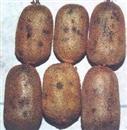
Kiwifruit gray mold mainly occurs during the flowering stage, young fruit stage and storage period of kiwifruit. In severe years, the incidence rate in orchards and during storage can reach more than 50%. Kiwifruit gray mold has become one of the main diseases affecting the healthy development of the kiwifruit industry.
1. Symptoms
When young fruit (late May to early June) is affected, residual stamens and petals are densely covered with gray spores. At the initial stage, the fuzz on young fruit turns brown, the skin is infected, and in severe cases it can cause fruit drop. Contaminated stamens and petals attach to leaves and form concentric ring lesions centered on them; the lesions expand and leaves drop. If rain occurs, the disease develops more severely. After fruit is affected, gray-brown mycelium and spores form on the surface, followed by black sclerotia. During storage, fruit is easily infected by diseased fruit.
2. Occurrence Patterns
The pathogen overwinters as sclerotia and conidia in diseased residual tissues such as fruit, leaves and flowers. From early flowering to late flowering in the second year, under rainfall or high-humidity conditions, the pathogen infects floral organs and causes flower rot; contaminated petals falling on leaves cause leaf spots; and contaminated petals remaining on young fruit stalks invade the flesh through wounds on the fruit stalk, causing fruit rot. The growth and development temperature of the pathogen is 0-30°C, with an optimum temperature of about 20°C. Compared with fruit soft rot, the gray mold pathogen grows vigorously at temperatures below 20°C. Therefore, gray mold occurs more often at low temperatures, and the pathogen readily forms spores under conditions of high air humidity, spreading with wind and rain.
3. Control Methods
1. Agricultural control
1) Adopt ridge cultivation, pay attention to orchard drainage, and avoid dense planting. Maintaining good ventilation and light penetration and suitable humidity conditions are the most basic requirements for orchard management. In autumn and winter, take care to clear all kinds of plant residues and crop straw inside and around the orchard, and try to avoid using wooden stakes as supports.
2) Prevent excessive shoot growth, carry out summer pruning of overly vigorous branches and vines, increase ventilation and light penetration, and reduce humidity in the orchard. The ideal canopy density is one in which sunlight projected onto the ground appears as a sieve-like pattern.
2. Chemical control
1) Pre-harvest control. Begin spraying fungicides before flowering, such as 50% Procymidone wettable powder at 500 times dilution, 80% Mancozeb wettable powder at 1000 times dilution, Vinclozolin wettable powder at 500 times dilution, 50% Iprodione wettable powder at 1500 times dilution, etc. Spray once every 7 days, for 2-3 consecutive sprays. After summer pruning, spray a protective fungicide or biological agent.
2) Post-harvest control. Spray a fungicide once one week before harvest. During harvest, avoid and reduce fruit injury, and avoid harvesting on rainy days or when dew has not yet dried. Remove diseased fruit to prevent secondary infection. After storing in the warehouse, appropriately extend the pre-cooling time. Make efforts to reduce fruit moisture, then package and store.