-
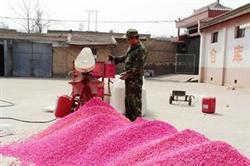
Opinions on the Prevention and Control of Diseases, Insects and Weeds during the Sowing and Seedling Stages of Wheat
Seed dressing of wheat can prevent soil-borne and seed-borne diseases such as take-all, root rot, sheath blight and loose smut, as well as some insect pests. When dressing seed, note the following: 1. The type of pesticide should be determined according to the occurrence of diseases and insect pests. If insect pests occur only slightly during the wheat seedling stage while diseases occur relatively severely, dressing seed with a fungicide alone is sufficient, and there is no need to use an insecticide...
-
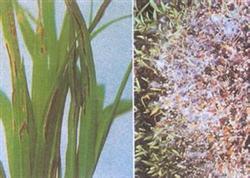
How to prevent and control rice Phytophthora disease? Detailed explanation of control methods
Rice Phytophthora disease: Diseased fields should be drained and dried in time, which can effectively inhibit the spread of the disease. Chemical control should focus on protecting early rice seedlings at the 3-leaf stage. Generally, pesticides should be applied before cold-protection irrigation or after drainage. The pesticides include: 50% carbendazim 1000-fold solution; 50% thiophanate or 50% benomyl 500-fold solution; 40% Phytophthora-killing 500-fold solution....
-
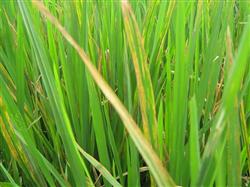
How to prevent and control bacterial brown stripe disease of rice?
Control of bacterial brown stripe disease of rice: 20% Yekuning (Chuanhua 018) wettable powder at 6000 times dilution; 25% Dikushuang at 1500 to 2000 times dilution; 20% Shakujing (Yekujing) wettable powder at 300 to 400 times dilution (not to be used after heading); during the seedling stage, Daisenzam at 1000 to 1500 times dilution may be used; during the main field stage, use 2 to 1 to 500...
-
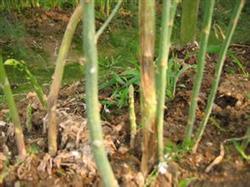
Occurrence Characteristics and Control Methods of Common Asparagus Diseases
I. Asparagus Fusarium Wilt 1. Symptoms. Asparagus fusarium wilt, also known as wilt disease, is a soil-borne disease. Initially, individual plants in the field turn yellow and wilt, and as the disease spreads, the entire plant dies. When young stems are infected, the cladodes and stems turn brown or split longitudinally. Brown lesions can appear on the underground stems and roots of diseased plants, and in later stages the affected parts rot, producing white to pink mold. When young spears are infected, the stems are thin or unable to emerge from the soil.
-
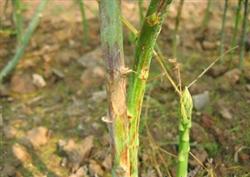
Comprehensive Control Methods and Techniques for Asparagus Pests and Diseases Explained in Detail
For pest and disease control, scientific control measures must be adopted, pollution-free control techniques vigorously promoted, and highly toxic and high-residue pesticides banned, so as to effectively control pest and disease damage while keeping pesticide residues in the product within limits. In control, adopt the measures of "prevention first, comprehensive control" and carry out early prevention in good time. (1) Agricultural...
-
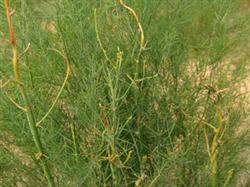
How to prevent and control asparagus pests and diseases? A detailed explanation of practical technical points
Asparagus stem blight and brown spot are the main diseases harming asparagus, developing quickly and causing severe damage. At present, there is no specific cure. Practice has proven that adopting a comprehensive disease prevention strategy based mainly on agronomic measures, supplemented by chemical control, can achieve twice the result with half the effort. The specific methods are: 1. Pinch off the growing tips at the right time to prevent lodging. As...
-
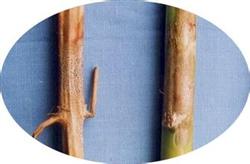
Detailed Explanation of the Harm and Control Methods of Asparagus Pests and Diseases
In recent years, the asparagus planting area has been continuously expanding, and the degree of damage from its diseases has also increased accordingly, causing considerable losses to the vast number of asparagus growers. The main asparagus diseases include: stem blight, root rot, brown spot, damping-off, and tip blight. The common diseases in the growth process of asparagus and their control measures are introduced as follows: 1. ...
-
How should pesticides be used for pest and disease control in organic asparagus?
(1) Pests and diseases Common asparagus diseases include damping-off, stem blight and anthracnose; the main insect pests are beet armyworm, cabbage moth, cotton bollworm, corn borer, aphids, planthoppers, and soil-dwelling pests such as cutworms and white grubs. (2) Control methods In the production process, starting from the entire ecosystem of crops, pests, diseases and weeds...
-
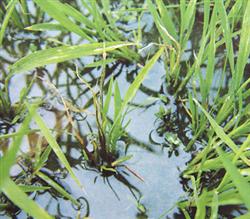
How to control the main diseases of rice in the middle and late stages? Here are the key control points
Damage symptoms: Symptoms appear in the late seedling stage and become obvious at the peak tillering stage. Diseased plants are stunted, with light green leaves; small yellowish-white spots appear on the leaves, round or oval, often forming lines; after booting, diseased plants are significantly stunted, with plant height less than one-half that of healthy plants. Leaves are short and thick, and the central leaf is yellowish-white, sometimes curved or twisted...
-
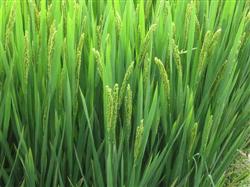
Key Technical Points for Pest and Disease Control in the Middle and Late Stages of Rice
Currently, rice is at the booting stage. In order to seriously carry out pest and disease control in the middle and late stages of rice and ensure increased yield and income this year, Shuangfengqiao Subdistrict recently took strong measures to strengthen pest and disease control in the middle and late stages of rice. Because last winter and this spring were a warm winter year, the overwintering populations of the rice stem borer (Chilo suppressalis), rice leaf roller (Cnaphalocrocis medinalis), and rice planthopper were large...
条件筛选