Opinions on the Prevention and Control of Diseases, Insects and Weeds during the Sowing and Seedling Stages of Wheat
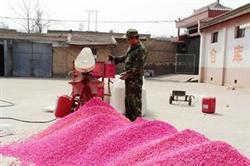
Seed dressing of wheat can prevent soil-borne and seed-borne diseases such as take-all, root rot, sheath blight and loose smut, as well as some insect pests. When dressing seed, note the following: 1. The type of pesticide should be determined according to the occurrence of diseases and insect pests. If insect pests occur only slightly during the wheat seedling stage while diseases occur relatively severely, dressing seed with a fungicide alone is sufficient, and there is no need to use an insecticide...
 Winter wheat is one of the grain crops with the largest sown area in our region. Doing a good job in the prevention and control of diseases, insects and weeds before sowing is the key to ensuring full and strong seedlings, striving for a bumper summer grain harvest, and safeguarding the security of grain production in our region. In recent years, climate change has been abnormal, extreme weather has increased, and the frequency of wheat disease and insect outbreaks has also shown an increasing trend. Some of these diseases, insects and weeds occur during the wheat sowing and seedling stages, and the sowing and seedling stages are also the best periods for controlling them. It is hoped that the competent departments of each township and the majority of association members will actively publicise this to farmers, conscientiously do a good job in prevention and control, and safeguard the safety of wheat production during the seedling stage. The main diseases, insects and weeds requiring control during the sowing and seedling stages are as follows. Main insect pests: wireworms, white grubs, mole crickets; diseases include sheath blight, glume blotch, leaf blight, root rot, take-all, bunt and loose smut; weeds include bromegrass, alkaligrass, shortawn foxtail and other grass weeds.
1. For plots where wheat glume blotch, leaf blight, bunt and loose smut occur together with underground pests, seed may be soaked for 48 hours in a 500-fold solution of 50% carbendazim-thiram mixed powder (carbendazim:thiram at 1:1), or 100 ml of 50% carbendazim wettable powder, 70% thiophanate-methyl wettable powder, or 40% seed-dressing bis + 50% phoxim emulsifiable concentrate may be used to dress 100 kg of seed; then dry in the sun and sow.
2. For plots where wheat take-all occurs together with underground pests: in lightly diseased fields, use 20-30 ml of quintozen plus 0.5-0.75 kg of water to dress 10-15 kg of wheat seed; in heavily diseased fields, use 20 ml of quintozen to dress 6.5-7.5 kg of wheat seed + 48% chlorpyrifos emulsifiable concentrate at 0.3% of the seed weight, then pile and cover the dressed seed for 6-12 hours, air-dry and sow, so that the pesticide fully adheres to the seed surface and kills the pathogens on the seed surface.
3. In fields where wheat sheath blight, root rot and underground pests occur together, 200 g of 50% thiophanate-methyl or 50% carbendazim + 100 ml of 50% phoxim may be used to dress 100 kg of seed; then dry in the sun and sow.
4. Control measures for grass weeds such as bromegrass, alkaligrass and shortawn foxtail
Late October to early November is the best period for controlling grass weeds,
4.1 Control of bromegrass: use 20-30 ml of 3% sulfosulfuron or iodosulfuron-methyl sodium + sulfosulfuron per mu, diluted with 30 kg of water for spraying.
4.2 Control of alkaligrass: use 80-100 ml of 50% quizalofop-p-ethyl + acetochlor emulsifiable concentrate per mu, diluted with 50 kg of water, and spray the whole field after the wheat seedlings have emerged completely.
4.3 Control of shortawn foxtail: after the wheat has emerged and before the weeds tiller, use 50% isoproturon at 125-250 g per mu, diluted with 50 kg of water, and spray the whole field.
Precautions: (1) Do not apply the pesticide when the minimum temperature is below 4°C; (2) rainfall within 4 hours after application does not affect the efficacy, but do not carry out flood irrigation within 2 days before or after application.