-
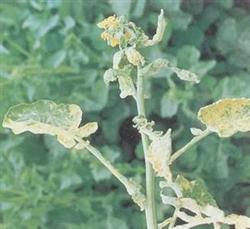
Beware of viral disease in rapeseed seedlings: detect and treat early
The characteristics of viral disease occurrence in rapeseed seedlings in seedbeds are as follows: 1. In seedbeds where farmyard manure such as pig manure, cow manure and chicken manure was applied during land preparation, the rapeseed seedlings do not develop the disease. 2. In seedbeds where no farmyard manure was applied and only ammonium bicarbonate was applied, the rapeseed seedlings develop the disease severely. 3. For the same variety and the same fertilizer rate, rapeseed seedlings in seedbeds with high fertility do not develop the disease, while rapeseed seedlings in seedbeds with low fertility do develop the disease.
-
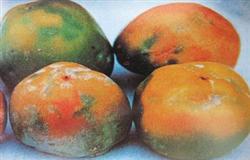
How to prevent and control persimmon witches' broom disease? Key control points every fruit grower must see
Symptoms: Diseased trees bud late in spring and grow slowly; the leaf veins turn black, and the xylem of the branches and trunk turns dark brown; in severe cases it spreads to the phloem tissue, causing clustered branches or upright excessive growth, or branch dieback and scorched shoot tips, with few fruits set, and the fruits soften prematurely and then drop; in severe cases there is no fruit set or the whole tree dies. Control methods: (1) Choose...
-
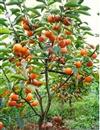
How to prevent and control persimmon tree diseases? These two methods are very practical
The main pests and diseases that persimmon trees are prone to include: persimmon angular leaf spot, circular leaf spot, anthracnose, black spot, leaf blight, powdery mildew, Eumeta variegata, Japanese mealybug, tea tussock moth, Maladera ovata, red wax scale, Homona magnanima, and small black slug moth, etc. Control methods: (1) Remove diseased fallen leaves and burn them; at the early stage of the disease, spray Bordeaux mixture, zineb, carbendazim or any one of these fungicides several times; when powdery mildew is severe, spray triadimefon. (2) Use light traps to kill adult insects; during the larval or nymph stage, spray dichlorvos, trichlorfon, fenitrothion or any one of these insecticides.
-
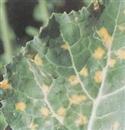
How to prevent and control rapeseed viral disease? A detailed practical guide
Viral disease is one of the main diseases of rapeseed. Affected plants reduce yield by around 20%, and in severe cases by more than 70%. It is generally more susceptible in years with little rain or in areas where vegetables are often grown nearby. Comprehensive control techniques must be adopted to prevent and control rapeseed viral disease. First, disease-resistant varieties should be selected; second, aphids should be controlled in a timely manner; third...
-
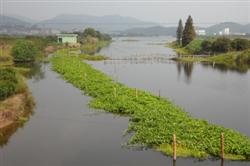
How to prevent pests and diseases in water spinach? Practical control measures shared
1. Preparing seedlings: After the mother stems of the planted water spinach form nodes, when the branches growing from the nodes reach 20 cm in length, cut off the seedlings with fibrous roots to use as planting material. 2. Cultivation method: Prepare braided straw ropes, wooden stakes and floats (the plastic foam ball-shaped floats used for the upper rope of fishing nets will do). When planting, place the seedlings at 15-20 cm...
-
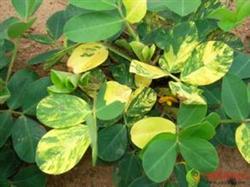
What are the control methods for peanut viral diseases?
Peanut disease is one of the major diseases of peanut, seriously affecting the yield and quality of peanut, and it is especially severe in the production areas of northern China. For peanut viral diseases, except for bud blight, which is mainly transmitted by thrips, other diseases such as mild mottle disease, yellow mosaic disease, and common mosaic disease are transmitted through seeds and aphids, and seed-borne infected tubers...
-
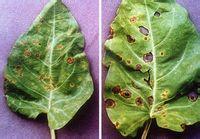
Symptom Identification and Control Methods of Brown Spot Disease in Water Spinach
Symptoms initially appear as small yellowish-brown spots, which later expand into circular to oval, or irregular dark brown lesions, 4-8 mm in diameter, with distinct edges. In severe cases, the lesions merge with each other, and the diseased leaves turn yellow, wither and die. Disease conditions: It is prone to occur in rainy and humid weather or during off-season cultivation. Control methods...
-
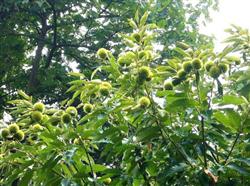
Chestnut Pest and Disease Prevention and Control Methods and Technical Key Points
In Anhui Province, chestnuts are mainly distributed in the mountainous areas of southeastern and western Anhui. Since the 1990s, they have also been developed on a large scale in the Jianghuai hilly region. The main chestnut-producing counties (cities) include Jinzhai, Huoshan, Shucheng, Yuexi, Guangde, Ningguo, Taihu, and others. There are about 150 species of pests and diseases harming chestnuts in our province, with common and severe occurrences affecting chestnuts...
-
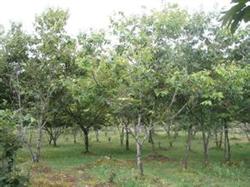
Key Pest and Disease Control Methods and Techniques for Chestnut
1. Select good varieties and prepare enough scion wood. Select good varieties. For the improvement of chestnut orchards, the three new varieties Dahongpao, Qingmaozao and Hongmaozao should be selected. These new varieties have been trial-planted in our city and have the characteristics of early fruiting, high quality, high yield, large fruit and strong stress resistance, and are suitable for promotion and planting throughout the city. Scion collection and storage...
-
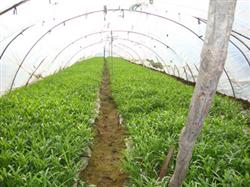
Pest and Disease Control Techniques for Greenhouse Cultivation of Water Spinach
1. The main diseases are damping-off and stem rot at the seedling stage, caused by low temperatures and excessively high relative humidity. Reducing humidity can alleviate the occurrence of diseases on the 12582 Nongxintong website. Spray with Ridomil at 700 times dilution or Kameitong at 800 times dilution for control. 2. The main pests are mites and red spider mites, which can be controlled with Karmante at 1000 times...
条件筛选