How should pesticides be used for pest and disease control in organic asparagus?
(1) Pests and diseases Common asparagus diseases include damping-off, stem blight and anthracnose; the main insect pests are beet armyworm, cabbage moth, cotton bollworm, corn borer, aphids, planthoppers, and soil-dwelling pests such as cutworms and white grubs. (2) Control methods In the production process, starting from the entire ecosystem of crops, pests, diseases and weeds...
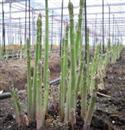
(1) Pests and diseases
Common asparagus diseases include damping-off, stem blight and anthracnose; the main insect pests are beet armyworm, cabbage moth, cotton bollworm, corn borer, aphids, planthoppers, and soil-dwelling pests such as cutworms and white grubs.
(2) Control methods
In the production process, one should start from the entire ecosystem of crops, pests, diseases and weeds, comprehensively apply various control measures, create environmental conditions that are unfavorable for the breeding of pests, diseases and weeds and favorable for the reproduction of various natural enemies, maintain the balance and biodiversity of the agricultural ecosystem, and reduce the losses caused by various pests, diseases and weeds.
1. Give priority to agricultural measures. Through a series of measures such as selecting disease- and pest-resistant varieties, non-chemical seed treatment, cultivating strong seedlings, strengthening cultivation management, intertillage weeding, deep plowing and sun-drying the soil in autumn, cleaning the field, and rotation, intercropping and relay intercropping, the role of preventing and controlling pests, diseases and weeds is achieved. At the same time, one should also make full use of measures such as mechanical capture of insect pests, and mechanical and manual weeding to prevent and control pests, diseases and weeds.
2. Physical measures. Hang silver-gray reflective film in the field to repel aphids and prevent viruses, cover with 30-mesh insect-proof netting to prevent various insect pests, install black light lamps, high-pressure mercury lamps and frequency-vibration insect-killing lamps to trap and kill adult pests, insert poplar branch bundles and millet straw bundles in the field to trap and gather armyworms, and set up yellow boards to trap and kill aphids, greenhouse whiteflies, American leafminers, etc.
3. Under special circumstances, when pesticides must be used, the following guidelines should be observed:
They must be pesticide products of the materials permitted for use in organic food production. When pesticide products of the materials permitted for organic food production cannot meet the needs of plant protection work, the following pesticides may be tried: (1) Plant-derived insecticides, fungicides, repellents and synergists of medium toxicity or below. Such as pyrethrins, rotenone, tobacco water, allicin, chinaberry, Sichuan chinaberry, neem, sesamin, etc. (2) Release parasitic and predatory natural enemy animals, insects, predatory mites, spiders and entomopathogenic nematodes, etc. (3) In pest trapping, insect pheromones and plant-derived attractants. (4) Mineral oil and vegetable oil formulations may be used, as well as sulfur formulations and copper formulations among mineral-element pesticides. (5) With the approval of a specialized agency, limited use of live microbial pesticides is permitted, such as fungal formulations, bacterial formulations, viral formulations, actinomycetes, antagonistic microbial agents, entomopathogenic nematodes, protozoa, etc.
The use of organically synthesized chemical insecticides, acaricides, fungicides, nematicides, nematicides, herbicides and plant growth regulators, as well as some genetically engineered varieties (products) and formulations, is prohibited.