Key Technical Points for Pest and Disease Control in the Middle and Late Stages of Rice
Currently, rice is at the booting stage. In order to seriously carry out pest and disease control in the middle and late stages of rice and ensure increased yield and income this year, Shuangfengqiao Subdistrict recently took strong measures to strengthen pest and disease control in the middle and late stages of rice. Because last winter and this spring were a warm winter year, the overwintering populations of the rice stem borer (Chilo suppressalis), rice leaf roller (Cnaphalocrocis medinalis), and rice planthopper were large...
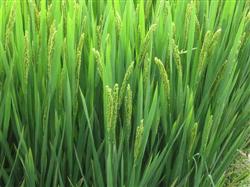
Currently, rice is at the booting stage. In order to seriously carry out pest and disease control in the middle and late stages of rice and ensure increased yield and income this year, Shuangfengqiao Subdistrict recently took strong measures to strengthen pest and disease control in the middle and late stages of rice.
Because last winter and this spring were a warm winter year, the overwintering populations of the rice stem borer (Chilo suppressalis), rice leaf roller (Cnaphalocrocis medinalis), and rice planthopper were large. In addition, since June there have been many rainy days and heavy rainfall, creating favorable opportunities for rice planthoppers and rice leaf rollers to migrate into the area one after another, resulting in another massive outbreak in the past ten years. In addition, the rice planthopper migrated into the area early this year in large numbers, and the local climate this year is particularly suitable for planthopper reproduction and growth. According to field surveys by the agricultural center, on July 4 the highest pest count reached more than 30,000 per 100 hills, with an average of 10,000, causing rice to wither and die before heading, and the general occurrence trend is a massive outbreak year. In addition, the first migratory generation of the rice leaf roller occurred in large numbers; if control is not thorough, it will provide a pest source for the second generation, with an average of 7-10 larvae per hill, now already first-instar larvae, and the occurrence level is second only to 1985, making it an outbreak year. The second generation of the rice stem borer, rice blast, sheath blight, and rice aspergillus disease are at a moderate occurrence level.
For this reason, the subdistrict requires each villagers' committee to study carefully, attach great importance, actively publicize, and fight a battle of annihilation against rice pests and diseases.
The specific requirements are: with the purpose of unified pesticide formula, unified timing, and widespread control, control must be done evenly and carefully. The spray water volume per mu is 3-4 buckets, that is, 45-60 kg; for motorized sprayers, more than 1 bucket per mu. The spraying time should be chosen after 9 a.m. and before 5 p.m., and spraying at noon must be avoided to ensure personnel safety.