-
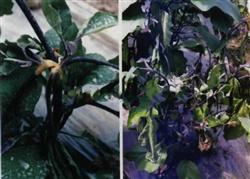
How to prevent and control pests and diseases in early spring eggplant? Key technical points to master
For eggplant seedlings raised in early spring, the main focus is preventing and controlling soil-borne diseases: damping-off, rhizoctonia rot and sclerotinia rot. For seedbed soil disinfection, mix 50 kg of seedbed soil with 20 g of 68% Jinlei water-dispersible granules and 10 ml of 2.5% Shileshi suspension concentrate, sift the soil and mix well, then fill nutrient pots, or spread it over the seedling bed. During the seedling stage, spray 0.1%-0.2% monopotassium phosphate...
-
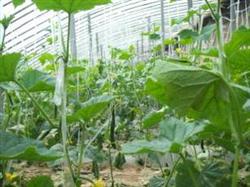
Integrated Pest and Disease Control Methods for Greenhouse Cucumbers in Spring
I. Common Diseases in Spring 1. Downy mildew (1) Occurrence characteristics: persistent (long-term companion), devastating (rapid spread, outbreaks). (2) Occurrence conditions: High humidity: relative humidity above 83% favors disease development, (water droplets or water film on leaf surface), spore germination and invasion. Optimum temperature: 15-20°C. Nutritional status...
-

How to Plant Sugarcane to Increase Yield? A Detailed Guide to Practical Planting Methods
How to Increase Sugarcane Yield
-
What are the integrated control methods for wheat take-all disease?
Wheat take-all is a typical root disease, capable of infecting wheat from sowing through to harvest. The main sites of infection are the wheat roots and the 1st to 2nd nodes of the stem base. After infection by the pathogen, the roots turn black and rot, losing their ability to absorb water and nutrients, which causes the above-ground parts to dry up and die, resulting in white heads. 1. ...
-
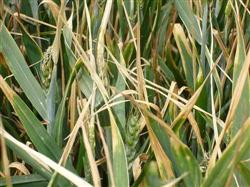
Pay attention to pest and disease control at the wheat seedling stage to ensure robust growth of the wheat seedlings
In recent years, symptoms of blighted white heads have often appeared in some fields during the milk-ripening stage of wheat, greatly affecting wheat yield and quality. The causes of wheat white heads are mainly diseases and pests, such as sheath blight, root rot, take-all, fusarium head blight, wheat stem maggot, wheat stem moth, and wireworm. The damage caused by different diseases and pests...
-
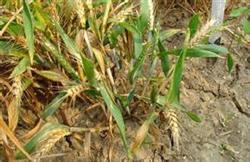
How to prevent and control wheat yellow dwarf disease? Detailed explanation of its occurrence and control measures
Wheat yellow dwarf disease is a viral disease mainly spread by aphids, and in some years the damage is quite severe. Symptoms: when infected at the seedling stage, the leaves lose their green color and turn yellow, and the plants are severely stunted; the leaves of severely affected plants often cannot survive the winter, or after overwintering cannot joint or head. Plants infected later show no obvious stunting, and the upper...
-
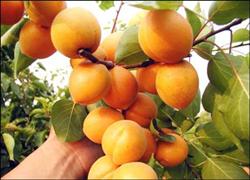
How to increase the fruit set rate of apricot trees? Master these technical measures
1. Choose superior varieties. Choosing varieties with a high percentage of perfect flowers, strong self-fruitfulness, frost resistance, a later blooming period, and early bearing and high yield as the main planted varieties is the key to increasing the fruit set rate. For example, Jintaiyang, Kate apricot, etc. In addition, varieties with early, mid, and late ripening can also be chosen in combination to reduce losses caused by early spring frost...
-
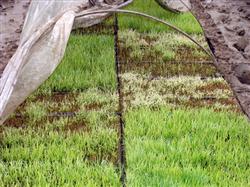
A complete guide to the basics of southern rice black-streaked dwarf disease
Rice seedling rot is the collective term for seed rot, bud rot and dead seedlings that occur at the seedling stage. Rice seedling rot can be divided into two types: physiological and infectious. Physiological seedling rot is mainly caused by low temperatures and mistakes or poor management practices in the seedling nursery; infectious seedling rot is caused by pathogen infection, and the main diseases include rice cottony rot, rice putrefactive disease and rice...
-
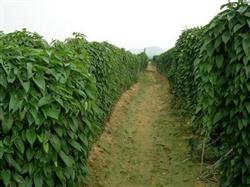
Key Technical Points for Integrated Pest and Disease Control in Chinese Yam
I. Agricultural Control 1. Selecting disease-resistant varieties is an effective method for controlling Chinese yam pests and diseases. When cultivating disease-resistant varieties, rational layout is necessary, rotating varieties every 2 to 3 years, and attention should be paid to variety purification and rejuvenation. 2. Crop rotation can reduce or avoid damage from Chinese yam stem rot and root-knot nematodes. Rotate at least once every 3 years with crops that are not infected, such as corn (2343, -3.00, -0.13%), wheat, radish, and watermelon; in old areas where Chinese yam is cultivated year-round, rotate once every year; where conditions permit, paddy-upland rotation can be implemented for better control results.
-
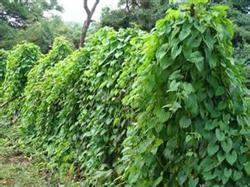
Yam Pest and Disease Control Methods and Key Technical Points
I. Anthracnose. Yams are prone to anthracnose during hot, rainy seasons, and after onset it causes stem blight and leaf drop. In the early stage, black spots appear on the leaves; in the later stage, the leaf color turns black, and the lesions become water-soaked; in severe cases it affects plant growth and causes reduced yield. Control: In the early stage of the disease, spray once every 7 days with 50% Tuzet 600x solution, or 7...
条件筛选