-
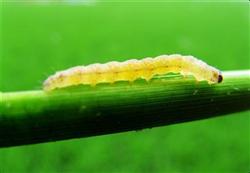
How to prevent and control common rice pests and diseases? A detailed practical guide
Rice bacterial leaf blight is a bacterial disease of rice leaves. The pathogen is Xanthomonas oryzae pv. oryzae in the prokaryote kingdom. The bacterium invades through wounds and water pores in the roots, stems and leaves, and reproduces and causes damage in the vessels of the vascular bundles. Seedlings and tillering stages are the most susceptible. Seedling leaves mostly show leaf blight symptoms. In susceptible varieties...
-
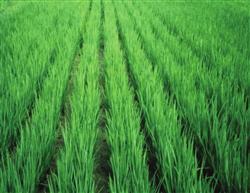
Zinc supplementation for rice boosts disease resistance and high yields, making rice plants healthier
When rice enters the jointing and panicle elongation stage, it is an important period of transition from vegetative growth to reproductive growth, and also a critical period that determines yield. Doing a good job of field management in the middle and late stages of rice is crucial for ensuring sufficient panicles, developing large panicles, shaping a high-yield plant type, and building a good framework for a bumper harvest. I. Seedling characteristics According to a survey on July 21...
-
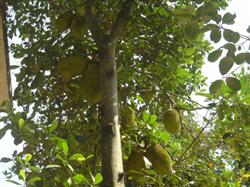
Methods and Technical Key Points for Pest and Disease Control in Jackfruit
In hot and humid regions, pests and diseases of jackfruit can sometimes be quite serious, but current research and control measures are limited. The main ones include longhorn beetles, stink bugs, aphids, scarab beetles, cottony cushion scale, as well as leaf spot disease, sooty mold, and soft rot of flowers and fruits. Longhorn beetles are the most widespread and serious, damaging branches and trunks, causing gummosis, branch dieback, tree decline, and hollow or even rotting and death of the trunk...
-
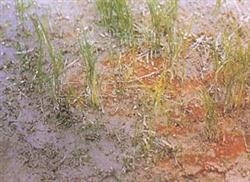
Green control methods for rice diseases, insect pests and weeds
Rice seedling rot refers to the death of rice seeds and seedlings during the seedling-bed stage (that is, seed rot, bud rot and seedling death), and can be divided into two major categories: physiological and infectious. Physiological seedling rot refers to that caused purely by adverse environmental conditions; infectious seedling rot mostly refers to adverse environmental conditions inducing weakly parasitic fungi such as Pythium, Achlya, Fusarium and Rhizoctonia...
-
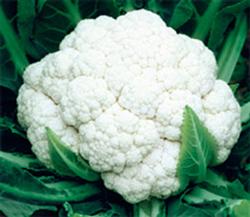
Key Technical Points for Integrated Pest and Disease Control in Bitter Gourd
Cauliflower has poor waterlogging tolerance. When growing cauliflower in rainy areas and in environments with a high water table, deep furrows and high beds should be used to facilitate drainage. This is the key to successful cauliflower cultivation. Cauliflower also should not be grown in continuous cropping. The previous crop is best as cucurbits, solanaceous fruits, or legume vegetables, and fertile...
-
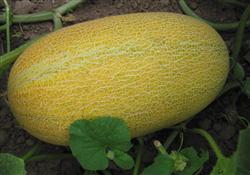
Main Disease Control Methods and Technical Key Points for Hami Melon
**The main diseases of Hami melon are Phytophthora rot and downy mildew, and powdery mildew. Bacterial leaf spot, gummy stem blight, viral disease and broomrape. The main control measures and pesticides are as follows: 1. Phytophthora rot (dead vines, wilt, rotten melons) (1) Select disease-resistant varieties (2) Use a middle furrow (15-20cm) with high beds (0....
-
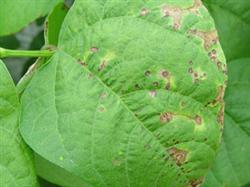
Symptom Identification and Control Methods for Kidney Bean Leaf Spot Disease
It mainly affects the leaves. The leaf spots are round or nearly round, mostly occurring at the leaf tip or leaf margin, with brown edges and a light brown to grayish-brown center; when humid, small black dots are scattered or arranged in concentric rings on the spots. Control methods: strengthen management inside the greenhouse (such as frequently applying foliar fertilizer such as Fengshou No. 1), especially controlling air humidity. Then there is chemical control, ...
-
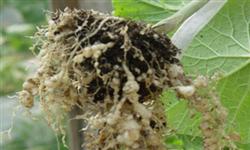
Symptoms and Control Methods of Root-Knot Nematode Disease in Hami Melon
Root-knot nematode disease is an important disease of Hami melon, occurring and distributed in some areas. It can develop both in protected cultivation and in open fields, with more severe incidence in autumn. Infection at the seedling stage has a great impact on production, and after onset the diseased plant rate often reaches more than 60%, significantly affecting Hami melon production. The symptoms mainly damage the root system, producing on the main root and lateral roots...
-
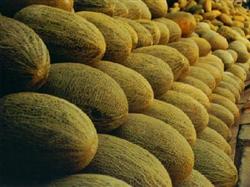
What is black spot disease during cantaloupe storage?
Black spot disease is one of the main diseases in cantaloupe storage, mainly occurring in the late storage period. Brown, slightly sunken round spots form on the melon surface, gradually expand and turn black, and may even become irregular in shape. The flesh beneath the spots becomes necrotic, black, and spongy, and separates easily from the healthy flesh. This disease strikes when the cantaloupe matures and ages and its disease resistance gradually...
-
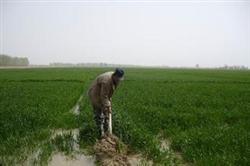
Early prevention and early treatment of wheat pests and diseases in spring is key
From the perspective of water conservation, it is recommended to water wheat twice in spring. For wheat fields that have normal growth after winter irrigation, if the soil moisture is good, the green-up water can be skipped. The first spring watering of wheat should be at the stem elongation to jointing stage (late March to early April), and the second spring watering at the heading to flowering stage (late April to early May). The specific watering time...
条件筛选