How to prevent and control asparagus pests and diseases? A detailed explanation of practical technical points
Asparagus stem blight and brown spot are the main diseases harming asparagus, developing quickly and causing severe damage. At present, there is no specific cure. Practice has proven that adopting a comprehensive disease prevention strategy based mainly on agronomic measures, supplemented by chemical control, can achieve twice the result with half the effort. The specific methods are: 1. Pinch off the growing tips at the right time to prevent lodging. As...
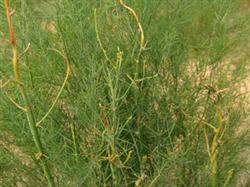
Asparagus stem blight and brown spot are the main diseases harming asparagus, developing quickly and causing severe damage. At present, there is no specific cure. Practice has proven that adopting a comprehensive disease prevention strategy based mainly on agronomic measures, supplemented by chemical control, can achieve twice the result with half the effort. The specific methods are:
1. Pinch off the growing tips at the right time to prevent lodging. Asparagus plants can reach a height of over 1.5 m. If allowed to grow freely, this seriously affects ventilation and light penetration, and the plants are prone to lodging, with high field humidity leading to severe disease. When the plant height reaches about 70 cm, the growing tips should be pinched off at the right time, which helps concentrate nutrients and promote the growth of underground rhizomes.
2. Clean up the field. Cleaning up the field to reduce sources of infection is one of the effective methods for controlling stem blight. In February, comprehensively clear the stems in the field, sweep up diseased and residual branches and leaves, and burn them in a centralized manner. After the asparagus harvest ends in early to mid-August, in conjunction with backfilling soil and leveling the ridges, thoroughly clean up residual stumps and aboveground mother stems, and spray fungicide on the bud scale discs for sterilization and disinfection. During the autumn growth stage, regularly remove diseased and residual branches and leaves from the field, which can significantly reduce the occurrence of the disease
3. Keep mother stems and harvest asparagus spears to extend the harvest period. For new asparagus field plots in the second year after planting, only green asparagus should be harvested. Generally, the young stems that emerge in early to mid-April are kept in the field as mother stems and not harvested, in order to supply the root system. The tender stems that emerge afterward can then be harvested. The length of the harvest period depends on how well the plants grew in the previous autumn, and generally harvesting can last 30 to 50 days. For asparagus field plots that have entered the production period, after keeping 2 to 3 mother stems per hill in early to mid-May depending on the emergence of spears, harvesting can continue until early to mid-August. This method of keeping mother stems while harvesting spears not only increases the income of asparagus growers, but also avoids the disease peak caused by the high-temperature and high-humidity weather in July, reducing the number of pesticide applications and lowering costs.
4. Rational fertilization. Applying more organic fertilizer and phosphorus and potassium fertilizer, and appropriately controlling the amount of nitrogen fertilizer, can increase soil organic matter, loosen the soil, promote robust growth of asparagus stems and leaves, and improve disease resistance.
5. Seize favorable opportunities and use rational chemical control. To control stem blight, apply fungicide at the key stage in a timely manner. Before soil mounding in spring, sprinkle fungicide solution on the root discs for sterilization, and cut off old plants. When keeping mother stems, immediately spray for protection to prevent young spears from being infected by residual diseased plants on the soil surface after emergence, and at the same time protect the retained mother stems from airborne pathogens; when necessary, use a slightly more concentrated fungicide solution to coat the stems. Effective fungicides include 50% iprodione wettable powder at 1500 times dilution, 50% benomyl wettable powder at 1000 times dilution, 70% thiophanate-methyl wettable powder at 600 times dilution, 50% mixed sulfur suspension concentrate at 500 times dilution, 2% agricultural antibiotic 120 aqueous solution at 200 times dilution, Lubao No. 1 at 2000 times dilution, 50% carbendazim ultra-fine wettable powder at 500 times dilution, 25% pefurazoate aqueous solution at 800 times dilution, 64% oxadixyl mancozeb wettable powder at 500 times dilution, and difenoconazole at 1000 times dilution + 75% chlorothalonil at 600 times dilution for spraying. Note to mix or rotate fungicides rationally. Adding 0.1% laundry powder or 0.3% neutral soap or Tween 20 and other stickers or spreaders when preparing the solution can improve efficacy. During the growing period, apply once every 5 to 14 days depending on disease conditions, for 3 to 4 consecutive applications; appropriately increase the number of applications in rainy conditions, and re-spray promptly after rain. In severely affected areas, especially, timely control should be carried out during the young and tender stage when infection is most likely. Although the disease resistance of asparagus plants over 40 days old gradually increases, spraying should still be carried out for protection before soil mounding or 2 to 3 days after the soil is scraped away following the end of harvest when the root discs are exposed to the sun. Spraying should stop 7 days before harvesting spears.
For brown spot, spraying should begin at the early stage of disease onset. Fungicides that can be selected include 50% anilazine wettable powder at 500 times dilution, 70% thiophanate-methyl wettable powder at 600 times dilution, 6% anilazine wettable powder at 1500 times dilution, 50% carbendazim wettable powder at 600 times dilution, 14% copper ammonia complex aqueous solution at 300 times dilution, 50% copper succinate wettable powder at 500 times dilution, and 47% kasugamycin copper wettable powder at 600 times dilution. Apply once every 7 to 10 days depending on disease conditions, for a total of 2 to 5 applications.
The main pests include tobacco cutworm, beet armyworm, cotton bollworm, cutworm, and others. For armyworm-type pests, spray with diflubenzuron at 1000 times dilution; for aphids, use 40% dimethoate emulsifiable concentrate at 1000 times dilution; for underground pests, use trichlorfon bait to trap and kill them.