-
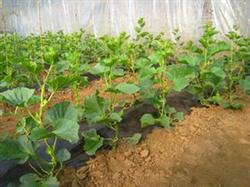
Control Methods for Major Diseases and Pests of Melons
Melon, also known as oriental melon, is one of the high-grade fruits that people love. It belongs to the Cucurbitaceae family, Cucumis genus, melon species, and is an annual herbaceous plant. I. Variety Types and Selection of Improved Varieties Melons are generally divided into two types: thin-skinned melons and thick-skinned melons. Thin-skinned melons, also known as Chinese melons, have thin skin, crisp flesh, and small fruits with a single fruit...
-
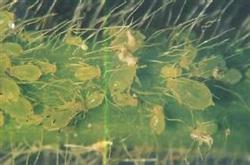
What are the pollution-free soybean diseases and their control methods?
The soybean aphid is one of the major pests of soybean, with adults and nymphs piercing and sucking sap on the top leaves, tender leaves and tender stems of the soybean plant. In severe cases they cover the stems and leaves, and can also attack tender pods, causing stunted plants, reduced fruiting branches and pod numbers, and lower 1000-grain weight; when severe at the seedling stage, the entire plant can die, and in outbreak years if not controlled in time...
-
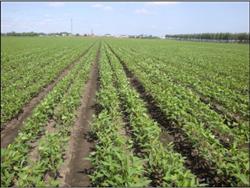
What are the control methods for the three major soybean diseases?
Soybean root rot: This disease can occur and cause damage throughout the entire growth period of soybean, with yield reductions ranging from 25% to 75% or more. The protein content of infected seeds is significantly reduced. The main symptoms are dark brown lesions appearing at the base of the stem and spreading upward to varying degrees to the lower lateral branches, causing the pith of the diseased stem to turn brown, the base of the petiole to constrict...
-
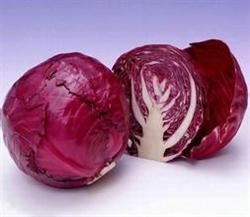
Key Points of Pest and Disease Control Techniques for Spring-Planted Purple Cabbage
Pest and disease control: As long as management is proper, purple cabbage generally has few diseases, so it is easy to produce pollution-free products that can be eaten raw. Purple cabbage may only suffer from seedling-stage diseases such as damping-off and downy mildew when humidity is high during the seedling stage, which can be controlled with pesticides such as Yunsheng, Dasheng, carbendazim, Xinluling, and Anke. Pests...
-
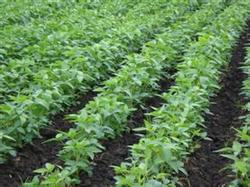
Soybean Disease Control Measures and Technical Key Points
Soybean Sclerotinia Stem Rot Soybean sclerotinia stem rot mainly infects the stems, and symptoms usually begin to appear in late July. In the early stage of infection, brown lesions appear on the stems, after which white cottony mycelium and white granules develop on the lesions, later turning into black granules (sclerotia). When the diseased plant stem is cut lengthwise, black cylindrical sclerotia resembling mouse droppings can be seen. After the diseased plant dies...
-
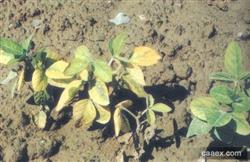
Identification and Control Methods of Soybean Cyst Nematode Disease
Soybean cyst nematode disease, also called "huolongyangzi" disease, is caused by nematodes parasitizing the roots of soybean. Diseased plants have poorly developed root systems, with a marked reduction in lateral roots, slow growth, stunted plants, yellowing stems and leaves, small pods with shriveled seeds, or no seed set, and even death of the entire plant. When diseased plants are pulled up and examined, many needle...
-
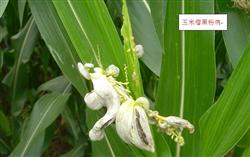
Control of corn smut disease cannot be ignored
The symptoms of this disease can occur on all aboveground parts of the corn throughout the entire growth period, and are especially obvious at the tasseling stage. Tumor-like growths of varying sizes develop on the affected parts. Initially, the tumors are covered with a white membrane, which later turns gray and, after drying and cracking, releases black powdery material, namely the spores of the pathogen. On the leaves, bean-sized tumor-like masses are easily produced, while on the tassel...
-
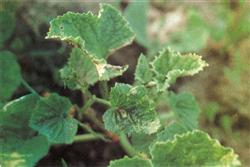
What to Do When Open-Field Melons Get Mosaic Virus Disease? Symptom Identification and Control Methods
Symptoms: In the early stage of the disease, the leaves show mosaic mottling interwoven with yellow-green and dark green, the leaves become smaller, and the leaf surface is wrinkled, uneven, and curled. The main vine is distorted and stunted, the plant is dwarfed, the melons are small, and the fruit surface has mottled patches of alternating light and dark, or slight bump-like protrusions. Causes: The incidence of mosaic virus disease has been relatively high in recent years...
-
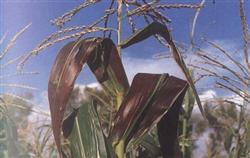
How can corn red leaf disease be controlled effectively?
Symptoms: When improved varieties bred with Huangzaosi encounter low temperatures and rainy, overcast weather during the grain-filling stage, their leaves turn red, which is called red leaf disease. Cause: The occurrence of this disease is related to the fast grain-filling of this variety. When large amounts of synthesized sugars cannot be quickly converted due to metabolic disorders, they become anthocyanins, and the green leaves turn red. Control methods: (1) In areas where it occurs severely, do not...
-

Growing Succulents to This Level: Brave Souls, Please Drink This Cup of Poison
Main Text Image and Text: Curator. A heart that loves succulents is full of restlessness. I heard you like succulents. The curator got deeply poisoned in South Korea. The curator thinks such strong poison should be shared with everyone, right? Today I am just here to simply release some poison. It is simple. I will release some poison and leave,...
条件筛选