-
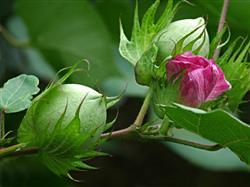
Do not relax pest and disease control during the cotton flowering and boll stage
In recent years, the proportion of Bt transgenic insect-resistant cotton planted has accounted for more than 95% of the total cotton planting area in our province. The promotion of insect-resistant cotton has played a strong role in controlling the occurrence and damage of cotton bollworm in cotton fields, but some pests and diseases should be strengthened in control. Judging from this year's situation, the cotton boll stage is a period when multiple pests and diseases occur and cause damage in an interwoven manner, mainly including...
-
Countermeasures for preventing seedling diseases from pre-sowing to seedling stage in cotton
Cotton seedling diseases mainly include damping-off, anthracnose, Pythium blight, root rot and more than a dozen others, collectively known as cotton seedling diseases. In mild cases, growth is slow, plants wilt and develop late; in severe cases, there are gaps and broken rows in the field, with plants dying in patches, causing tremendous damage. After cotton seedlings become diseased, although a series of disease prevention and treatment measures have been taken, such as timely ventilation of plastic-film cotton, intertillage near the roots...
-
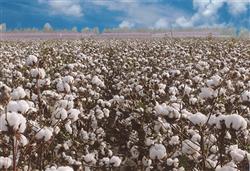
What are the integrated control techniques for cotton pests and diseases?
Topdressing is an important measure for cotton to set more bolls, set large bolls, reduce shedding, and increase yield. However, if topdressing is not done scientifically, it will not achieve the desired effect and sometimes may even produce side effects. In production, cotton topdressing has the following four key points. First, topdress according to the fertilizer requirement pattern. At different growth stages, cotton has different requirements for fertilizer...
-
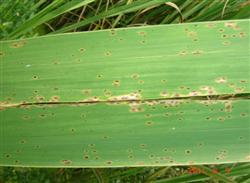
Jiaobai (wild rice stem) is prone to Helminthosporium leaf spot disease under high-temperature and high-humidity weather
Jiaobai Helminthosporium leaf spot is a fungal disease. In recent years, as the jiaobai planting area has continued to increase, the scope of occurrence of this disease has gradually expanded, and the severity has become increasingly worse. This disease can occur throughout the entire growth period of jiaobai. It mainly damages the leaves. In the early stage, small yellow-brown spots appear on the leaves, which later expand into brown spots the size of sesame seeds, with a few forming...
-
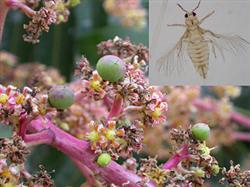
How to prevent and control diseases and pests during the mango flower spike stage? A detailed practical guide
After mango flower spikes are damaged by diseases and pests, the spikes become deformed, flower quality declines, buds drop, flowers dry up, and they cannot bloom or set fruit. The control methods for the diseases and pests harming mango flower spikes are as follows: 1. Anthracnose Anthracnose is the most serious disease harming flower spikes. It strikes as soon as the flower spikes emerge, first appearing as black...
-
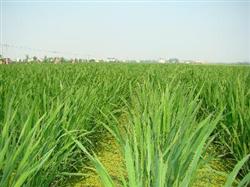
Occurrence Characteristics of Pests and Diseases in High-Mountain Water Bamboo and Integrated Control Techniques
The key points of off-season cultivation techniques for double-cropping water bamboo at low altitudes are introduced as follows: 1. Selection of improved varieties. The Zhejiang Yidianhong water bamboo (a single-cropping type) is selected. 2. Land preparation and seedling raising. Select a field sheltered from wind and facing the sun, with convenient irrigation and drainage and loose, fertile soil, as the seedling bed. In early November, sun-dry the seedlings until they are 60-70% dry, 1...
-
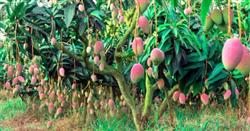
The commonly used pesticide for mango pest and disease control is Supracide.
Physical and chemical properties: appearance is a dark yellow liquid, density 1.04-1.08 kg/L, storage stability period 2 years, cannot be mixed with alkaline pesticides. Toxicity: a highly toxic insecticide, toxic to mammals, birds and bees; the safety regulations for the use of highly toxic pesticides should be observed when applying. Mode of action: Supracide, also called methidathion, is a...
-
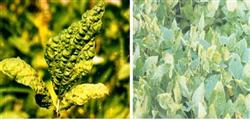
What are the control methods for soybean mosaic virus disease?
Suihua City in Heilongjiang Province is a major soybean-producing area, with a perennial soybean planting area of nearly 300,000 hectares. In recent years, the occurrence of soybean mosaic virus disease has shown a trend of worsening year by year, occurring in most fields, with the disease incidence rate in the field generally around 4.8%, and reaching over 20% in severe cases; the rate of brown (black) mottled seeds in soybean grain is over 10%,...
-
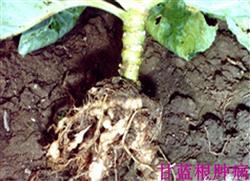
How to prevent and control pests, diseases and weeds during the seedling stage of cabbage-family vegetables
Cabbage clubroot mainly harms cruciferous vegetables. After the disease occurs, the roots swell and become tumor-like, hence the name clubroot disease. Generally, after the main root is infected, it becomes lump-shaped, and after the fine roots, branch roots, lateral roots and fibrous roots are infected, they are mostly locally swollen and deformed. Simple diagnosis: clubroot disease and root-knot nematode disease have similar field symptoms. When distinguishing them, you can dissect...
-
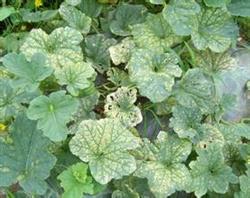
Pollution-free Disease and Pest Control Techniques for Muskmelon
The main pests harming melons include root maggots, mole crickets, cutworms, white grubs, leafminers, pumpkin beetles, aphids, and red spider mites, among others. (1) Root maggot: also called root maggot or melon maggot. It is the larva of the seed corn maggot. The body is about 5 mm long and maggot-shaped, damaging the young roots, young shoots, and tender stems of melon seedlings. Common control methods are as follows: ...
条件筛选