What to Do About Yellow Leaves on Eggplant? A Detailed Guide to Prevention and Control
There are mainly two causes of yellow leaves on eggplant: first, fertilizer damage. This kind of damage often occurs on cloudy days or after the weather turns sunny. It is mainly caused by using large amounts of undecomposed farmyard manure as a base fertilizer or improper application as a topdressing fertilizer, which leads to excessive accumulation of ammonia gas; combined with the lack of timely ventilation in the greenhouse, this ultimately triggers ammonia toxicity...
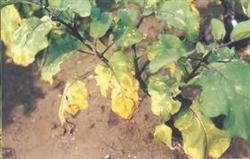
There are mainly two causes of yellow leaves on eggplant:
First, fertilizer damage. This kind of damage often occurs on cloudy days or after the weather turns sunny. It is mainly caused by using large amounts of undecomposed farmyard manure as a base fertilizer or improper application as a topdressing fertilizer, which leads to excessive accumulation of ammonia gas; combined with the lack of timely ventilation in the greenhouse, this ultimately triggers ammonia toxicity.
Second, pesticide damage. It is mainly caused by excessive use. Therefore, when controlling eggplant diseases and pests, farmers must choose the appropriate dosage according to the nature of the pesticide, the weather, and the plant's growth condition. Especially recently, when using pesticides such as Shijiale and pyrimethanil to control gray mold, the concentration must be strictly controlled. In addition, pesticides should not be applied in the early morning or evening, because at these times the plant stomata open only slightly, which not only reduces the efficacy of the pesticide but also increases air humidity and the occurrence of disease. In the current season, spraying should generally be done at around 10 a.m. Experts remind that for growing round eggplant, pyrimethanil should not be used to control gray mold as far as possible.
For plants suffering from fertilizer damage (soil fertilizer damage, gas damage), water should be applied at the right time to help the plants restore their physiological functions as soon as possible. In addition, a certain greenhouse temperature should be maintained. Foliar fertilizers such as Fengshou No. 1 and Xian U Su should be sprayed on the leaves, preferably mixed with potassium dihydrogen phosphate.
If the plant root system is damaged, attention should be paid to promoting and nourishing the roots. A rooting agent can be used to drench the roots, or rooting fertilizers (humic acid, microbial fertilizers) can be applied as a topdressing.
For plants suffering from pesticide damage, Fengshou No. 1 or other foliar fertilizers that relieve pesticide damage can be sprayed on the leaves. If it is discovered in time, spraying clean water on the leaves or watering can both alleviate the damage. At the same time, the greenhouse temperature should be raised, especially the nighttime temperature, to promote and nourish the roots.
In addition to fertilizer damage and pesticide damage, nutrient deficiencies can also cause yellow leaves on eggplant, such as magnesium and iron deficiency. In magnesium-deficient eggplant, the middle and lower leaves turn yellow, developing from the bottom upward, and in some cases spreading along the leaf veins, with obvious symptoms. Under conditions of acidic soil, excessive fertilizer, and high moisture, eggplant is prone to iron deficiency, and in iron-deficient eggplant the young leaves at the top of the plant turn yellow.