What are the control methods for stunted seedling syndrome in greenhouse eggplants?
Symptoms: In early spring crops, eggplants often show symptoms at the seedling stage such as small leaves, dark green color, thin stems, and few roots. After transplanting, such seedlings recover slowly, grow weakly, and are prone to flower and fruit drop. Causes: The disease occurs most easily when the seedbed temperature is too low (below 15°C for a long time). When using heating facilities or nutrient pots for seedling raising, water consumption is high,...
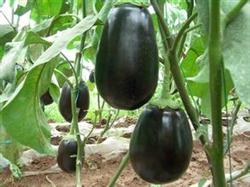
Symptoms: In early spring crops, eggplants often show symptoms at the seedling stage such as small leaves, dark green color, thin stems, and few roots. After transplanting, such seedlings recover slowly, grow weakly, and are prone to flower and fruit drop.
Causes: The disease occurs most easily when the seedbed temperature is too low (below 15°C for a long time). When using heating facilities or nutrient pots for seedling raising, water consumption is high; if watering is not timely and the seedbed soil becomes too dry, the disease can also occur.
Control methods: Raising eggplant seedlings for early spring crops takes place during a low-temperature period, so temperature management is the most critical. First, choose low-temperature-tolerant varieties: for round eggplants, such as Qieza No. 12 and Yuanza No. 2; for long eggplants, such as Shouguang Purple Long Eggplant, etc.; during the growing period, spray New High-Lipid Film to keep warm and prevent freezing, prevent pathogen infection, and improve resistance to natural disasters; second, use heating facilities, such as laying ground heating wires, and add small arched sheds, second curtains, and other insulation facilities, water in a timely manner, and strengthen temperature and moisture management.