-
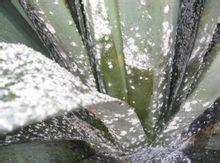
Identification and Control Methods for Pineapple Mealybugs
Pineapple mealybugs belong to the order Homoptera, family Pseudococcidae. Dysmicoccus brevipes is the most commonly seen species. The damage symptoms are caused by adults and nymphs feeding on the sap of pineapple rhizomes, leaves, fruits and seedlings. Affected leaves first show symptoms starting from the lower part, gradually fading upward to yellow and finally turning red-purple; in severe cases all leaves soften and droop...
-
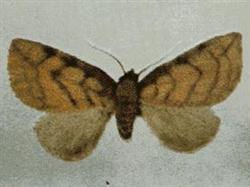
Control Methods and Technical Key Points for the Buckwheat Hook-wing Moth
The buckwheat hook-wing moth belongs to the order Lepidoptera, family Drepanidae. The adult has a body length of 10-13 mm and a wingspan of 30-36 mm, with 3 outward-curving ">"-shaped yellowish-brown lines on the forewings. The larva has a body length of 20-30 mm; young larvae are green or grayish-brown, gradually turning dark brown as the instar increases, and mature larvae are dirty white. This pest mainly...
-
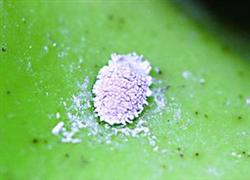
How to control pineapple mealybug? Detailed control methods
The pineapple mealybug, scientific name Dysmicoccus brevipes (Cockerell), belongs to the order Homoptera, family Pseudococcidae. Dysmicoccus brevipes is the most commonly seen species. Damage symptoms: adults and nymphs damage pineapple rhizomes, leaves, fruits and seedlings by sucking their sap. On affected leaves, symptoms first appear on the lower leaves, gradually fading upward to yellow and finally...
-
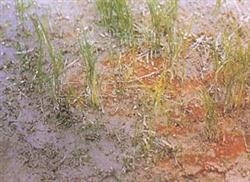
Green control methods for rice diseases, insect pests and weeds
Rice seedling rot refers to the death of rice seeds and seedlings during the seedling-bed stage (that is, seed rot, bud rot and seedling death), and can be divided into two major categories: physiological and infectious. Physiological seedling rot refers to that caused purely by adverse environmental conditions; infectious seedling rot mostly refers to adverse environmental conditions inducing weakly parasitic fungi such as Pythium, Achlya, Fusarium and Rhizoctonia...
-
Occurrence and Control Methods of Jackfruit Stem-End Rot and Fruit Rot
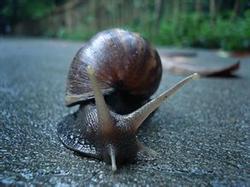
The African giant snail, also known as the French snail, is a pest that harms pineapple. It mainly bites the base of the fruit from June to August when the fruit is ripe, leaving holes of varying depths, which makes the pineapple prone to infection by pathogens and rot, thereby reducing the commercial value of the fruit and even making it inedible. Control methods: (1) Manual capture. In the African giant snail...
-
Methods and Technical Key Points for Pest and Disease Control in Jackfruit
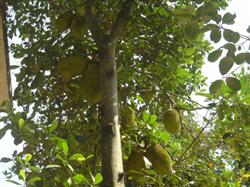
In hot and humid regions, pests and diseases of jackfruit can sometimes be quite serious, but current research and control measures are limited. The main ones include longhorn beetles, stink bugs, aphids, scarab beetles, cottony cushion scale, as well as leaf spot disease, sooty mold, and soft rot of flowers and fruits. Longhorn beetles are the most widespread and serious, damaging branches and trunks, causing gummosis, branch dieback, tree decline, and hollow or even rotting and death of the trunk...
-
How to prevent and control common rice pests and diseases? A detailed practical guide
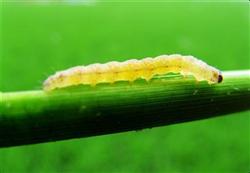
Rice bacterial leaf blight is a bacterial disease of rice leaves. The pathogen is Xanthomonas oryzae pv. oryzae in the prokaryote kingdom. The bacterium invades through wounds and water pores in the roots, stems and leaves, and reproduces and causes damage in the vessels of the vascular bundles. Seedlings and tillering stages are the most susceptible. Seedling leaves mostly show leaf blight symptoms. In susceptible varieties...
-
What are the key technical points for controlling rice false smut?
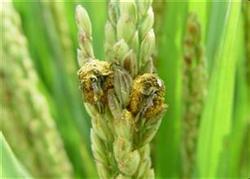
Rice is susceptible to infection during the heading and flowering stage, and the pathogen damages some grains on the panicle. At first, a pale yellow-green mass appears at the seam of the glumes, gradually expands, and finally covers the entire glume shell. It is 3-4 times larger than a healthy grain, dark green, with a smooth surface, and later splits open, releasing dark green powder. Weather is closely related to the occurrence of rice false smut;...
-
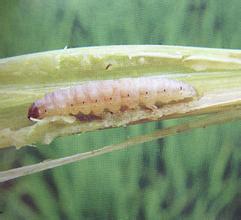
Introduction to Several Control Measures for the Rice Stem Borer
The rice stem borer, also known as the rice stalk borer or heart borer, is one of the major pests harming rice. Its larvae have a diverse diet and also damage corn, sorghum, and other crops. A normal outbreak can reduce yields by 5-10%, and a severe outbreak can reduce yields by more than 30%. Snatching grain from the pest is also an urgent matter. Several control measures are introduced here for reference only. 1....
-
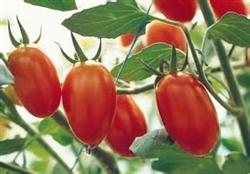
Complete Guide to Pest and Disease Control Measures for Cherry Tomatoes
The cultivation techniques are as follows: 1. Sow at the right time. This variety is suitable for autumn sowing; seedlings can be raised starting in late May to early June, transplanted in July, and harvested starting in September. To prevent the spread of seed-borne viruses, disinfect the seeds before sowing: wrap the seeds in gauze, soak them in a 15% trisodium phosphate aqueous solution for 10 to 20 minutes, then...
条件筛选